Our major commitment … is to discover ourselves before discovering scientific truth, to mold ourselves before molding nature. To fashion a strong brain, an original mind that is ours alone — this is the preliminary work that is absolutely essential.
The Founding Father of Neuroscience on Solitude – Santiago Ramón y Cajal (May 1, 1852–October 17, 1934)
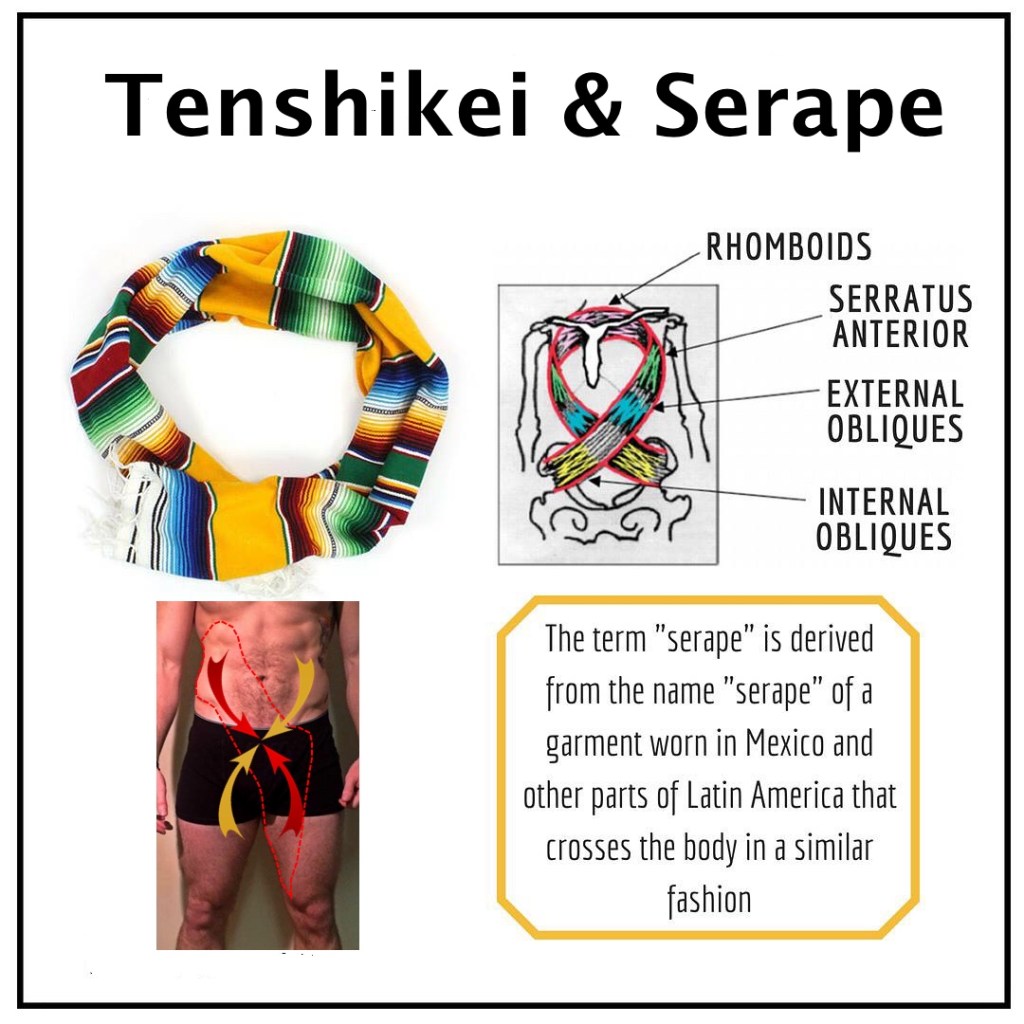
Tenshikei – Using a linear motion to rotate.
Tenshikei can be described as “energy boosting”. These bodymovement makes the use of your strength more efficient because you will use all the resources of your body.
Diagonal Tenshikei Exercise
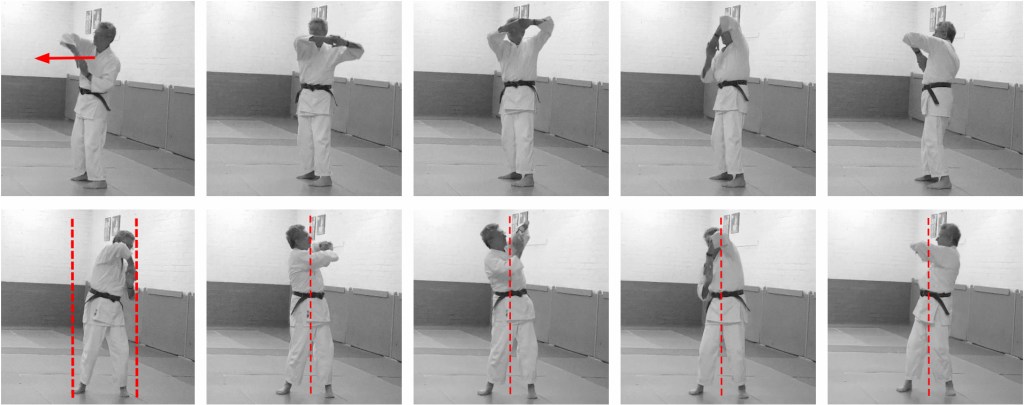
The diagonal tenshikei exercise is an entry to rotating diagonal movement.
The motion is straight ahead and takes place between the lines on the side of the body.
The first is to raise your elbow. Don’t drop the other elbow.
When the body is stretched upwards, the forward elbow moves downwards and backwards. The rear elbow travels straight forward.
This exercise is very hard to do, the shoulder and chest must be very flexible. The lower part of the body remains “comparatively” in the same position.
Application of a straight motion
In a previous blog about kinetic energy, I used the phrase “Using a straight line to rotate”. After some reflection on tenshikei, I rather use “linear motion”.
A linear motion is a one-dimentional motion along a straight line. A linear motion is the most basic of all motion if there are no external powers acting on this motion.
But as we all know, Aïkidō has a complicated simplistic label.
Body movement is a linear motion with rotational elements.
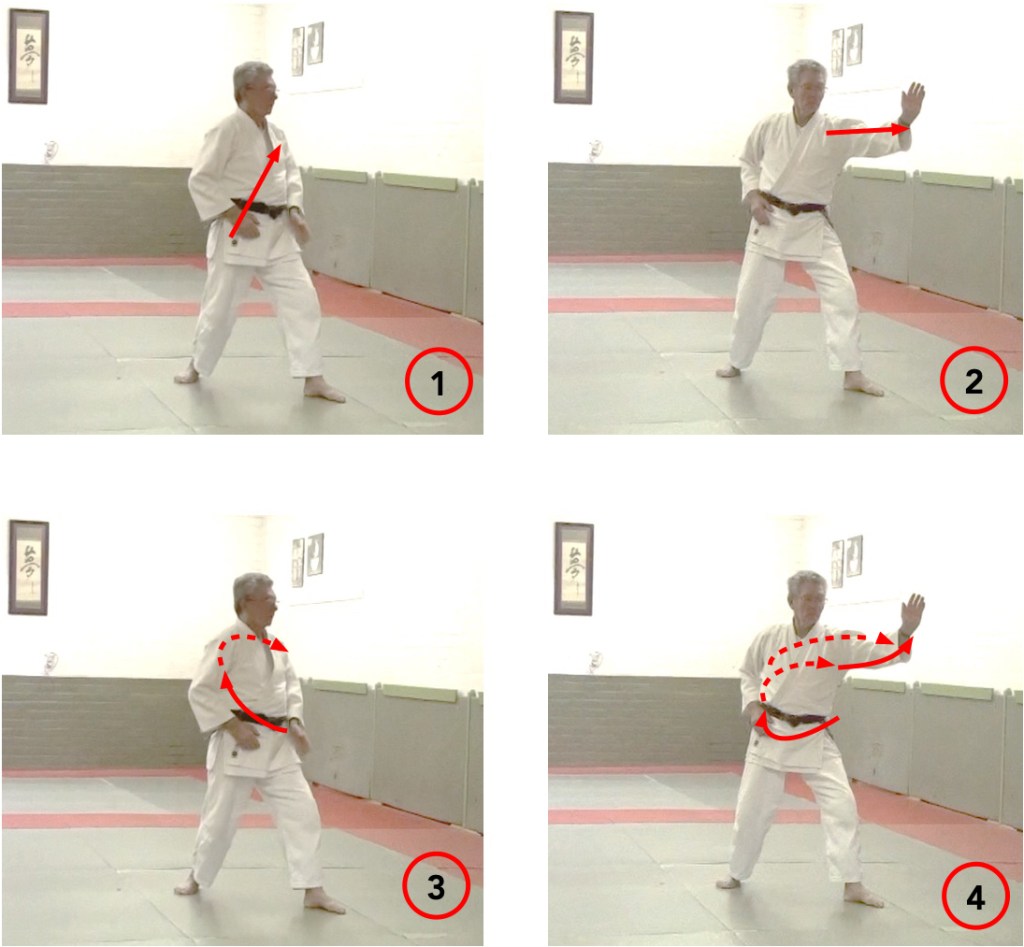
Lifting the arm into an attacking position. The legs and feet are the support of the torso and are not used to generate strength activily in this example.
- Picture 1 – A linear motion from the hip to the shoulder, to initiate arm lifting
- Picture 2 – Lifting the arm with a forward movement
- Picture 3- Initiating from the hara to the opposite armpit following a diagonal course. Using the back to let the flow to the arm
- Picture 4 – Adding the rotation of the waist and adopting a hanmi posture
A rotating linear motion
Ukimi – The floating body
A lightness of the body, a feeling of complete weightlessness, hovering sensation of the body that is established by koshi-mawari.
Koshi-mawari is mostly translated as hipturning, but it is better to describe it as initiating movements by using the pelvis.
When we practise with our without a partner, we must always be ready to use both legs or feet to move. The skill of taijū no dendō is putting the weight in the koshi, not in the legs or feet. If the weight is in the koshi and we move with koshi-mawari and/or unsoku, a feeling of weightlessness will fill the body. An eventually partner will feel almost nothing.

 Study Group Tomiki Aikido