Accept your limitations

Martial arts marketing mainly emphasizes the idea of winning against a much stronger opponent. This idea is enforced by a clever training system that has rules and limitations for the attacker. A competing format tries to break out of those limitations. Unfortunately, the competitive format to become safe requires limitations and rules.
The study and training in a martial art occur in a specially equipped hall. For Japanese martial arts, the training hall is called a dojo.
Dojo training is not comparable to a hostile environment in the real world. Your belief that a competitive format will significantly improve your self-defense abilities is incorrect. A problem with many competitive martial arts is that they continuously assume the conditions of mutual combat. Before starting the fight, the opponents are identified and lined up at a comfortable distance.

It’s important to remember the physical and mental aspects of good health.
In order to survive in the arena, it’s important to be in good shape and have practiced the technical and tactical aspects of competitive fighting.

The reality on the street is totally different. Your attacker is not following the rules that govern the competition format. Your body and mind are conditioned by rules and limitations.
Self-defence courses emphasize the idea of running away from potential conflicts rather than engaging in physical combat. In the event that your condition is not good, what is the outcome? Can you run away? Are you fully prepared for the confrontation? Your limitations are highlighted by those questions.

Performance-oriented

Our society’s foundation is performance. If you cannot fulfill this concept, you will always be considered a member of the lower class.
Religions are also using this concept. Entering Paradise is possible if you adhere to the rules set by the religious leaders.

Martial arts are not excluded from this concept. In certain martial arts, their founders are treated as gods and their successors are treated similarly.
Certainly, some founders have the ability to excel in the field of martial arts. To become such a skilled martial practitioner, they lived a life based on training for both the mind and body.

Is it possible to become a skilled warrior in our society while maintaining a family relationship and performing well in your occupation for a living?
The chance to become a military or police officer is not available to everyone.

Your limitations

  • Physical and mental limitations
  • Social limitations
  • Educational limitations
  • Fat-belly syndrome
  • Other

Most of the limitations are interwoven and cannot be separated from each other. If you see the founder of your martial art as a godlike person, your way of thinking will be restricted by the dogmas outspoken by the founder and the successors. Dogmas can restrict your search to the truth in martial arts. Of course, if there is a truth in martial arts.

We cannot forget, most of the founders had a life as a professional martial art practitioner and their training was almost a full-time job.
Most of us have a responsibility to our family and social environment. These limitations, we have to accept, we cannot become at the same level as a professional martial art practitioner.

Physical and mental limitations are no excuses for not practising. Laziness are being often the origin of so-called physical limitations.
But each physical training program must be adapted to the real limitations of the practitioner. We cannot expect the same performance from a 80 yr old person compared to a 20 yr old practitioner.
Performing always at the maximum heartbeat is not healthy, especially for older practitioners.
Knowing your heartbeat is a key to excellent performing taking into account the limitations of your age and condition.

Using a smart watch or other device to measure your heartbeat can be helpful to find out something about your condition when performing for example solo-exercises with or without a weapon.

You can estimate your maximum heart rate based on your age. To estimate your maximum age-related heart rate, subtract your age from 220. For example, for a 50-year-old person, the estimated maximum age-related heart rate would be calculated as 220–50 years = 170 beats per minute (bpm). A 20-year-old person would be 220-20 years= 200 BPM.
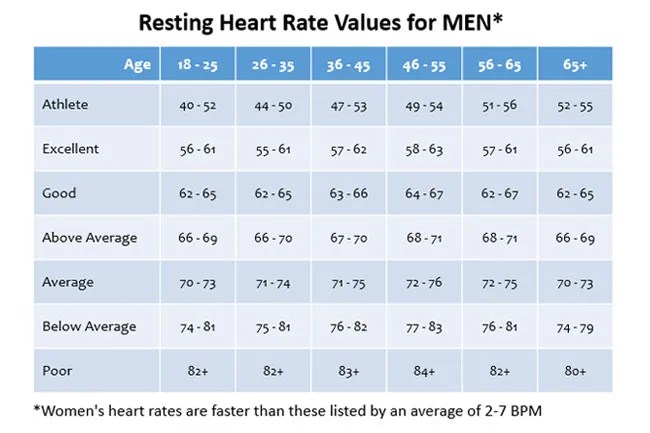
When you know your max heart rate, you can calculate the BPM for efficient exercising.

Target heart rate zones are five ranges of heart rates that generally determine how much effort a person is putting forth in their exercise.

Heart rate zones vary from person to person—someone who is younger or more physically active will have different target zones than a person who is older or currently less physically active—so they’re described as percentages of maximum heart rate. 

  • Zone 1 – moderate to low intensity, at 50 to 60 percent of maximum heart rate 
  • Zone 2 – moderate intensity, at 60 to 70 percent of maximum heart rate 
  • Zone 3 – moderate to high intensity, at 70 to 80 percent of maximum heart rate 
  • Zone 4 – high intensity, at 80 to 90 percent of maximum heart rate 
  • Zone 5 – very high intensity, at 90 to 100 percent of maximum heart rate 

Educational limitations

Not every martial art has an extensive educational program, some of them are very limited and physical. Others are very wide organized and require a lot of mental energy.
Maybe, the martial art you practise has a very profound mental educational program. But you are very loyal to the group or teacher, but you like to practise more physical. This is your problem, not the system’s problem, and you have to solve it.
You can look around for a more physical method or you can use your creativity and a good conversation with the teacher to find a solution for your problem.

The fat-belly syndrome limitation

There was a time when I was accumulating too much fat in the belly. A fat-belly is of course a limitation in proper martial art training. Some people with this syndrome will tell you about developing a powerful hara. Of course, this is only an excuse for not participating in a physical training program adapted to the person in question.
After changing a bad habit of eating and drinking, my well developed hara disappeared and my training became more vigorous.

Knowing your limitations

We can detect a lot of more limitations, but deep in our heart we really know our limitations and we must adapt our training. Sometimes, you will find out remarks made by others about your performance. Those remarks can be very positive, but can have also a huge negative impact on your training. Especially social media is a well known source of negative influence.

Knowing your limitations is the path to “well-being”.

The simplification of Ueshiba’s Aikido

As a practitioner of Aikido Tomiki, I am certainly very proud of the efforts of our Sensei. He examined Morihei Ueshiba’s archaic system and made it accessible to the rational man. His simplification of the many techniques in the so-called “Aiki-randori-no-kata” can be considered a work of art.
Is this simplification one of a kind in the world of Aikido? No!

In 1969, Aikido by Kisshomaru Ueshiba was published and can be seen as a simplification of Aikido as practised by the Ueshiba family and in a broader sense the Aiki-Kai community. The book was based on two previous Japanese books written by Kisshomaru Ueshiba.
Aikido (1958) and Aikido Giho (1962)

Complementary and alternative

Old Waseda dojo

Complementary and alternative are terms used to describe many kinds of practices or methods that are not part of the mainstream system. You may hear them outline methods for improving the method. This is called “complementary” because they are used along with your current method. You can sometimes hear about methods that should be better than the original method. We call these “alternatives” because they are used in place of tried and tested methods. Most of the time, the value of these alternative methods is doubtful because they do not complement the current method. Perhaps there is some value if it is used as a stand-alone method with a different objective to achieve.

There are numerous exercises and techniques to support every aspect of Aikido. But often the forest cannot be seen for the trees. Making choices will thus be a real challenge! Even simple basic exercises are conducted in an infinite number of ways. Some of the elementary exercises are created by Kenji Tomiki and every deviation from the basic model is sometimes regarded as a capital sin. However, Kenji Tomiki committed a capital sin when he tried to create a competitive element in the formation of Aikido. After all, its teacher, Morihei Ueshiba has always emphasized the “impossibility” of having contests in Aikido.
This brings forward a question about “complementary or alternative” in Tomiki’s method.

The impossibility of competitive aikido?

To find an answer, we need to dive into the history of Aikido or also known as “aikibudo”. It was Morihei Ueshiba who popularized Aikido or aikidbudo to a wider public, though he was mostly for influential people in the pre-war period. Kenji Tomiki’s role is described in many biographies by different writers and like everything in the world, the different versions are not exactly the same. But in general, Kenji Tomiki was a major student of Morihei Ueshiba and had his own vision of Ueshiba’s art.
In an article written by prof. Shishida of Waseday University we find some information on the history of competitive aikido and a solution for the “impossibility of competitive aikido”.

A Historical Study of Competitive Aikido : the Developmental Process of Randori Method, The Annual Report of Physical Education 33 : 17-27, 2001

To overcome the problem, his talent (Tomiki) in judo, and a quietly humble personality, and widely cultured background were useful in saving aikibudo from misunderstanding. A former student of Kenkoku University, Mr. Seiichi Saito remembered and said, “It was possible because it was Mr. Tomiki. He used to often compare aikido to sumo, kendo, and judo in class.” (1/26/2000 Telephone conversation) This is an indication that Tomiki was trusted by many students. This probably was the only way he could take away prejudice and give proper understanding of aikibudo to those bright students at Kenkoku University.
At this period, Tomiki was concerned with the problem of how to classify and organize Ueshiba’s various excellent methods of skills to establish an instructional system. Tomiki was incapable of destroying traditional relationship between master and pupil by selfishly manipulating to disturb his teacher’s most important principles of aikibudo, or give presumptuous advice. Therefore, he kept the problem of forming a plan of instructional system to himself deep in his mind. When did Tomiki start moving toward developing aikido into a form of competition?
Sometime in post war period, Tomiki wrote, “I started to research modernization of aikido after I received aikido 8th dan in February of 1940.” It was probably after the official registration of Tomiki’s 8th dan. Tomiki must have been thinking about competitive aikido in his mind by then at the latest. But, considering Tomiki’s cautious personality and difficulties of the method, it might have been only a faint thought. It must have been a dilemma to decide on a fight form.

During a fight with bare hands like judo, if one comes close enough for the opponent to get hold of the neck band or sleeve, he would be thrown by judo technique. If they keep their distance, there will be no fight. There was another problem: interests in sitting technique or techniques against weapons will be lost by developing aikido into a competitive sport.

He must have doubted if aikido could be popularized by developing it into a competition. The process of developing aikido into a competitive sport was not easy.
It seems that around the early part of 1958, Tomiki started his actual research activity to develop aikido into a competitive sport with conscious decision to exclude randori technique. This was directly prompted by a severe criticism given that there was no competition of aikido in existence by the council of physical education department of Waseda University when Tomiki decided to set up an aikido club, at the University where he was teaching, and requested to the department of physical education council. At this stage, Tomiki, of course, was practicing only exercises of kata just like the way his teacher Mr. Morihei Ueshiba’s school was coaching aikido, and he did not have any definite plan to develop aikido into a competitive sport. At the council meeting, however, he explained the history, significance, and future of aikido, and by promising competitive aikido, be was allowed to start aikido club. This marked the beginning of ‘experimental stage’, and he recorded in 1969, “With devoted cooperation of the club members, through 10 years’ trials and errors, we have almost succeeded.”

The question arises, did Tomiki change Ueshiba’s Aikido by introducing a competitive element?
Everything depends on the way we like to practice our Aikido. If our aim is to emphasize “competition”, it is certainly an “alternative method” and it becomes an athletic event without the mystical elements of Morihei Ueshiba.
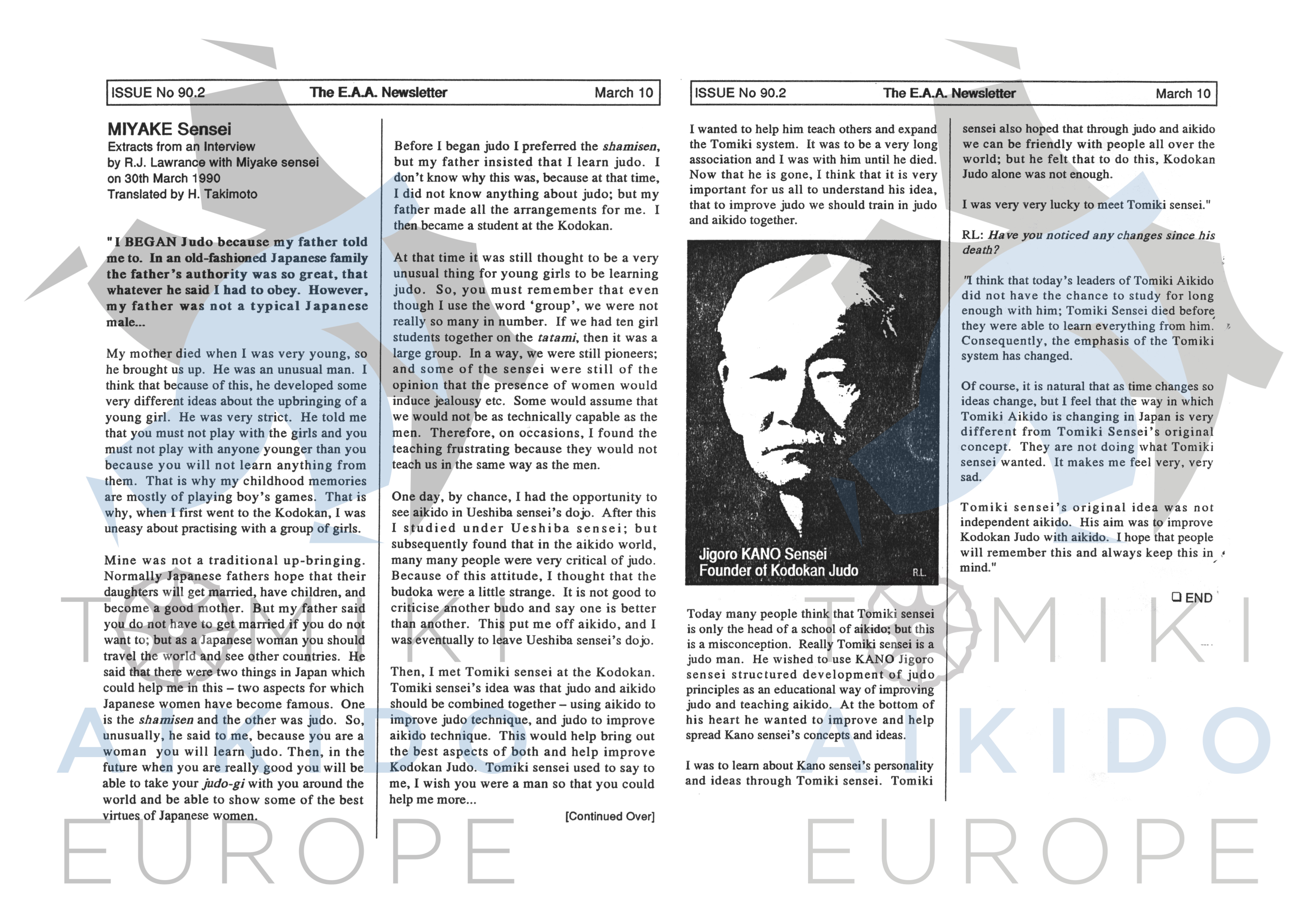
Practitioners who studied the uncompetitive method of Tomiki’s Aikido, will remember Senta Yamada, Tsunako Miyake or Takeshi Inoue. They taught us the original Tomiki Aikido, a method to improve Aikido by adding some judo elements and can be seen as a “complementary method”.

【Kakunodate Times】 Article of August 12, 1957.

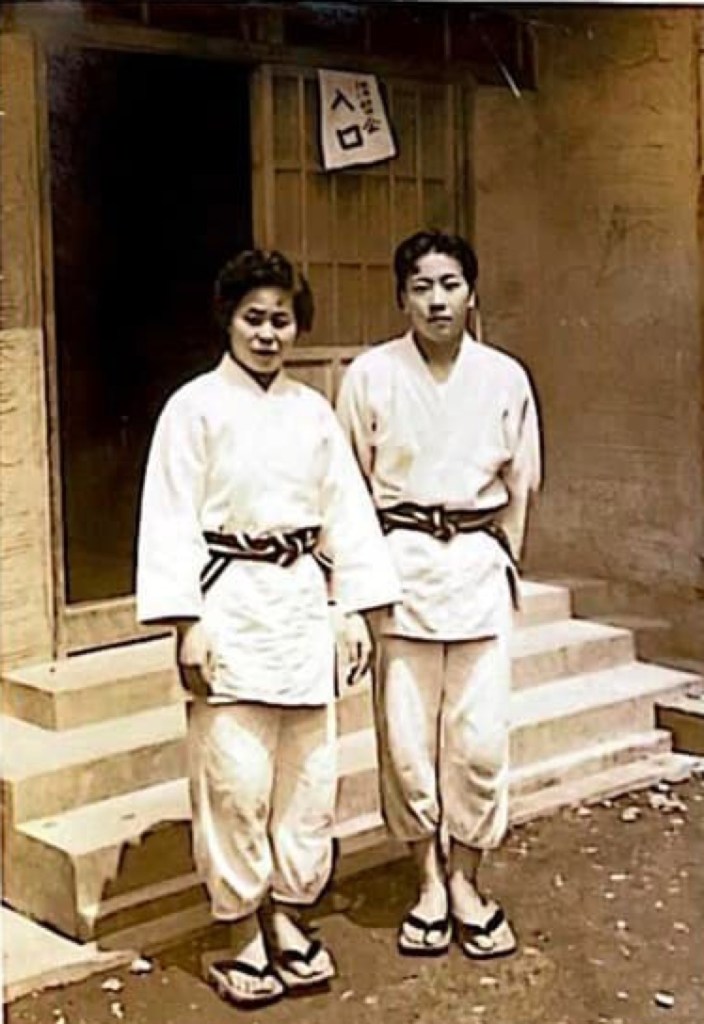
Kenji Tomiki, then president of the All Japan Aikido Association, Hideo Ohba, Keiko Fukuda, and Ayako Miyake gave Aikido lessons to volunteers at Tsuneko-in in Kakudate-cho.

At the left Keiko Fukuda, 9th dan Kodokan Judo awarded in 2006
At the right a young Tsunako Miyake. Pioneer of Tomiki Aikido.

Simplified movements and exercises

What are the additional features of Tomiki’s Aikido? “Simplified movements and exercises”. Kenji Tomiki’s contribution plays an important part in simplifying the numerous techniques and movements in the Aikido repertoire. A small part of the original Ueshiba technique can be discovered in Koryu no Kata. These kata are covering different aspects of Aikido. Simplified techniques can be found under “randori no kata” or “Kihon waza”. As usual, there are several versions of these simplified techniques. By simplifying the movements and techniques, a student will acquire in an early stage a global view of the possibilities with Aikido. It has also occurred in other martial arts, Japanese and Chinese. In Iaido and Jodo, the Kendo Federation responsible for these martial arts created a simple format as an introduction. Modern Kendo itself a simplified version of old systems with a sword. Simplified versions of Iaido and Jodo can create a focus on more complex methods. Even Kodokan Judo can be viewed as a simplified version of old Jujutsu methods. In Chinese martial arts, Taijichuan has a short version of the original lengthier versions. The art of Yiquan has no formal sequences (taolu – kata) to study. The most noteworthy is the basic training of the basic elements. After a while, training is progressing at a freestyle of training similar to a randori style of judo and…… Aikido.

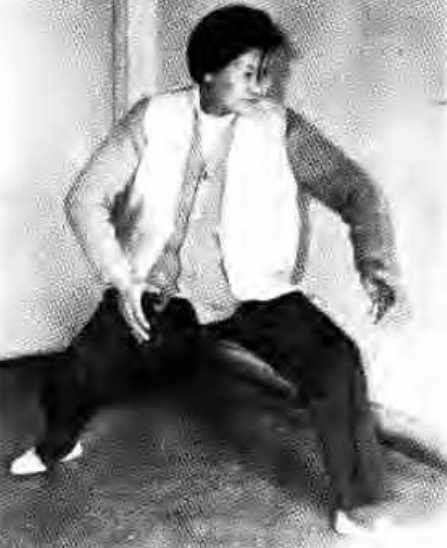
Yiquan posture

Is simplified really simplified?

Although it is said Kenji Tomiki simplified Ueshiba’s Aikido along the lines of the Kodokan Judo doctrine, maybe simplified is a too simplified definition.
Kenji Tomiki saw the fundamental movements in Ueshiba’s Aikido and created exercises for practising the fundamental movements. Unfortunately most of those exercises are nowadays practised in a rigid format and lost the fundamental idea of Japanese martial arts: Jukozo.
In the article – the science of training – you will find some explanation about jukozo principle.
Simplifying has not always been a shortcut to understanding. We cannot deny the fundamental elements or movements, otherwise our martial art becomes a shallow image of the original.

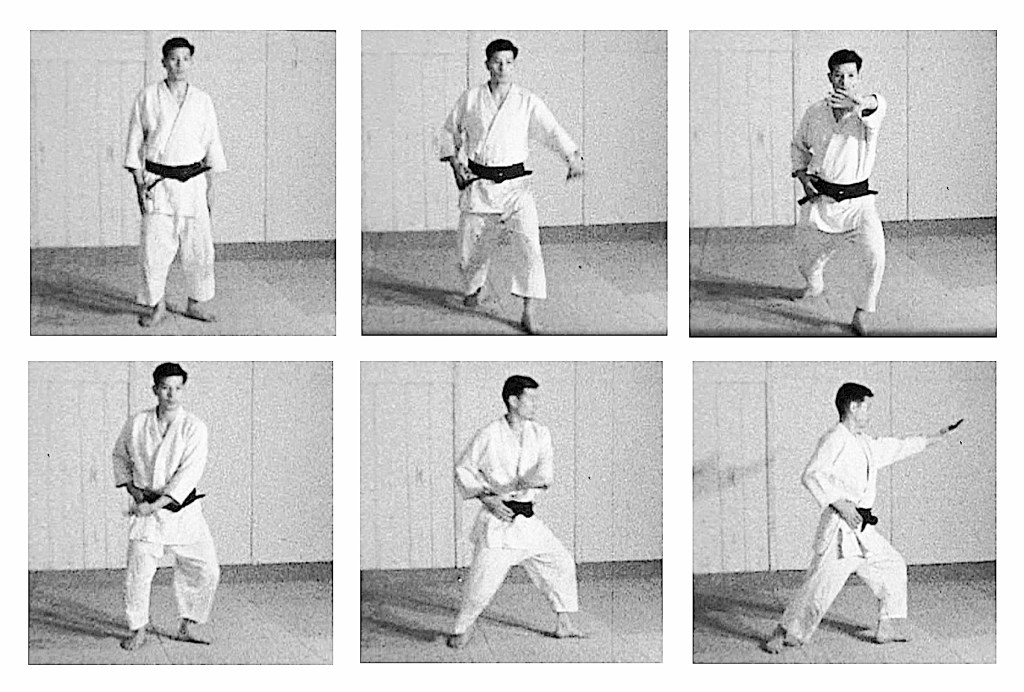
Uchi gaeshi & soto gaeshi