Cross-training in Martial Arts

There has been a lot of controversy surrounding the idea of cross-training in martial arts. Cross-training is rejected by traditionalists in particular. Nonetheless, cross-training can provide valuable insight into the art of fighting.
When talking about cross-training in martial arts, grappling arts are frequently mentioned. But we can also cross-train in combat systems with weapons.

Fencing
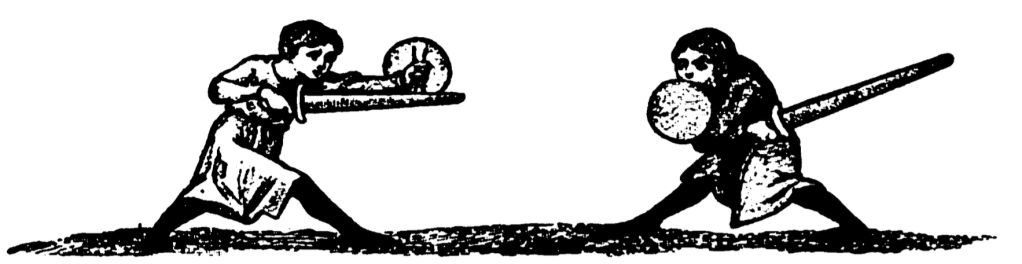

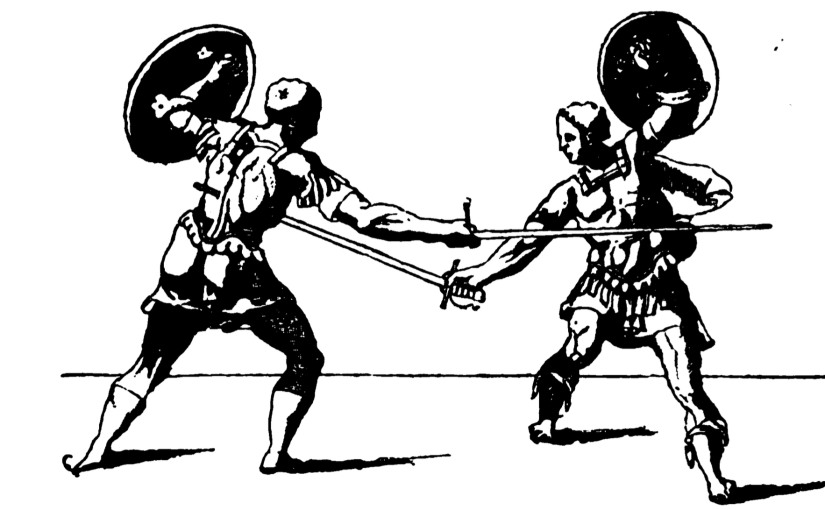
The origins of contemporary fencing must be found in Antiquity and medieval fighting methods. The swords used then were suitable as impact weapons and less so as stabbing weapons. The use of a shield to absorb the blow of a sword was widely accepted. Therefore, the warriors of the time were probably physically very strong. One cannot speak of true fencing.
During the Renaissance, the use of stabbing weapons came more to the foreround. Probably because firearms made their appearance and heavy armour was replaced by lighter clothing. With the change in clothing, the way of body-to-body combat was also adapted. Impact weapons were replaced by stabbing weapons.
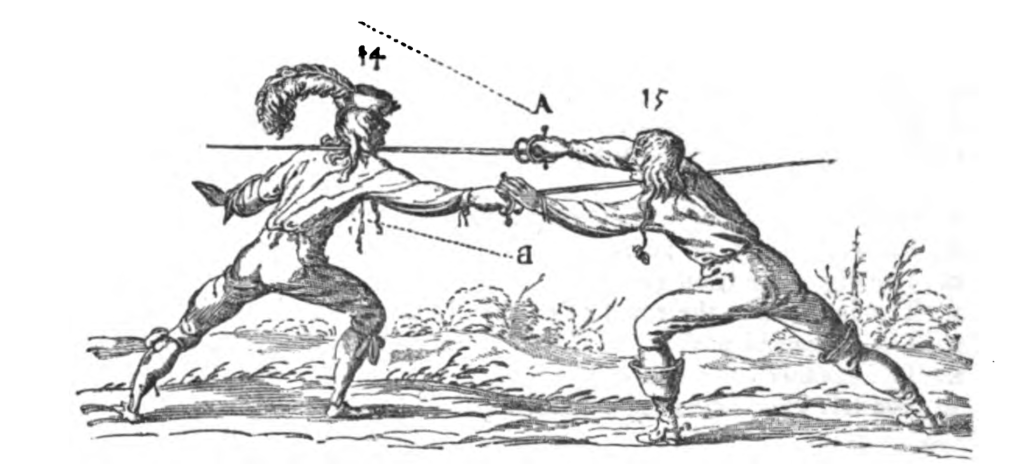
We do need to distinguish between civilian and military weaponry. The origins of modern fencing and the resulting stick fencing must be sought in civilian weaponry.
Civilian weaponry served 2 purposes:

  • Duel, an arranged engagement in combat between two people with matched weapons
  • Self-defense, about protecting yourself and your family against the hostile actions of criminals.

Dueling remained highly popular in European society, despite various attempts at banning the practice. From 1841 to 2000, Belgium had a criminal law on duelling.It offered reduced sentences for those who injured or killed someone during a duel.
The concept of ‘dueling’ can be found in numerous competitive martial arts styles.
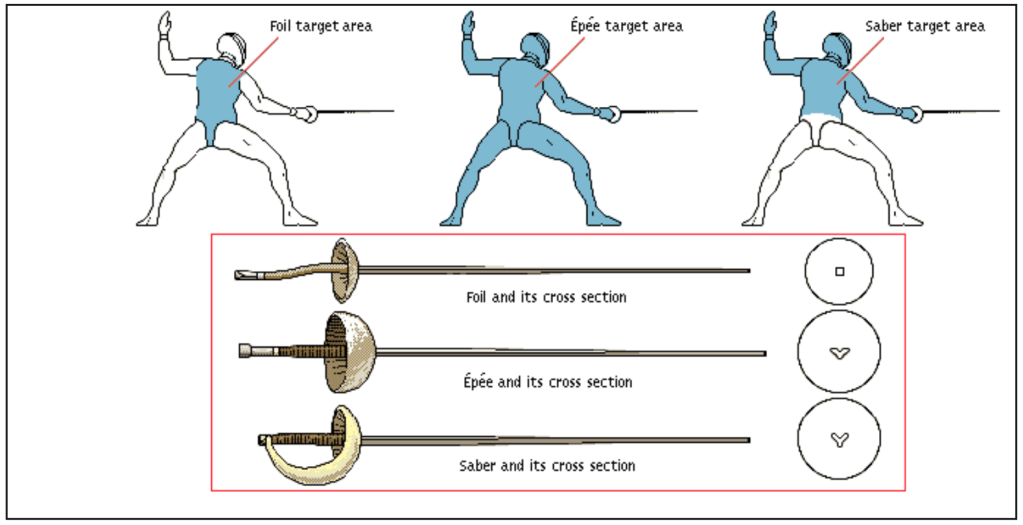
Today’s competitive fencing is largely based on a stabbing technique. Three types of weapons are promoted. Floret and epee are stabbing weapons, a sabre is a stabbing and impact weapon.

Stick fencing – La Canne

Stick fencing became popular in the 19th century as a result of the ban on carrying a sabre for civilians. Although a stick doesn’t have a sharp point or cutting edge, it still has the potential to kill or injure an adversary through its striking technique.

Stick fencing has several tendencies that can be derived from the different European fencing traditions. We distinguish between the German tradition, the Italian tradition, the Spanish tradition, and the French tradition. Despite regional distinctions, there have been many transfers between traditions in terms of technique and philosophy.
By the end of the 19th century, French traditions were the most prevalent methods. La Canne, as the French called their method, was part of a self-defence system that included French boxing. Outside the French language area, stick fencing can also be found.
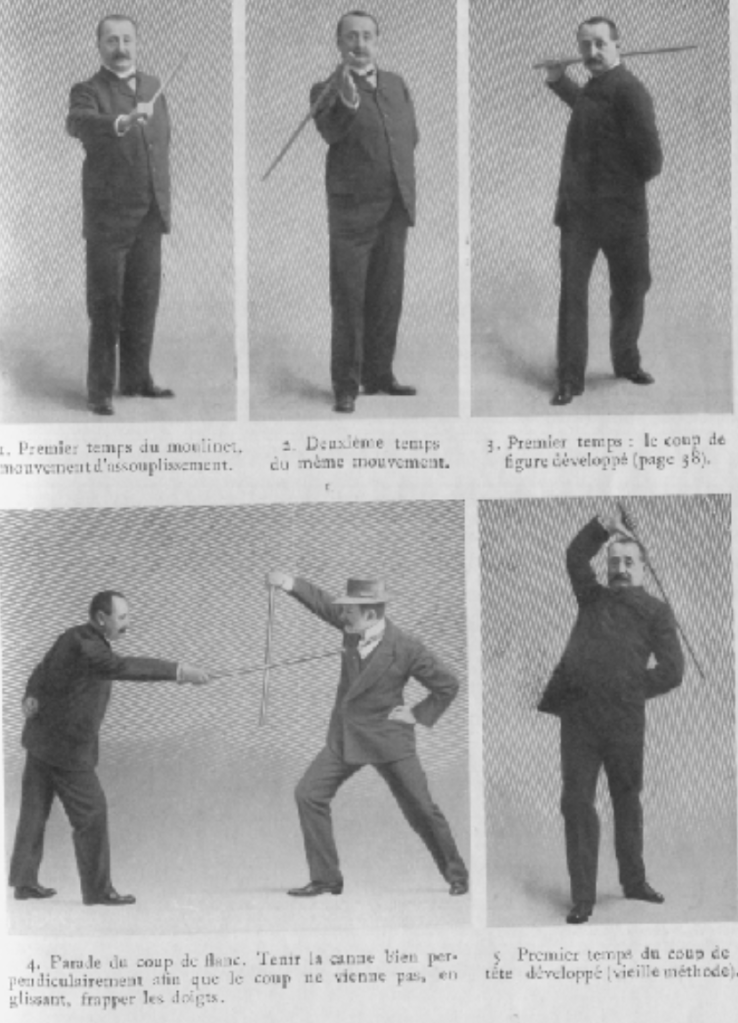

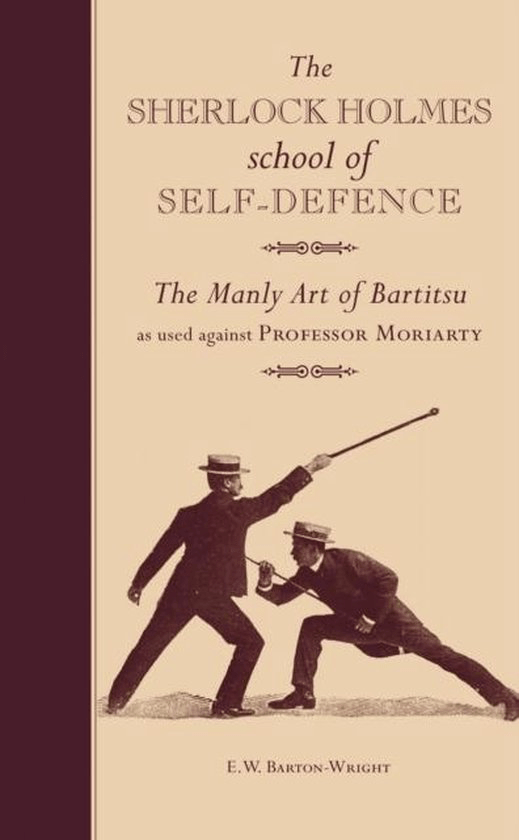
A popular version is the “Bartitsu stick fencing system”, an English method that gained fame thanks to Conan Doyle’s books featuring Sherlock Holmes as the main character. The stick fencing component has its origins in La Canne’s Vigny system, a method from the French-speaking region of Europe.
An upside-down world
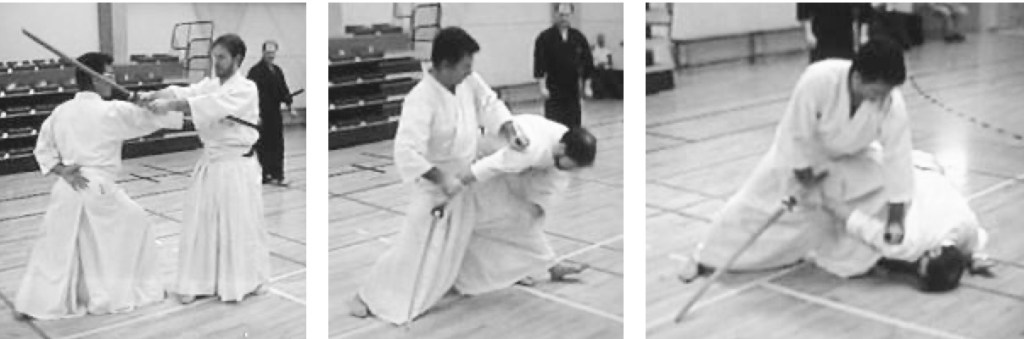
Of course, we cannot forget the Eastern traditions that found their way into the Western world of martial arts and martial arts in the 20th century. Despite the European influence in Tanjo Jutsu being denied by some Jojutsu practitioners, stances and striking technique share similarities.
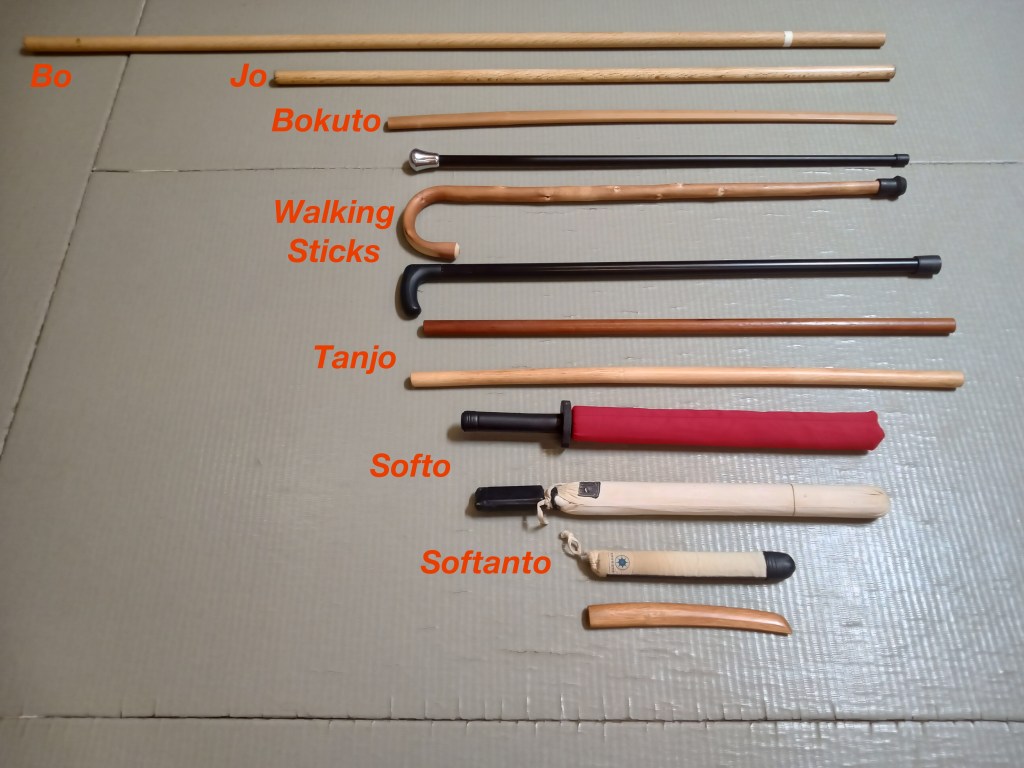
One notable tradition is Japanese Shindo Muso Ryu Jo-jutsu. This tradition promotes a form of stick fighting using as its central weapon the Jo, a stick about 130 cm long. In this tradition one finds the Uchida-Ryu Tanjo Jutsu, a method based on European walking stick fencing from the 19th century.

The link with Aikido
hdr

Aikido was created by Morihei Ueshiba’s students after the war. In most modern aikido systems, weapons are used in training. A cane or a walking stick belongs not to the traditional weaponry in aikido.
Nonetheless, a short stick was employed by a few of Ueshiba’s students in their training methods.

Kenji Tomiki, who created competitive aikido, also played a role in the creation of Goshi-jutsu no kata, which is a formal exercise in Kodokan Judo that has a self-defense section that involves the use of a short stick.

In the Tomiki Aikido training syllabus, a “Softo”, a short stick is used for example to practise “avoidance”.

Integrating a walking stick into your training requires a lot of study to determine which elements you would like to incorporate into your training. If your training is focusing on the sports side of Tomiki Aikido, practicing with a walking stick is a waste of time. As usual, there are no absolutes.
Le Combat de la Canne is a French competitive system with a stick that originated from the ‘La Canne’ methods for self-defense.

“La Canne” or the French Stick Fighting system

If the purpose of your training is to study practical elements for self-defense or aikido weapons training, practising with a walking stick can be very rewarding training supplement.
La Canne is build upon a more than 500 years experience of sword masters. Their knowledge is equal to that of the famous Japanese Swordmen.

Most of the La Canne methods have a similar syllabus that contains the following items.

  • Guards / Postures
  • Moulinets – Circling of the cane
  • Footwork
  • Striking, thrusting, ….
  • Parries
  • Combinations
  • Freeplay

A lot of attention is paid to:

  • Distance – 3 basic distances
  • Timing – 3 basic timings

The concepts of distance and timing are integral to Eastern martial arts. It can be said that they are the ‘essential concepts’ of all martial arts.


This concept can be practiced at different levels, with beginners generally moving slowly and not using powerful actions.

Are you intrigued?

The internet is a great place to find a lot of information. But fundamentally, practicing is the best solution.
For those who are interested, our group offers introductionary sessions.

The science of training

Primary movement patterns.

2895036Humans have several primary movement patterns that are learnt and refined throughout early life. Many of those primary movements are learnt by a baby without an example of another person. The baby has no role model.
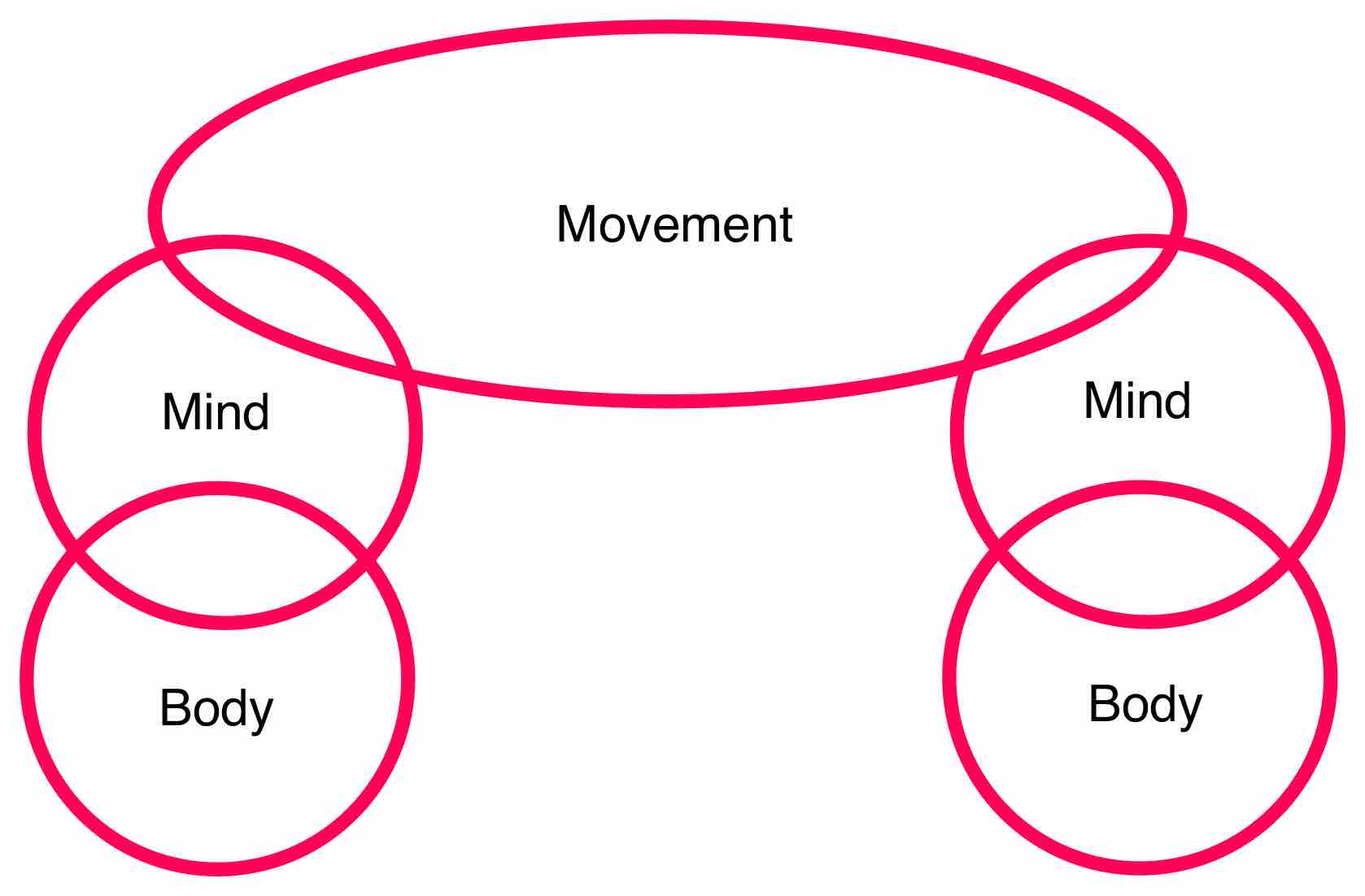
When the baby starts to discover other people movements, a mirroring process starts in the brain of the baby and copies the movements of other people. Refer to the book written by Marco Iacoboni.


During your early years of life, your brain records and refines several primary movement patterns that it will need again and again. These patterns, once ingrained, allow your brain to quickly put them in to action and modify them slightly as the environment dictates.

Learning or modifying basic movement patterns

Primary movement pattern is learned without a role model, basic movement pattern is learnt by using a role model like parent, other children…..Or martial arts instructors.
Using walking as an example. Your brain is recalling the basic pattern known as ‘gait’ and could modify this to uphill or downhill or over uneven surfaces or in a crowd with shorter steps than usual.

The patterns are used in many variations but in the brain, the basic movement pattern is always the same. So a strike with the hand-blade, a fist or a knife is a replica of a basic movement pattern in the brain. What changes is the speed at which they occur, the loading in the movement (due to the weight of a weapon), and other minor refinements (where the target is and the timing of the start of the movement).
With a basic movement pattern the relative timing of the body segments stays the same. So, in striking with the hand-blade, if the action took one second the timing and sequencing of the joint movements would all be proportional to that one second. If in a strike with a weapon, the action took half a second the timing and sequencing of the joint movements would still be in the same proportion as in the hand-blade strike.

This allows us to ‘slow down’ and perfect a movement if someone is having a hard time with it, and as if by magic, when we speed the movement up again the improved movement should prevail. This is one reason that getting it right is more important than getting it done. The purity of the movement greatly increases the forces that can eventually be developed and can significantly reduce the injury risk simultaneously.

0.5 seconds for the mind to recognise what has occurred

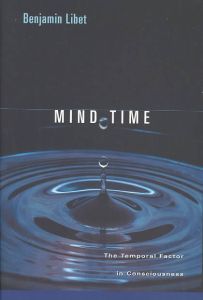
libet bookBenjamin Libet states in his book, “Mind Time: The Temporal Factor in Consciousness (Perspectives in Cognitive Neuroscience),” that it takes 0.5 seconds for the mind to recognise what has occurred.
When someone attacks you, you usually try to defend with your hands, but this is just a conditioned response. However, if you enter into your opponent as your opponent is about to attack, your opponent will be turned back on himself and his attack will suddenly stop. This is because you are entering in before 0.5 seconds and entering the unconscious mind of your opponent. That is why you can control your opponent. Once your pre-0.5 seconds unconscious mind is controlled, you cannot break free from that condition. Usually, after 0.5 seconds, both you and your opponent are in the conscious world, and because such pre-conscious control will not work, it will become a simple exchange of power and technique.

Sen or pre-emptive action

5 rings011There is only “one” pre-emptive action, but we discern three types in pre-emptive action.
• One is a pre-emptive action from me to the opponent, and it is called the active pre-emptive action.
• Another is a pre-emptive action when the opponent is to strike me, and it is called the reactive pre-emptive action.
• The last is a pre-emptive action when both the opponent and I are to strike each other, and it is called the interactive pre-emptive action.

There are no other type in pre-emptive actions.
A pre-emptive action is the decisive factor in victory, it is the most crucial in martial arts.
There are many details in a pre-emptive action, but as it is up to the logic of the moment and you need to see the mind of the opponent and use the skill of martial arts to win.
In the “Fire” book (The book of 5 Rings) by Musashi Miyamoto, you will find a similar explanation.

Chikara wo Nuku 力を抜く

In a Japanese dojo, you hear sometimes the expression. Chikara wo Nuku. Chikara means power or force. Nuku means to pull out or withdraw. You may hear for example `katana wo nuku`, to pull out (unsheathe) your sword. It means start of the action.
The “chikara wo nuku” concept is not only important in martial arts but also in everyday life when there is friction between 2 people. Finding the timing to remove the tension is a skill very useful for quarrelling people. There is also an expression when a fighting couple makes up, moto no saya ni osomatta – the sword is sheathed back in its scabbard.

Chikara wo nuku is the ability to drop or release power in a proper manner and timing when you feel resistance in an exchange with the opponent. In toshu randori (unarmed randori), you can either create a tension or pressure and release it or you receive tension from your opponent and skilfully direct and release it. Properly executed, you can create moments of great surprise for your opponent. When the opponent is surprised, his power is often disrupted and creates moments of receptivity in him.

The function of muscles

The most serious mistake that people have about body movements is that they believe movements are primarily generated by conscious contractions because they have consciousness and muscle.
Basically there are 2 kind of using muscles in the training for Tomiki Aikido.

• bridging the distance
• manipulation of opponent

Bridging the distance

In bridging the distance, the function of muscles is not to generate the main power of body movements, but to trigger the start a movement (to lose balance) by using gravity, to control it (to create new balance), and to redirect into the opponent. Using gravity is an economic way of using energy and is certainly according Kano’s maxim :

“Seiryoku-Zenyo” (maximum efficient use of energy)


Manipulation of the opponent

Manipulation of the opponent is the result of the body communication by using the concept of “sen” or initiative.
Besides “sen”, we must also consider the distance between the 2 bodies. The attack of the opponent has to be controlled by using “mikiri” or the manipulation of the distance by an extremely thin margin. This action of control must be very precise. By using the tenshikei skill we can transmit our power into the opponent.
Pulling or tensing the muscles will destroy the capacity of listening to the communication of the 2 bodies

autopietic system

Jukozo – Flexible structure – Tensegrity

Tomiki wrote many articles and books about Budo, mostly Judo and Aikido. In his writings, but also in his lectures he stressed a lot “shizentai” or natural posture.
Shizentai is a posture neither limp or neither rigid. From shizentai we can move in any direction. If someone is pushing we can move away without changing the distance in our relationship with the opponent or partner.
Flexibility is a concept prevalent in all parts of Japanese society. Even in Japanese architecture, flexible structure is a basic concept due to the many earthquakes.
The old temples were built on a principle of flexi­bility, with thousands of interconnecting wooden parts that absorbed and dissipated the force of an earthquake as it traveled up and down the structure. Unfortunately this concept was overlooked by early 1900 Japanese architects until there was a major earthquake in 1923. From a modern architectural perspective flexible structure or “jukozo” was a revolutionary concept, and reinvented by Japanese archi­tects as the only defence against earthquakes.
In Western society, tensional integrity or floating compression is a similar concept (see Tensegrity on Wikipedia).
In martial arts, skill of “jukozo” or the interconnecting parts of the human body is one of the basic premises of study from the beginning in your training. Jukozo is direct related to “rendo” (interlinked movements) which will be discussed later.

Soft-Tissue-Therapy-Tensegrity-Structure1-e1426098026118  tensegritty01