written and/or compiled by Eddy Wolput °1948 – 7th dan Aikido (JAA-Tokyo/Japan) – 5th dan Iaido – 5th dan Jodo. Part of the material in this article is not directly linked to the Japan Aikido Association (NPO) program or Shodokan approach. Other concepts are incorporated into the study of the subject presented.
There has been a lot of controversy surrounding the idea of cross-training in martial arts. Cross-training is rejected by traditionalists in particular. Nonetheless, cross-training can provide valuable insight into the art of fighting. When talking about cross-training in martial arts, grappling arts are frequently mentioned. But we can also cross-train in combat systems with weapons.
Fencing
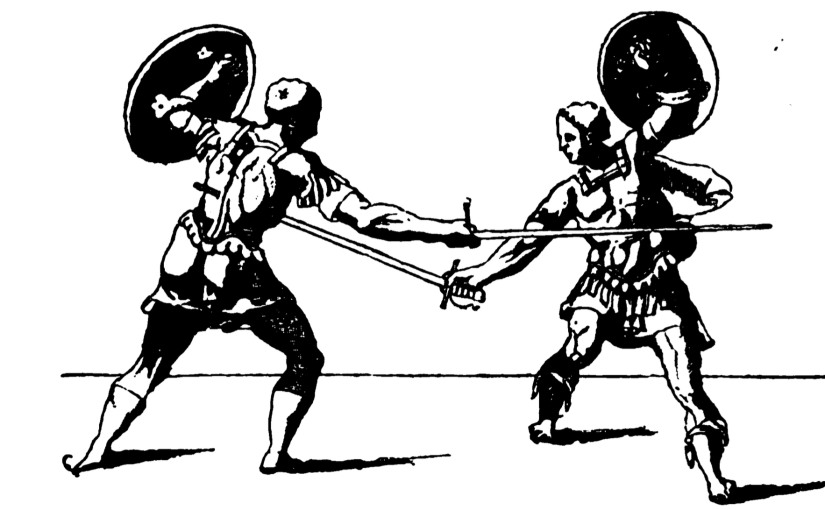
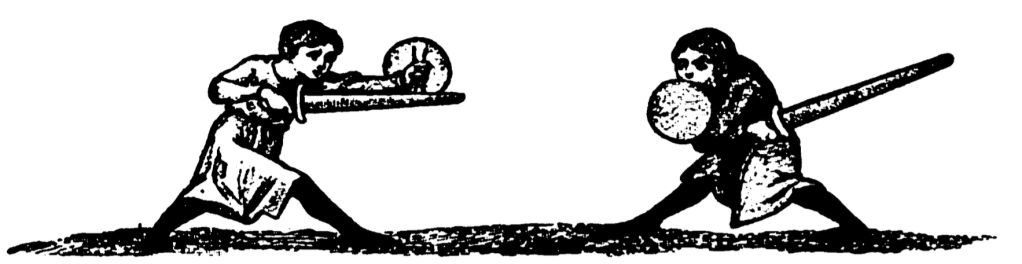
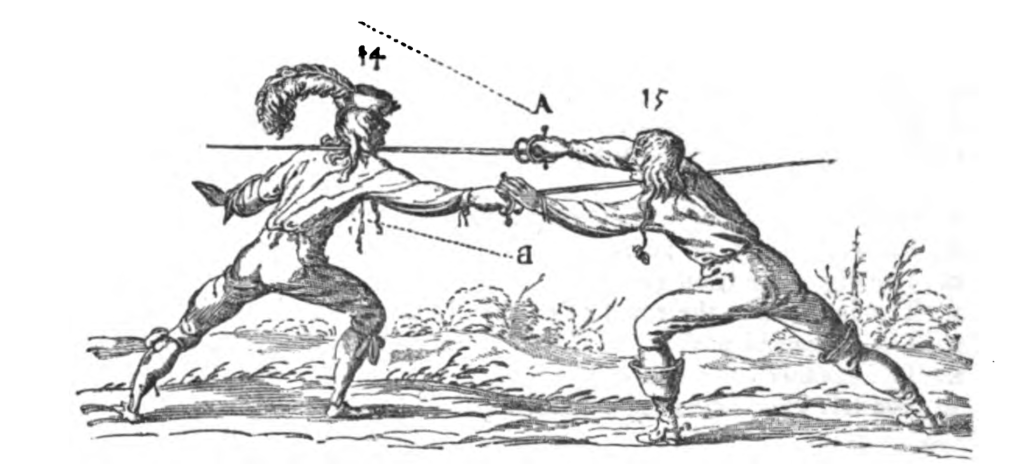
The origins of contemporary fencing must be found in Antiquity and medieval fighting methods. The swords used then were suitable as impact weapons and less so as stabbing weapons. The use of a shield to absorb the blow of a sword was widely accepted. Therefore, the warriors of the time were probably physically very strong. One cannot speak of true fencing. During the Renaissance, the use of stabbing weapons came more to the foreround. Probably because firearms made their appearance and heavy armour was replaced by lighter clothing. With the change in clothing, the way of body-to-body combat was also adapted. Impact weapons were replaced by stabbing weapons.
We do need to distinguish between civilian and military weaponry. The origins of modern fencing and the resulting stick fencing must be sought in civilian weaponry. Civilian weaponry served 2 purposes:
Duel, an arranged engagement in combat between two people with matched weapons
Self-defense, about protecting yourself and your family against the hostile actions of criminals.
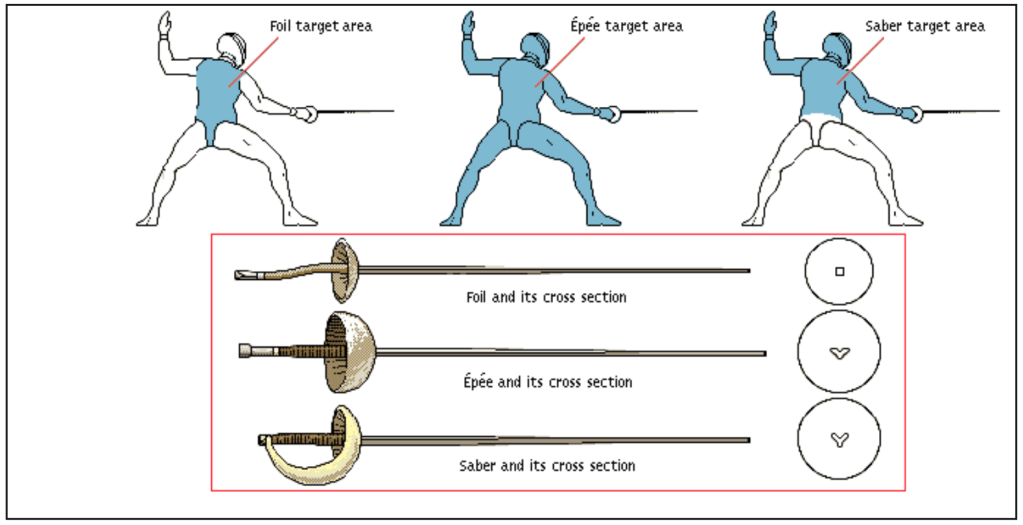
Dueling remained highly popular in European society, despite various attempts at banning the practice. From 1841 to 2000, Belgium had a criminal law on duelling.It offered reduced sentences for those who injured or killed someone during a duel. The concept of ‘dueling’ can be found in numerous competitive martial arts styles. Today’s competitive fencing is largely based on a stabbing technique. Three types of weapons are promoted. Floret and epee are stabbing weapons, a sabre is a stabbing and impact weapon.
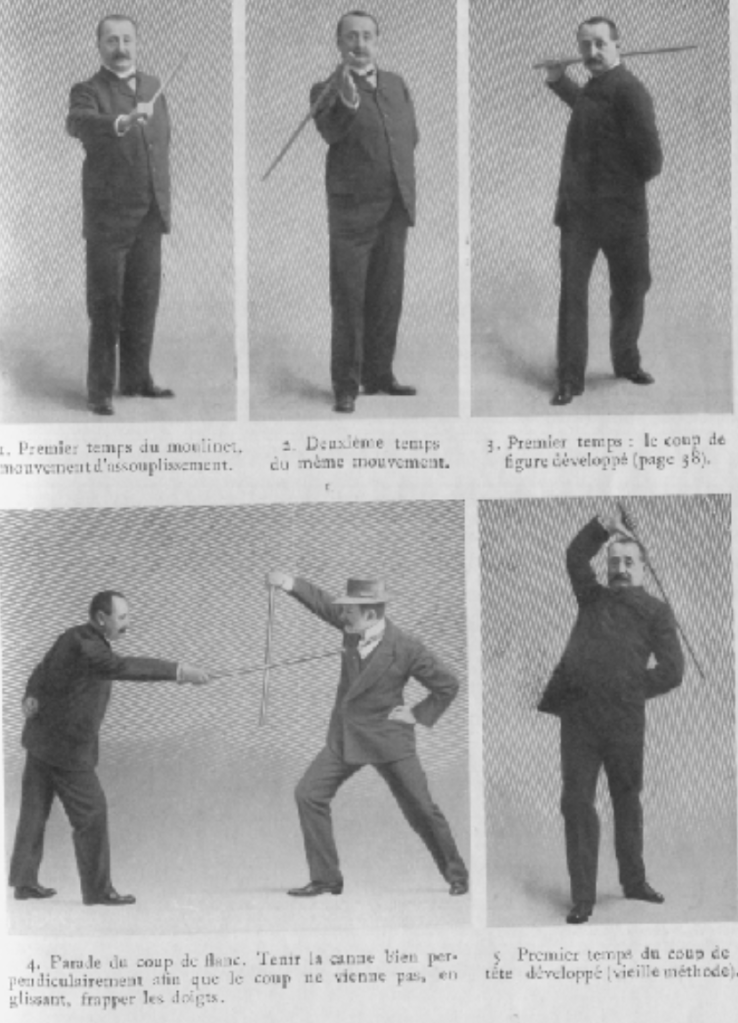
Stick fencing – La Canne
Stick fencing became popular in the 19th century as a result of the ban on carrying a sabre for civilians. Although a stick doesn’t have a sharp point or cutting edge, it still has the potential to kill or injure an adversary through its striking technique.
Stick fencing has several tendencies that can be derived from the different European fencing traditions. We distinguish between the German tradition, the Italian tradition, the Spanish tradition, and the French tradition. Despite regional distinctions, there have been many transfers between traditions in terms of technique and philosophy. By the end of the 19th century, French traditions were the most prevalent methods. La Canne, as the French called their method, was part of a self-defence system that included French boxing. Outside the French language area, stick fencing can also be found.
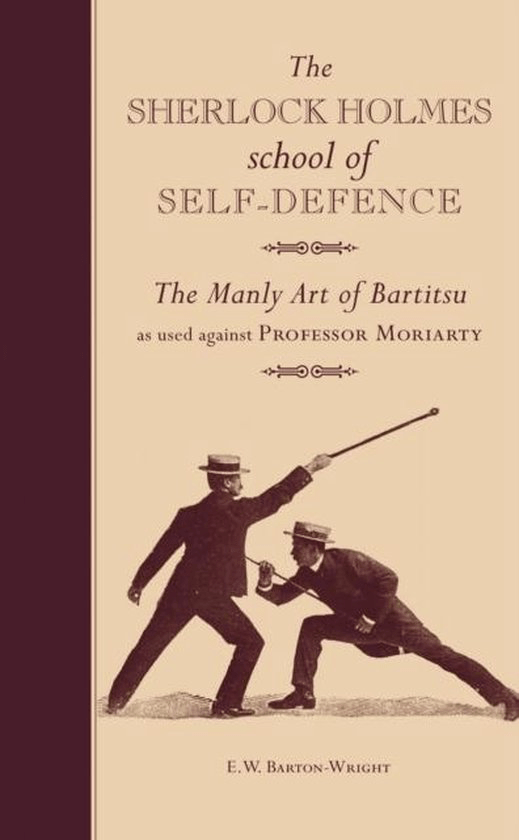
A popular version is the “Bartitsu stick fencing system”, an English method that gained fame thanks to Conan Doyle’s books featuring Sherlock Holmes as the main character. The stick fencing component has its origins in La Canne’s Vigny system, a method from the French-speaking region of Europe.
An upside-down world
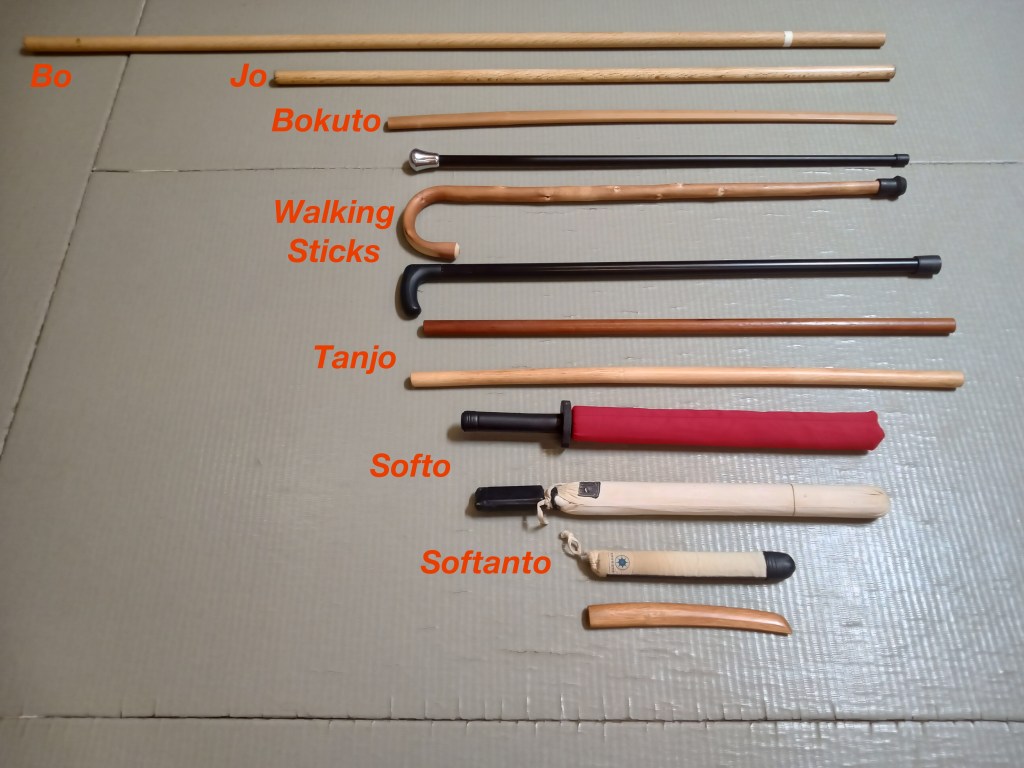
Of course, we cannot forget the Eastern traditions that found their way into the Western world of martial arts and martial arts in the 20th century. Despite the European influence in Tanjo Jutsu being denied by some Jojutsu practitioners, stances and striking technique share similarities. One notable tradition is Japanese Shindo Muso Ryu Jo-jutsu. This tradition promotes a form of stick fighting using as its central weapon the Jo, a stick about 130 cm long. In this tradition one finds the Uchida-Ryu Tanjo Jutsu, a method based on European walking stick fencing from the 19th century.
The link with Aikido
hdr
Aikido was created by Morihei Ueshiba’s students after the war. In most modern aikido systems, weapons are used in training. A cane or a walking stick belongs not to the traditional weaponry in aikido. Nonetheless, a short stick was employed by a few of Ueshiba’s students in their training methods.
Kenji Tomiki, who created competitive aikido, also played a role in the creation of Goshi-jutsu no kata, which is a formal exercise in Kodokan Judo that has a self-defense section that involves the use of a short stick.
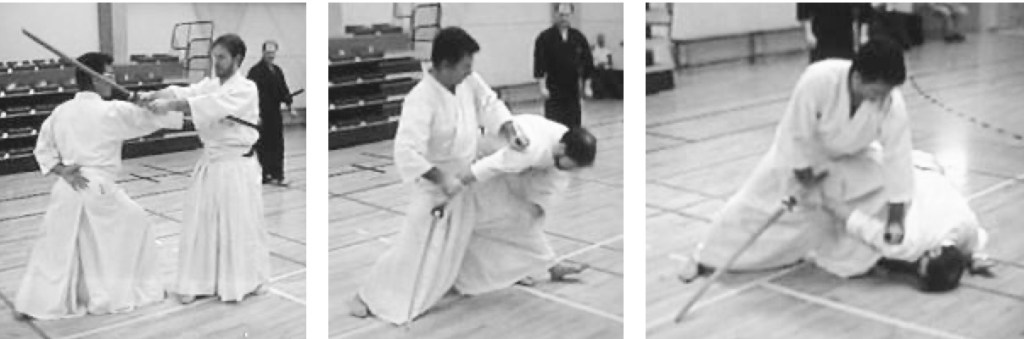
In the Tomiki Aikido training syllabus, a “Softo”, a short stick is used for example to practise “avoidance”.
Integrating a walking stick into your training requires a lot of study to determine which elements you would like to incorporate into your training. If your training is focusing on the sports side of Tomiki Aikido, practicing with a walking stick is a waste of time. As usual, there are no absolutes. Le Combat de la Canne is a French competitive system with a stick that originated from the ‘La Canne’ methods for self-defense.
“La Canne” or the French Stick Fighting system
If the purpose of your training is to study practical elements for self-defense or aikido weapons training, practising with a walking stick can be very rewarding training supplement. La Canne is build upon a more than 500 years experience of sword masters. Their knowledge is equal to that of the famous Japanese Swordmen.
Most of the La Canne methods have a similar syllabus that contains the following items.
Guards / Postures
Moulinets – Circling of the cane
Footwork
Striking, thrusting, ….
Parries
Combinations
Freeplay
A lot of attention is paid to:
Distance – 3 basic distances
Timing – 3 basic timings
The concepts of distance and timing are integral to Eastern martial arts. It can be said that they are the ‘essential concepts’ of all martial arts.
This concept can be practiced at different levels, with beginners generally moving slowly and not using powerful actions.
Are you intrigued?
The internet is a great place to find a lot of information. But fundamentally, practicing is the best solution. For those who are interested, our group offers introductionary sessions.
Martial arts marketing mainly emphasizes the idea of winning against a much stronger opponent. This idea is enforced by a clever training system that has rules and limitations for the attacker. A competing format tries to break out of those limitations. Unfortunately, the competitive format to become safe requires limitations and rules. The study and training in a martial art occur in a specially equipped hall. For Japanese martial arts, the training hall is called a dojo. Dojo training is not comparable to a hostile environment in the real world. Your belief that a competitive format will significantly improve your self-defense abilities is incorrect. A problem with many competitive martial arts is that they continuously assume the conditions of mutual combat. Before starting the fight, the opponents are identified and lined up at a comfortable distance.
It’s important to remember the physical and mental aspects of good health. In order to survive in the arena, it’s important to be in good shape and have practiced the technical and tactical aspects of competitive fighting.
The reality on the street is totally different. Your attacker is not following the rules that govern the competition format. Your body and mind are conditioned by rules and limitations. Self-defence courses emphasize the idea of running away from potential conflicts rather than engaging in physical combat. In the event that your condition is not good, what is the outcome? Can you run away? Are you fully prepared for the confrontation? Your limitations are highlighted by those questions.
Performance-oriented
Our society’s foundation is performance. If you cannot fulfill this concept, you will always be considered a member of the lower class. Religions are also using this concept. Entering Paradise is possible if you adhere to the rules set by the religious leaders.
Martial arts are not excluded from this concept. In certain martial arts, their founders are treated as gods and their successors are treated similarly. Certainly, some founders have the ability to excel in the field of martial arts. To become such a skilled martial practitioner, they lived a life based on training for both the mind and body.
Is it possible to become a skilled warrior in our society while maintaining a family relationship and performing well in your occupation for a living? The chance to become a military or police officer is not available to everyone.
Your limitations
Physical and mental limitations
Social limitations
Educational limitations
Fat-belly syndrome
Other
Most of the limitations are interwoven and cannot be separated from each other. If you see the founder of your martial art as a godlike person, your way of thinking will be restricted by the dogmas outspoken by the founder and the successors. Dogmas can restrict your search to the truth in martial arts. Of course, if there is a truth in martial arts.
We cannot forget, most of the founders had a life as a professional martial art practitioner and their training was almost a full-time job. Most of us have a responsibility to our family and social environment. These limitations, we have to accept, we cannot become at the same level as a professional martial art practitioner.
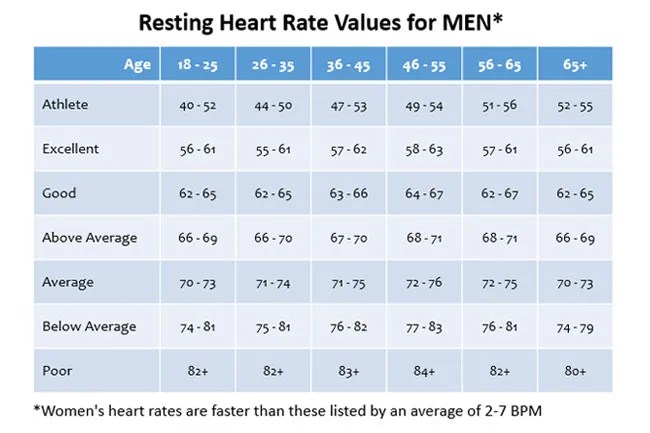
Physical and mental limitations are no excuses for not practising. Laziness are being often the origin of so-called physical limitations. But each physical training program must be adapted to the real limitations of the practitioner. We cannot expect the same performance from a 80 yr old person compared to a 20 yr old practitioner. Performing always at the maximum heartbeat is not healthy, especially for older practitioners. Knowing your heartbeat is a key to excellent performing taking into account the limitations of your age and condition.
Using a smart watch or other device to measure your heartbeat can be helpful to find out something about your condition when performing for example solo-exercises with or without a weapon.
You can estimate your maximum heart rate based on your age. To estimate your maximum age-related heart rate, subtract your age from 220. For example, for a 50-year-old person, the estimated maximum age-related heart rate would be calculated as 220–50 years = 170 beats per minute (bpm). A 20-year-old person would be 220-20 years= 200 BPM.
When you know your max heart rate, you can calculate the BPM for efficient exercising.
Target heart rate zones are five ranges of heart rates that generally determine how much effort a person is putting forth in their exercise.
Heart rate zones vary from person to person—someone who is younger or more physically active will have different target zones than a person who is older or currently less physically active—so they’re described as percentages of maximum heart rate.
Zone 1 – moderate to low intensity, at 50 to 60 percent of maximum heart rate
Zone 2 – moderate intensity, at 60 to 70 percent of maximum heart rate
Zone 3 – moderate to high intensity, at 70 to 80 percent of maximum heart rate
Zone 4 – high intensity, at 80 to 90 percent of maximum heart rate
Zone 5 – very high intensity, at 90 to 100 percent of maximum heart rate
Educational limitations
Not every martial art has an extensive educational program, some of them are very limited and physical. Others are very wide organized and require a lot of mental energy. Maybe, the martial art you practise has a very profound mental educational program. But you are very loyal to the group or teacher, but you like to practise more physical. This is your problem, not the system’s problem, and you have to solve it. You can look around for a more physical method or you can use your creativity and a good conversation with the teacher to find a solution for your problem.
The fat-belly syndrome limitation
There was a time when I was accumulating too much fat in the belly. A fat-belly is of course a limitation in proper martial art training. Some people with this syndrome will tell you about developing a powerful hara. Of course, this is only an excuse for not participating in a physical training program adapted to the person in question. After changing a bad habit of eating and drinking, my well developed hara disappeared and my training became more vigorous.
Knowing your limitations
We can detect a lot of more limitations, but deep in our heart we really know our limitations and we must adapt our training. Sometimes, you will find out remarks made by others about your performance. Those remarks can be very positive, but can have also a huge negative impact on your training. Especially social media is a well known source of negative influence.
Knowing your limitations is the path to “well-being”.
Dan ranks are mass produced these days and they no longer prove any real skill level or proficiency.
Around 1880, Jigoro Kano started transforming his Jujutsu method into what is now referred to as Judo. At the same time, a movement was underway to transform Kenjutsu into a competitive martial art called Kendo. Kano gave some of his students their first rank “Shodan” in 1883.
To standardize and nationalize the martial arts, the Dai Nippon Butoku Kai (1895) was established. The Dai Nippon Butoku Kai awarded titles (Shogo) such as Renshi, Kyoshi, and Hanshi in Shogo. Later, the system of Dan-ranking was introduced. The DAN-I (段位), a ranking system borrowed from GO or Japanese Chess was obviously heavily influenced by the system used in Judo that was instigated by Kano and used at Kodokan. Shogo (称号) in Japanese translates simply as “title” or “rank,” and the word can be used in many areas, for example formal titles of nobility, military ranks, scholarly ranks, etc, and informally in the sporting world, between friends, etc. Renshi was promoted to 4th-5th Dans, Kyoshi was promoted to 7th Dans, and Hanshi was promoted to 8th-9th Dans. The Shogo and Dan ranks were not automatically linked. Some were awarded Dan grades but not Shogo, while others were awarded Shogo but not Dan grades.
After the Dai Nippon Butoku Kai was dissolved as a result of defeat in WWII in 1946, the Dai Nippon Butoku Kai was reestablished again in 1953. Even though the same name organization was established it is not related to the original Dai Nihon Butoku Kai though they probably wish to claim as such as the prewar organization received a lot of respect and honor as it was sponsored by the Japanese government. The current organization is no longer well known or large in membership as it is only a private organization without any sponsorship from the government.
Shodan, most important rank
初段 Shodan: The meaning of the first kanji “first time, beginning”, the second kanji “grade, steps, stairs”. Is it a mistake to translate “shodan” as “first dan – black belt”? Literally it is a mistake, but it is not a mistake because it is the first “dan” you can receive.
1917: Kenjutsu, starts using the Dan-i system similar to judo. At this point the system went only as far as godan, after that the titles of seirensho (renshi), kyoshi, and hanshi are awarded. In 1919, the Dai Nippon Butoku Kai changed the name Kenjutsu into Kendo.
The dan-i system was gradually adopted by other martial arts, including Aikido, which Morehei Ueshiba adopted around 1940. Some of Ueshiba’s senior students were quickly promoted to high dan grades, e.g. Kenji Tomiki 富木 謙治 was awarded the first ever 8th dan in the same year.
It is very difficult to find out level-explanation. Most of the dan-ranking requirements are just a list of techniques, kata and/or getting points by entering shiai. Nevertheles, some Martial Arts can give you a glimpse of the differentiating in the dan-levels. For example Japanese Archery. Someone who starts Kyudo has to shoot the arrow into the target. Someone of a high level has to shoot the arrow in the same target. Fundamentally there is no difference, both they shoot the arrow.
Kyudo – Japanese Archery
Shodan: The shooting form (Shakei) and the formal movement (Taihai) should be consistent with the standard form. There should not be disarray in the placing of the arrows (Yadokoro).
Nidan: Both the shooting form (Shakei) and formal movement (Taihai) should have good arrangement with evidence of spiritual energy (Kiryoku) in the application of the shooting technique (Shajitsu). There should be less uncertainty in the placing of the arrows (Yadokoro).
Sandan: The shooting form (Shakei) is better established and the formal movement (Taihai) is more stable. The breathing is ordered and the application of the shooting technique (Shajitsu) follows the principles of shooting (Shaho). The arrow should fly straight and there should be more consistency in hitting the Mato (Tekichu).
Yondan: The shooting form (Shakei) is better established and the formal movement (Taihai) is more stable. There should be correct breathing, the application of the shooting technique (Shajitsu) should be consistent with the principles of shooting (Shaho) and Hanare should be sharp. Consistency should be reached in hitting the Mato (Tekichu).
Godan: The shooting form (Shakei), the shooting technique (Shajitsu) and the formal movement (Taihai) should be consistent with the principles of shooting (Shaho) and refinement (Shahin) should be apparent. In particular, progress should be shown over the previous levels.
Rokudan: Shooting form (Shakei), shooting technique (Shajitsu), and formal movement (Taihai) have reached the stage of excellence. The shooting shows a high level of refinement (Shahin).
Nanadan: Shooting form (Shakei), shooting technique (Shajitsu), and formal movement (Taihai) are evident naturally in the body. The shooting has reached a high level of refinement (Shahin) and mastery.
Hachidan: There should be perfection in the technique, the highest level of refinement (Shahin) and embodiment of skill in the art of shooting.
Kyudan: The truth of Kyudo should be transparent.
Judan: 😉
Shodo – Non-Martial Arts Dan-Ranking
Shodo 書道, sometimes also called shuji 習字, is one of Japan’s oldest traditional art forms. It is the art of Japanese Calligraphy and can be translated into something like “the path of writing”. It transforms kanji, the Japanese script based on Chinese punctuation marks, into true works of art. The point is to put the kanji on paper as beautifully as possible. Each kanji consists of several “strokes” that must be placed in the correct order and in the correct manner. Pay attention to the length and width of your strokes, the way they extend, connect, and flow into each other.
In most of the Shodo schools, they use the concepts of “fundamentals”, “beginners model” and “advanced models”. Models are basically different kinds of scrips how to paint the kanji, hiragana and katakana, the 3 diiferent methods of Japanese writing.
To be graded to shodan, you must master the fundamentals of Shodo and make a painting based upon the beginners model. From shodan students must start painting kaisho script using the advanced model, instead of the beginner’s model. From sandan students can start using the reisho and tensho styles. Also, from sandan students may submit works to the shoyuu gallery (書友ギャラリー), which is a relatively free form opportunity. The gallery model is only words in printed text: the submitting artist must decide which style to use.
As with Martial Arts, Shodo has several schools and styles and each of them are using different models in their dan-i system. But every school is painting the kanji, the hiragana and the katakana. Fundamentally it is like Kyudo, everybody is shooting the arrow.
Aikido, a generic term
The definition of Aikido will be shaped by the question of who created it. There are those who claim that Aikido was created by Morihei Ueshiba, while others will talk about Sokaku Takeda. Some of the followers of those teachers created their own system. In most cases the name Aikido was used to identify their method.
The word “Aikido” must be regarded as a generic term for all “Yawara” based method. The list did not include Kodokan Judo, which was considered a unique martial art. Of course, some methods are not using the term Aikido and prefer other terms like “Aiki (Ju) Jutsu”. The name Aikido is adopted around 1940 by the Dai Nippon Butoku Kai. After WW2. In an interview with Minoru Hirai (Korido Ryu) and member of Ueshiba’s dojo the following is about choosing the name “Aikido”
(Stanley Pranin with Minoru Hirai).« “Aikido,” rather than being a specifically selected name, was the term used to refer to “Butokukai-Ryu” aiki budo within the Dai Nippon Butokukai. The headquarters of the Dai Nippon Butokukai was located in Kyoto and Butokuden centers were set up in all prefectures. Tatsuo Hisatomi from the Kodokan, and Shohei Fujinuma from kendo, were close friends of mine. The Butokukai was an independent, umbrella organization for the martial arts, and it also was in charge of martial arts in the police departments. It was very difficult to create a new section in the Butokukai at that time. Mr. Hisatomi proposed the establishment of a new section including arts for actual fighting based on jujutsu techniques. The techniques of yawara (an alternate term for jujutsu) are comprehensive and also include the use of the ken and jo. I also made a number of suggestions and Mr. Fujinuma and Mr. Hisatomi understood my ideas. However, had I insisted on these things nothing would have been decided. There was discussion within the Butokukai about the choice of a name for this new section. It was discussed many times in meetings of the Board of Directors, and particularly in the judo and kendo sections. We had to consider all of the different individual arts encompassed when we tried to come up with an all-inclusive name. It was decided to select an inoffensive name to avoid future friction among the different martial arts. »
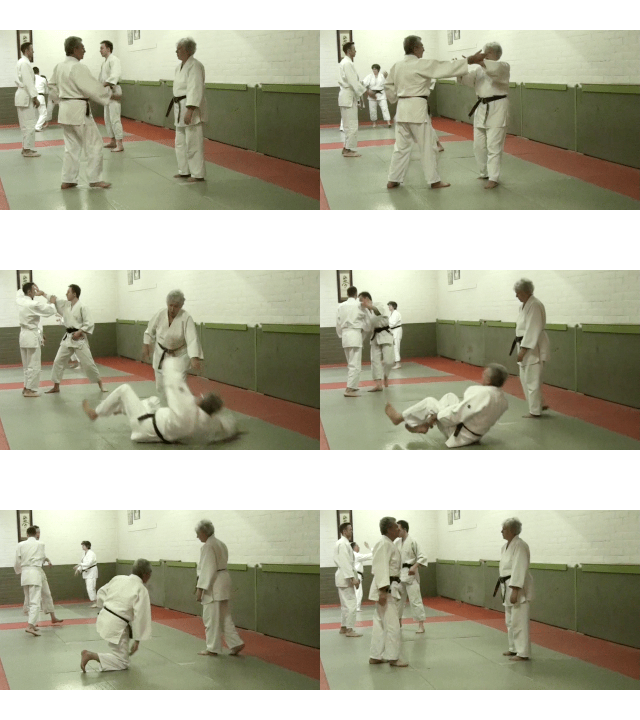
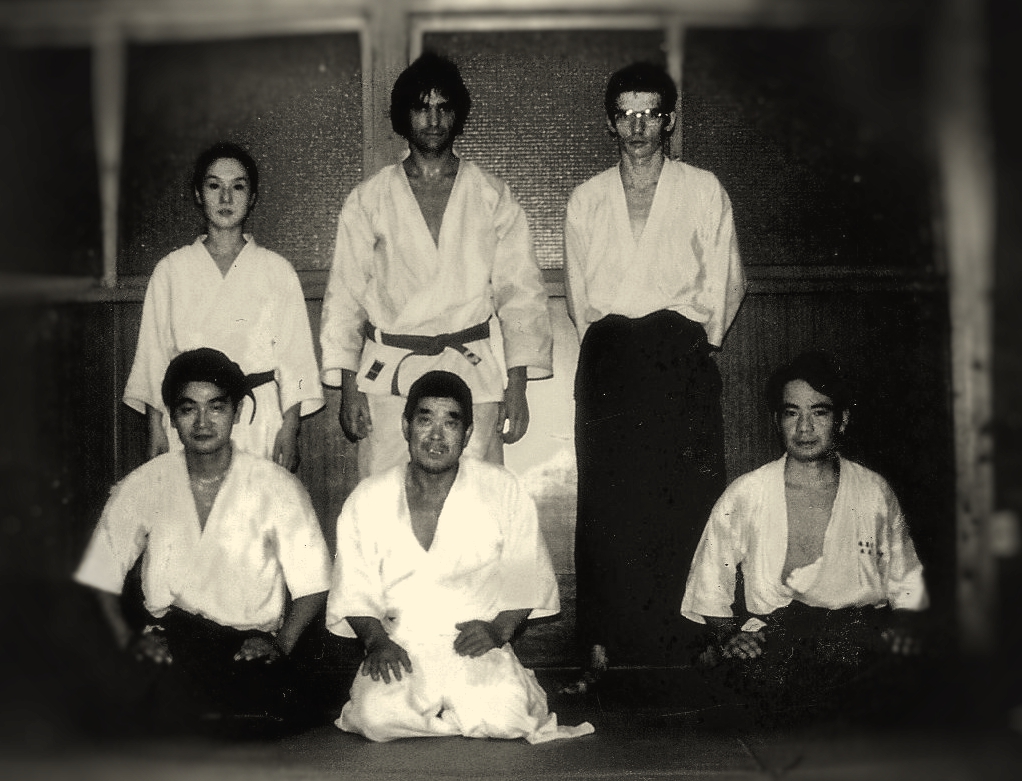
1976 – Practising Korindo Ryu “Aikido” with Hakamatsu Shihan at his private dojo in Shizuoka. Hakamatsu Shihan was a disciple of Minoru Hirai.
Aikido is typically promoted as a martial art and can be utilized for self-defense reasons. On the other hand Aikido became also popular as a method to create “harmony”. Regrettably, the word ‘harmony’ is poorly defined and frequently interpreted as a ‘new age’ concept.
Another form of Aikido is the controversial “Sports Aikido” system. A method for competing that utilizes the technical foundations of Aikido, influenced by Kodokan Judo and Sports Kendo.
Fundamentals of Aikido
The Dan-I system is being used as a ranking method in Aikido, just like other martial arts. To obtain the rank of Shodan, you must become proficient in the fundamentals of the art. The arts previously discussed, such as Shodo and Kyudo, also express this.
The fundamentals of Aikido must be based on how to use your mind and body under pressure in the environment. To perform at the best, your posture must be optimal and your mind must be focused on the task you are performing.
Tomiki’s Aikido Fundamentals
In Tomiki Aikido, the fundamentals are expressed through the concepts of:
Shizentai no ri – the concept of natural posture – a natural and unrestricted posture for attacking and defensive actions
Ju no ri – the concept of defensive power – do not oppose the offensive power of attacker
Kuzushi no ri – the concept of disturbing balance – creating an opportunity to attack with as little force as possible
The methods of kata and randori are employed to demonstrate these concepts.
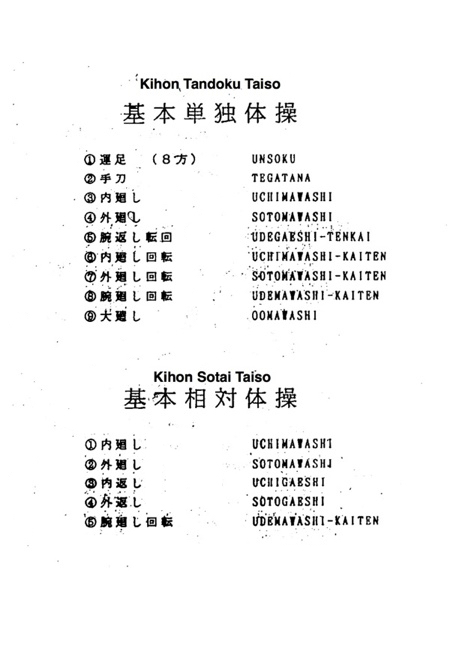
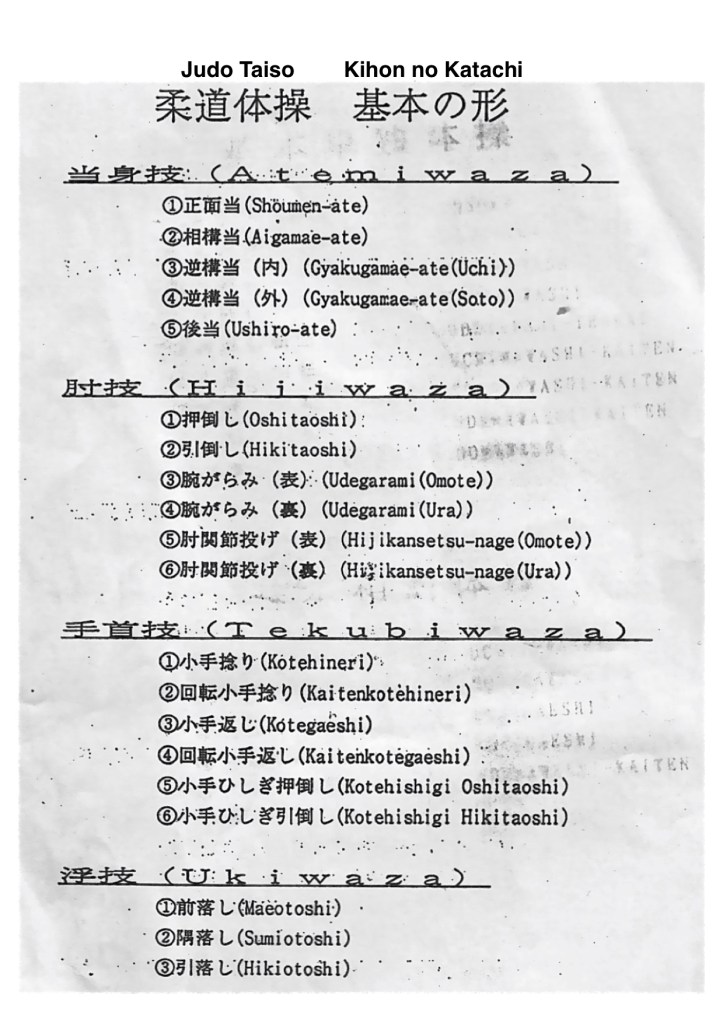
An example of an early Tomiki Aikido Syllabus – Senta Yamada
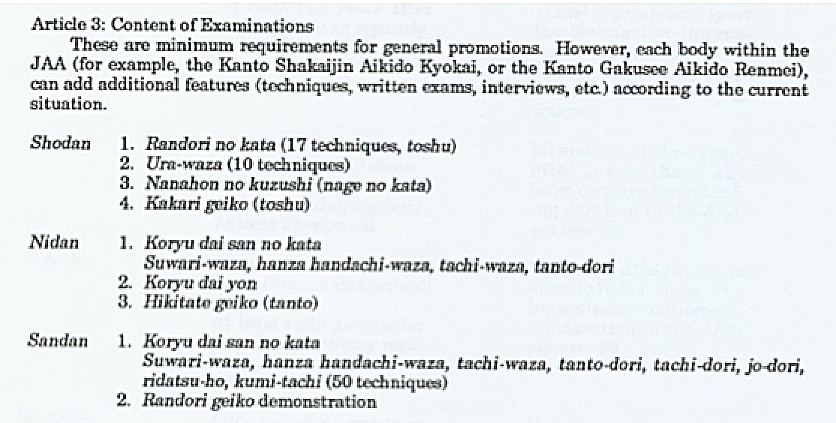
The JAA syllabus
Shodan is built around the randori concept in Tomiki Aikido. The Principles (shizentai no ri, ju no ri and kuzushi no ri) are an integral part of the grading demonstration. Nidan grading focuses on traditional pre-war techniques and a kata based on the concept of kuzushi. Demonstrating the randori concept requires the opponent to demonstrate a flexible resisting action. Sandan’s grading demonstration is based on pre-war techniques. Weapons such as tanto, bokuto, and jo are demonstrated at a fundamental level. The randori concept is demonstrated with a flexible resistance action by the opponent, who can try to take over the actions of the defender.
The Fundamental Principles are the core of the grading demonstration. Without these fundamentals, the candidate will be failed by the panel or examiner.
If a candidate wins 1st place in a major tournament, they can climb up in the dan-I ranking without a formal grading demonstration.
Higher levels are a matter of technical proficiency demonstration or promotion for special services.
The Dark Side of the Dan Ranking
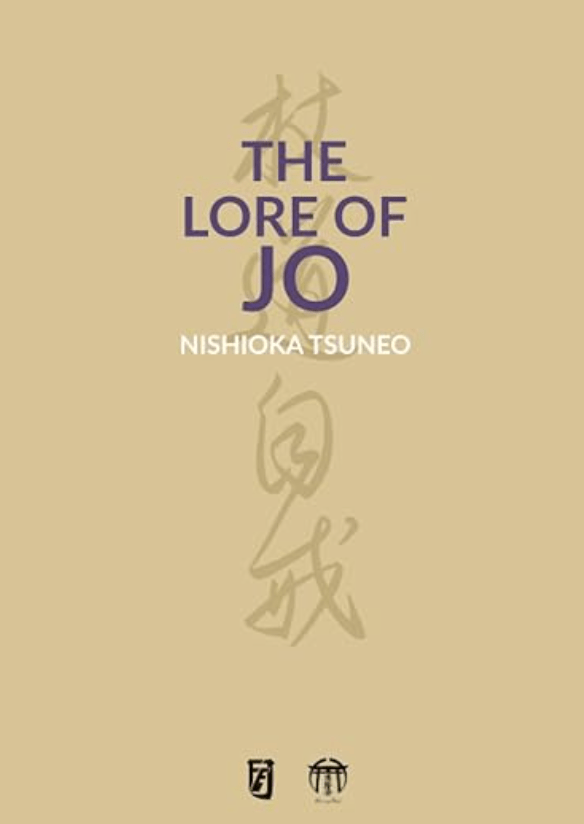
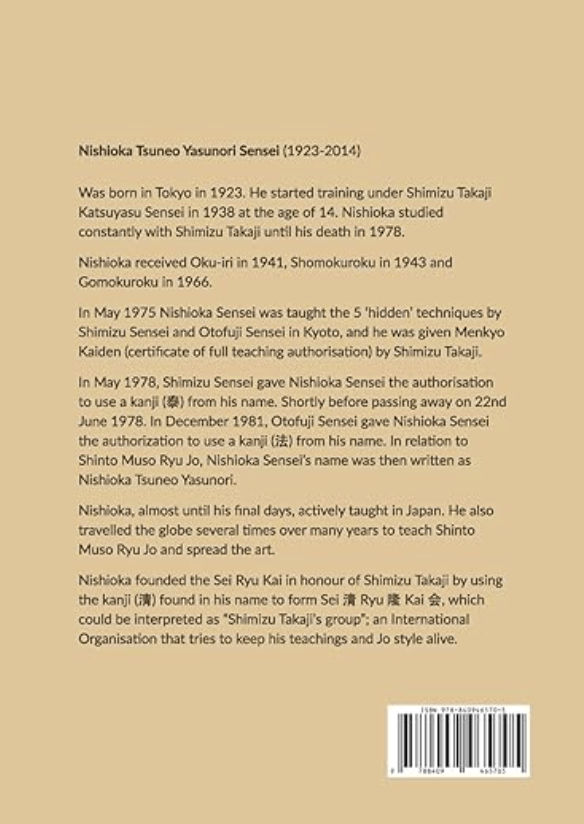
The Dan ranking system has a financial aspect. Promotion fees must be regarded as income for the organization. The organization’s prestige has a significant impact. Being promoted by a well-known organization is what most people prefer. Regrettably, this is not always a proof of understanding and skills. Nishioka Tsuneo’s book focuses on the compromised aspect of dan ranking.
A cure?
Finding a cure is not a problem. But accepting the cure is for most of the people the obstacle.
Do you have a passion for improving your skills? Your training is all about having enthusiasm. To enhance your skills, you need this secret ingredient. Even at a certain age, enthusiasm remains necessary.
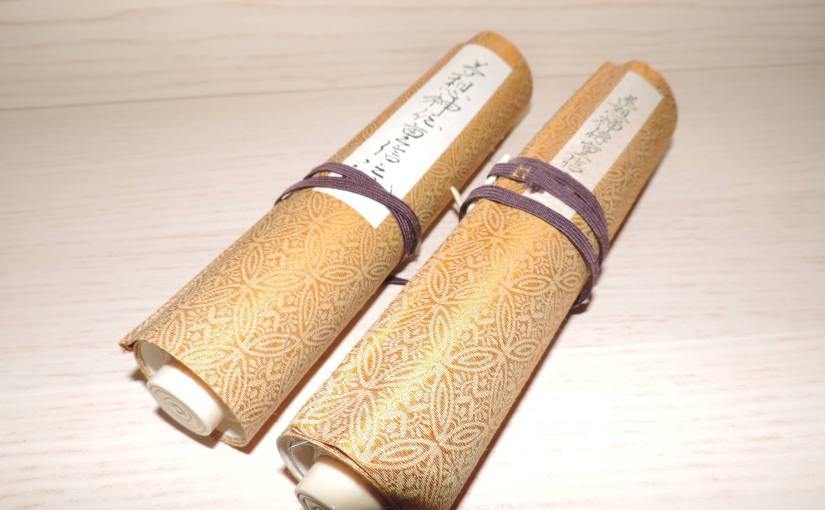
A piece of paper can look beautiful on your wall, but it is not guaranteed that you have the necessary skills to demonstrate your art.
 Study Group Tomiki Aikido