The Paradox of “Martial Arts” Without Combat

Introduction: Beyond the Mat – Exploring the Deeper Dimensions of Tomiki Aikido

It has been a while since I wrote about my thoughts on martial arts, particularly on Tomiki Aikido. Recent challenges regarding the use of Kenji Tomiki’s books as study tools have forced me to reconsider my involvement in this martial art. I find myself at a crossroads: I could simply disappear from the Tomiki Aikido scene, or I could take a different path—one that explores and articulates the ideas and concepts within Tomiki’s work that extend far beyond its competitive format.

This alternative approach views Tomiki Aikido not merely as a sport, but as a form of “performance art”—a practice that transcends the physical techniques and competitive aspects to touch something deeper about the nature of movement, conflict resolution, and human interaction. In this exploration, I aim to uncover the philosophical and artistic dimensions that make this martial art a vehicle for personal transformation and understanding.

Martial arts without Combat

The term “martial arts” contains an inherent contradiction that becomes increasingly apparent in modern practice. “Martial” derives from Mars, the Roman god of war, explicitly referencing violence and combat. Yet “art” suggests creativity, beauty, and human expression. This tension becomes acute when martial arts are practiced primarily as methods of self-defense, personal development, or artistic expression rather than actual combat preparation.

Does martial art belong to the realm of artistic experience, or is it fundamentally a sporting pursuit? From a purely functional standpoint, terms like “fighting system” or “combat method” might be more accurate, though these carry the negative associations of violence and aggression. However, when the fighting element is removed from “martial arts,” the functional foundation disappears entirely. What then remains of the original practice?

What remains when you remove the fighting:

1. Movement Philosophy

  • Acting without forcing
  • Spatial-temporal harmony
  • Aesthetic and spiritual concepts that transcend the functional origin

2. Physical Culture

  • Codified movement languages
  • Ritual movement forms
  • Aesthetics of precision, power, and grace

3. Philosophical Concepts

  • Ethical codes in movement
  • Contemplation through repetition
  • Meditation in action

The Core of the Question

When you remove the fighting, an abstracted movement language remains – just as abstract painting no longer depicts “things” but becomes pure form.

The Different Approaches

Eastern Traditions

Eastern martial arts often owe their popularity to the abstracted movement language where movement is central and the functional aspect is a vague reflection of the original fighting method. As examples, we can mention Taichi, Aikido and Iaido. These movement forms still retain a vague perception of what was once a deadly fighting method. The functionality that must be characteristic of an efficient fighting method has practically disappeared entirely.

Performance Art

Performance art is a temporal, physical artistic practice in which the artist themselves is the primary medium. The body becomes a living artwork, time becomes material, and the liveness of the moment is essential.

Performance art remains radical because it resists the commodification of art by placing presence and temporality at its center. It is art that only exists in the moment of the encounter between performer and audience.

Demonstration Sport

Characteristics:

  • Competitive but functionally not focused on efficiency in combat
  • Spectacular for the audience through acrobatic actions
  • Technical virtuosity in choreographed sequences
  • Cultural legitimacy by referencing the origin

Sport Logic:

  • Standardized rules and scoring systems
  • Comparable performances
  • Objective measurement systems

The Delusion of Efficiency in Martial Arts

A critical issue emerges when examining the claims of effectiveness made by various martial arts systems. It is important to distinguish dangerous-and-efficient fighting from safe-and-inefficient fighting, so that practitioners can easily understand what kind of activity they are engaging with, and can have realistic expectations about the effectiveness of it.

Many traditional martial arts that have undergone philosophical transformation continue to claim combat effectiveness while simultaneously removing the very elements that made them functional in real conflict. This creates a fundamental contradiction: systems marketed as “self-defense” or “martial arts” that have been systematically stripped of their martial applications.

The efficiency paradox manifests in several ways:

  • Traditional forms performed with combat narratives despite having no pressure-testing against resistance
  • Demonstration techniques that work only under choreographed conditions being presented as combat-applicable
  • Philosophical frameworks used to justify the absence of realistic training while maintaining claims of martial effectiveness
  • Cultural authority substituting for empirical verification of techniques

This delusion becomes problematic when practitioners genuinely believe they possess fighting skills that have never been tested under realistic conditions. The transformation from functional fighting system to performance art or personal development practice is legitimate, but the continued claims of combat effectiveness without corresponding training methodologies represents a fundamental misrepresentation of the art’s capabilities.

Do you like testing this way?

Some martial arts advertise a method useful for the street—brutal techniques tested and approved. The question arises in this case: are you ready to perform such a cruel action?

Mushin Mugamae? What huh?

Mushin Mugamae is a Japanese expression often used in the context of Tomiki’s Aikido. It is usually translated as ’empty mind, no posture’. 

But is this really the case? We need to understand and describe this expression in a much broader context.

A summary of the comments made by Kenji Tomiki regarding Mushin Mugamae


“No mind” (“mushin” 無心) represents the highest mental state in human cultivation. It must be the ultimate goal of martial arts, which reaches the “path” (“michi” 道) through “technique” (“waza” 技). Making martial arts competitive and establishing an arena for winning and losing is an educational “place” to learn “no mind” by transcending victory and defeat. However, competition comes with limitations. One tends to fixate on stances, drift toward specialized techniques, and forget the ideal of “no stance” (“mukamae” 無構). To learn “no stance,” one must repeatedly train in the correct “kata” (形) that emphasize self-defense.Emphasizing kata practice not only approaches the essence of martial arts and avoids the pitfalls of competition but also meets the needs of lifelong physical education in the coming era and greatly benefits the maintenance and promotion of national health through martial arts.

When we read and translate texts by Kenji Tomiki, we will certainly notice that he often uses the same parts of texts in different essays on Japanese martial arts. It is important for us to understand the purpose of the frequent repetition of an explanation of his concepts. Some of the texts (in Japanese) are available at:

(https://www.jstage.jst.go.jp/static/pages/JstageOverview/-char/en)

Translation and understanding confusion

When translating and trying to understand “mushin mugamae”, there is confusion when trying to understand this expression without the necessary background.

Mushin

In the context of martial arts, “無心” (mushin) is a profound concept that translates to “no-mindedness” or “no-mind.” It represents a mental state where the mind is free from distractions, fears, and ego, allowing for instinctive and fluid reactions. This state is highly valued in martial arts because it enables practitioners to respond naturally and effectively to any situation without hesitation or overthinking.

In Martial Arts:

  • Focus and Clarity: Mushin allows martial artists to act with complete focus and clarity, unhindered by conscious thought or emotion. This state is often achieved through rigorous training and meditation, where the practitioner learns to quiet the mind and trust their instincts.
  • Spontaneity: In combat or sparring, mushin enables spontaneous and intuitive movements, making the practitioner more adaptable and unpredictable to opponents.
  • Unity of Mind and Body: It signifies a harmonious unity between the mind and body, where actions flow naturally without conscious interference.

In a Broader Context:

  • Mindfulness and Presence: Beyond martial arts, mushin can be applied to daily life as a state of mindfulness and presence. It encourages living in the moment, fully engaged with the current task or experience without being distracted by past regrets or future anxieties.
  • Flow State: Mushin is akin to the concept of “flow” in psychology, where a person is fully immersed and focused on an activity, leading to a sense of effortless concentration and enjoyment.
  • Creativity and Problem-Solving: In creative endeavors or problem-solving, mushin can help individuals approach challenges with an open and uncluttered mind, leading to innovative solutions and expressions.
  • Emotional Balance: It promotes emotional balance and resilience, helping individuals manage stress and maintain composure in challenging situations.

In essence, mushin is a state of mental clarity and readiness that transcends the boundaries of martial arts, offering valuable insights and benefits for personal growth, creativity, and overall well-being.

Mugamae – Mukamae – Mukō

The term “無構” (mukamae) is composed of two kanji characters:

  1. 無 (Mu): This character means “nothingness,” “none,” or “without.” It represents the absence of something or a state of emptiness.
  2. 構 (Kamae): This character means “posture” or “stance.” In martial arts, “kamae” refers to the physical and mental readiness or posture that a practitioner adopts.

Together, “無構” (mukamae) can be interpreted as a state of “no posture” or “no fixed stance.” This concept is rooted in Japanese martial arts and Zen philosophy, emphasizing a mental and physical state of readiness without preconceived notions or rigid positions. It signifies being prepared for any situation without being confined to a specific form or expectation, allowing for fluid and adaptive responses.

But here is where the confusion comes in:

In martial arts contexts, the term 無構 can be read as either “mukamae” or “mukō”, depending on the specific tradition and context:

  1. “Mukamae” (無構え) – This reading is more commonly used in martial arts discussions about posture and stance. It literally means “no stance” or “no posture” and refers to a state where the practitioner has transcended formal stances, achieving a natural readiness that isn’t fixed in any particular form. In this context, it’s often written with the final え (e) as 無構え to clarify the pronunciation.
  2. “Mukō” (無構) – This alternate reading is sometimes used in more philosophical contexts, particularly in certain traditions of kenjutsu (sword techniques). It maintains the same fundamental meaning of “no predetermined form” but might be emphasized differently depending on the school.

無構 or 無構え

In his texts, Tomiki often uses the abbreviated form 無構 rather than the more explicitly pronounced 無構え when discussing this concept.

This is significant because:

  1. Tomiki is deliberately using the classical, condensed form 無構 that appears in traditional martial arts texts, particularly those from sword schools like the “Book of Five Rings” (五輪書, Gorin no Sho) which he references. This connects his ideas directly to historical martial traditions.
  2. Despite the abbreviated written form, the concept should still be understood as “mukamae” in pronunciation and meaning – referring to the state of “no stance” or transcending fixed postures.
  3. This writing choice reflects Tomiki’s deep connection to traditional martial arts literature while developing his modern perspective on martial arts education.

When Tomiki discusses 無構 (mukamae), he’s emphasizing the paradoxical nature of martial arts mastery – that the highest level of technique appears to have no technique, and the most effective stance appears to have no stance. This aligns with his broader philosophy of moving from form to formlessness, and from technique (waza) to way (michi).

The abbreviated writing style also reflects classical Japanese scholarly tradition, where concepts were often written in condensed form with the understanding that practitioners would know the proper reading and full implications. This approach is consistent with Tomiki’s position as both an innovator and a preserver of traditional martial arts knowledge.

Cross-training in Martial Arts

There has been a lot of controversy surrounding the idea of cross-training in martial arts. Cross-training is rejected by traditionalists in particular. Nonetheless, cross-training can provide valuable insight into the art of fighting.
When talking about cross-training in martial arts, grappling arts are frequently mentioned. But we can also cross-train in combat systems with weapons.

Fencing


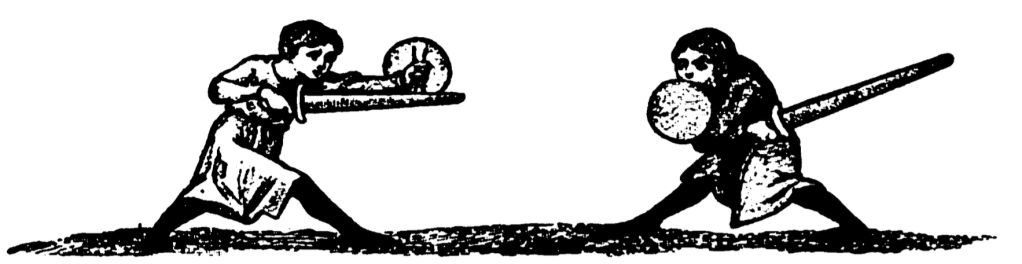
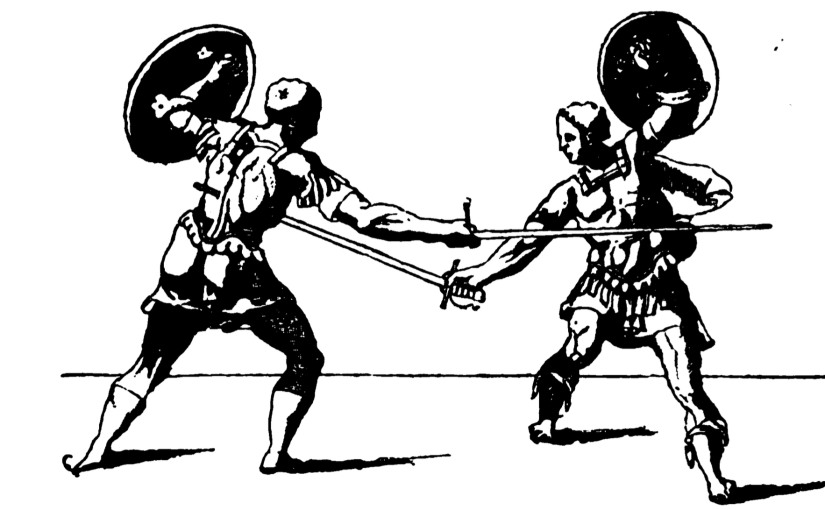
The origins of contemporary fencing must be found in Antiquity and medieval fighting methods. The swords used then were suitable as impact weapons and less so as stabbing weapons. The use of a shield to absorb the blow of a sword was widely accepted. Therefore, the warriors of the time were probably physically very strong. One cannot speak of true fencing.
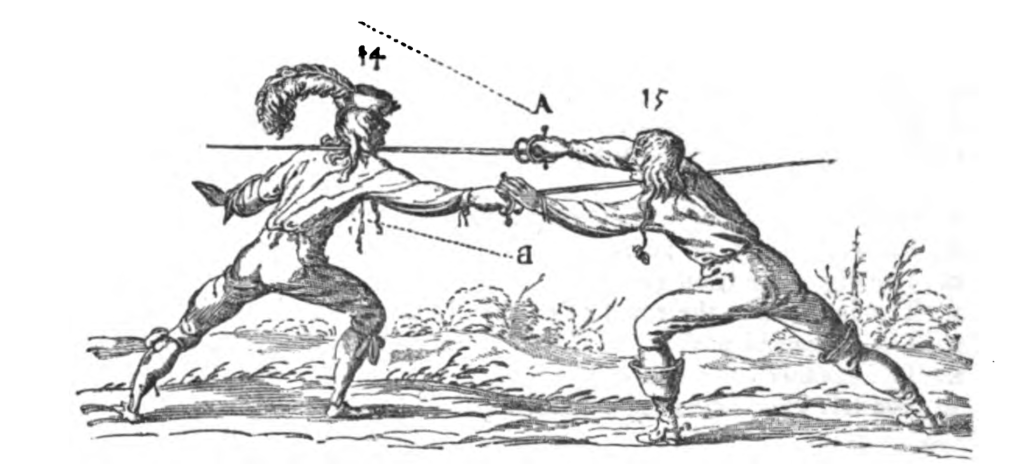
During the Renaissance, the use of stabbing weapons came more to the foreround. Probably because firearms made their appearance and heavy armour was replaced by lighter clothing. With the change in clothing, the way of body-to-body combat was also adapted. Impact weapons were replaced by stabbing weapons.

We do need to distinguish between civilian and military weaponry. The origins of modern fencing and the resulting stick fencing must be sought in civilian weaponry.
Civilian weaponry served 2 purposes:

  • Duel, an arranged engagement in combat between two people with matched weapons
  • Self-defense, about protecting yourself and your family against the hostile actions of criminals.

Dueling remained highly popular in European society, despite various attempts at banning the practice. From 1841 to 2000, Belgium had a criminal law on duelling.It offered reduced sentences for those who injured or killed someone during a duel.
The concept of ‘dueling’ can be found in numerous competitive martial arts styles.
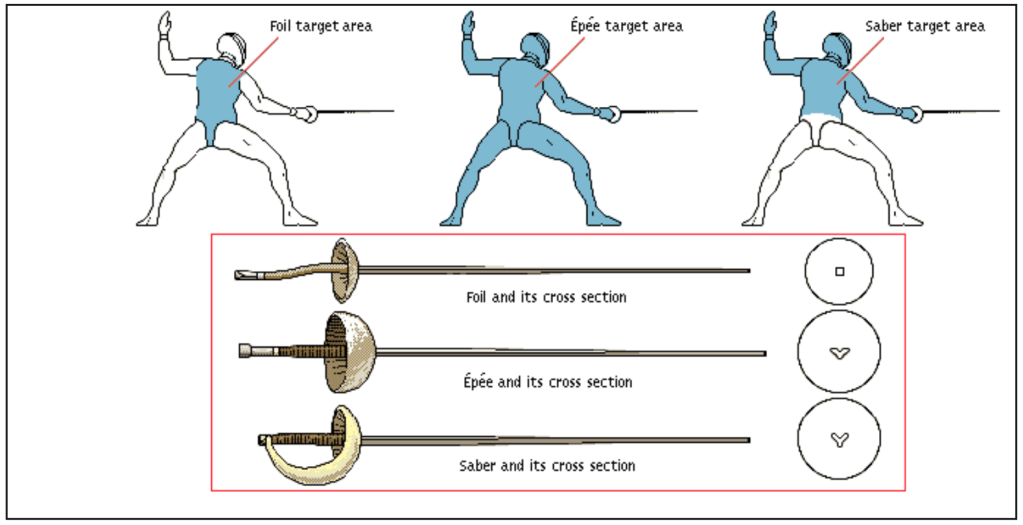
Today’s competitive fencing is largely based on a stabbing technique. Three types of weapons are promoted. Floret and epee are stabbing weapons, a sabre is a stabbing and impact weapon.


Stick fencing – La Canne

Stick fencing became popular in the 19th century as a result of the ban on carrying a sabre for civilians. Although a stick doesn’t have a sharp point or cutting edge, it still has the potential to kill or injure an adversary through its striking technique.

Stick fencing has several tendencies that can be derived from the different European fencing traditions. We distinguish between the German tradition, the Italian tradition, the Spanish tradition, and the French tradition. Despite regional distinctions, there have been many transfers between traditions in terms of technique and philosophy.
By the end of the 19th century, French traditions were the most prevalent methods. La Canne, as the French called their method, was part of a self-defence system that included French boxing. Outside the French language area, stick fencing can also be found.


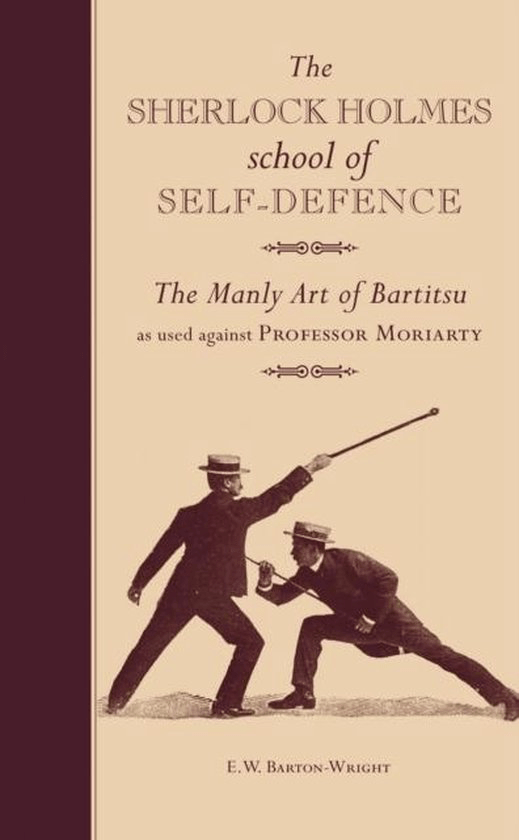
A popular version is the “Bartitsu stick fencing system”, an English method that gained fame thanks to Conan Doyle’s books featuring Sherlock Holmes as the main character. The stick fencing component has its origins in La Canne’s Vigny system, a method from the French-speaking region of Europe.

An upside-down world

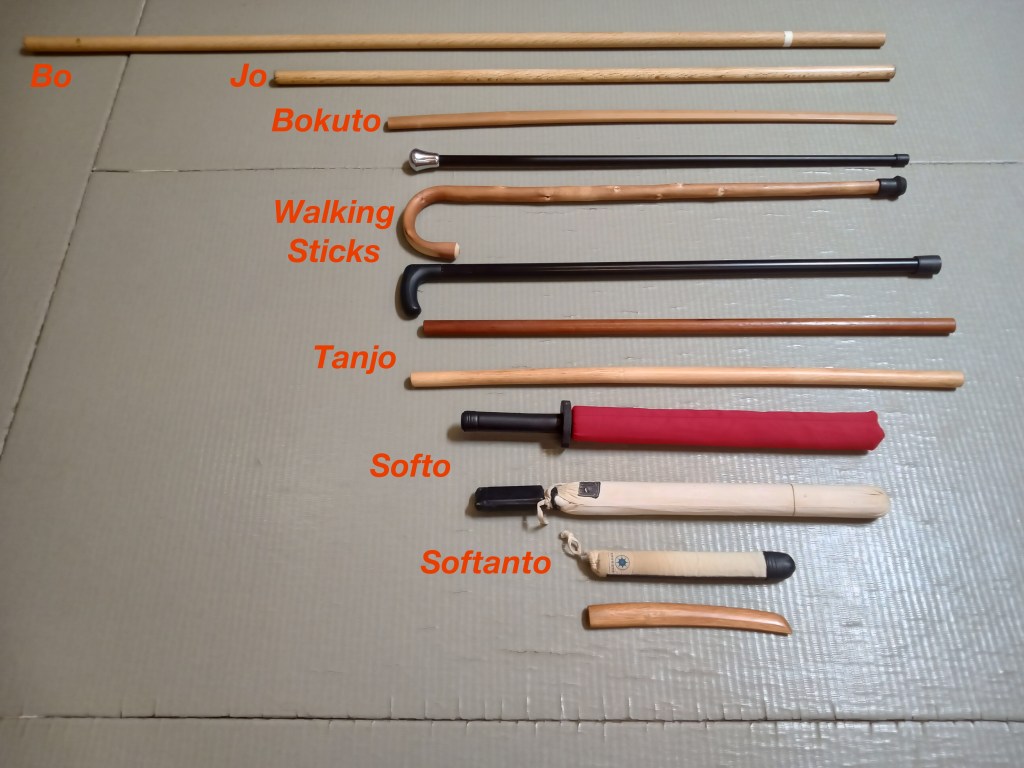
Of course, we cannot forget the Eastern traditions that found their way into the Western world of martial arts and martial arts in the 20th century. Despite the European influence in Tanjo Jutsu being denied by some Jojutsu practitioners, stances and striking technique share similarities.
One notable tradition is Japanese Shindo Muso Ryu Jo-jutsu. This tradition promotes a form of stick fighting using as its central weapon the Jo, a stick about 130 cm long. In this tradition one finds the Uchida-Ryu Tanjo Jutsu, a method based on European walking stick fencing from the 19th century.

The link with Aikido

hdr

Aikido was created by Morihei Ueshiba’s students after the war. In most modern aikido systems, weapons are used in training. A cane or a walking stick belongs not to the traditional weaponry in aikido.
Nonetheless, a short stick was employed by a few of Ueshiba’s students in their training methods.

Kenji Tomiki, who created competitive aikido, also played a role in the creation of Goshi-jutsu no kata, which is a formal exercise in Kodokan Judo that has a self-defense section that involves the use of a short stick.

In the Tomiki Aikido training syllabus, a “Softo”, a short stick is used for example to practise “avoidance”.

Integrating a walking stick into your training requires a lot of study to determine which elements you would like to incorporate into your training. If your training is focusing on the sports side of Tomiki Aikido, practicing with a walking stick is a waste of time. As usual, there are no absolutes.
Le Combat de la Canne is a French competitive system with a stick that originated from the ‘La Canne’ methods for self-defense.

“La Canne” or the French Stick Fighting system

If the purpose of your training is to study practical elements for self-defense or aikido weapons training, practising with a walking stick can be very rewarding training supplement.
La Canne is build upon a more than 500 years experience of sword masters. Their knowledge is equal to that of the famous Japanese Swordmen.

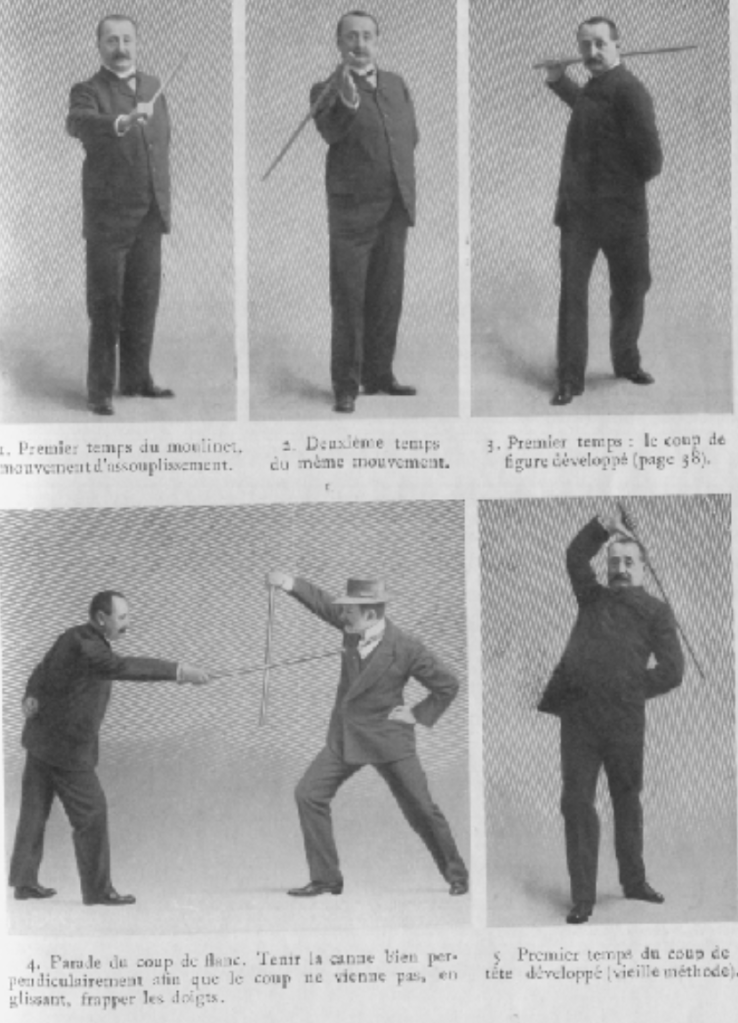
Most of the La Canne methods have a similar syllabus that contains the following items.

  • Guards / Postures
  • Moulinets – Circling of the cane
  • Footwork
  • Striking, thrusting, ….
  • Parries
  • Combinations
  • Freeplay

A lot of attention is paid to:

  • Distance – 3 basic distances
  • Timing – 3 basic timings

The concepts of distance and timing are integral to Eastern martial arts. It can be said that they are the ‘essential concepts’ of all martial arts.


This concept can be practiced at different levels, with beginners generally moving slowly and not using powerful actions.

Are you intrigued?

The internet is a great place to find a lot of information. But fundamentally, practicing is the best solution.
For those who are interested, our group offers introductionary sessions.

Developing a solid grip

The use of excessive power is always a concern when practicing ‘randori’. Although we stress the importance of softness during practice, sometimes it is necessary to use all your human resources, including muscular strength.

Effective use of controlling techniques requires a solid grip. Your opponent will overpower you during randori practice if your grasping method lacks the strength to keep your grasp solid.
A grip that is strong must also have the ability to be flexible. Your techniques will become static and tension-filled if you lack movement skill.

The skill of ‘ju-and-go’ is to balance power and flexibility.

Basic Grip

Exercise to create a solid grip

To create a solid grip, we use a set of two sticks (tanjo, jo or bo).
A solid grip is necessary to keep the two sticks together. Without a strong grip, the two sticks will move freely and there won’t be any transfer to your training partner.
A solid grip and movement is based upon 2 basic methods:

  • Inside rotation of the arm
  • Outside rotation of the arm

The use of a solid grip

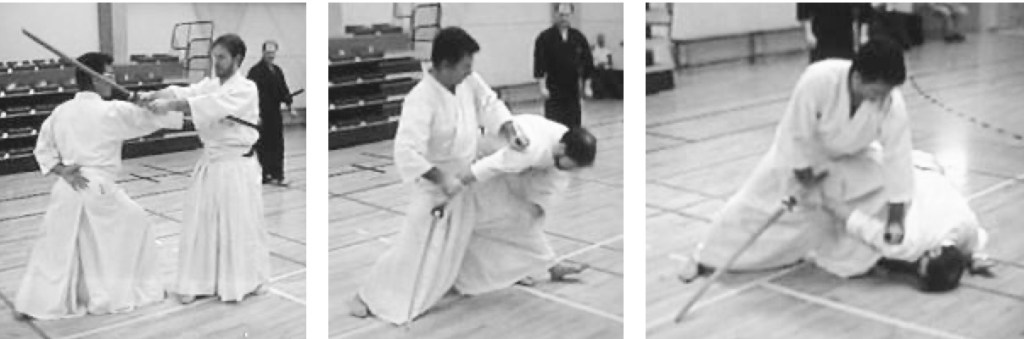
Developing a basic grasping method by using a solid grip. Different ways of grasping the wrist and hand to control the opponent’s arm.
Three fingers (middle, ring and little finger) are grasping the hand. Index and thumb are holding the wrist.

Solid grip and stretching or bending the arm

A basic grip on the wrist can be used for various applications. By understanding the fundamentals of a simple controlling technique, one can gain a better understanding of the complexity of the old Aikido techniques (Koryu no kata).

Timing – Hand-Body-Foot

Timing is crucial for controlling the distance between you and your opponent. Your actions can be more powerful and efficient by controlling the distance. To get a solid grip on your opponent, it’s crucial to have the correct distance. Your actions will become more effective if your distance control is more precise.
Your opponent will block or evade your hand action when you start with your foot. Before making any attempts with it, make sure to establish the distance before starting with the hand. At the appropriate distance, use offensive movements like thrusting, striking, or solid grasping techniques.
The best timing is when your hand touches the opponent and you don’t have to step. When you reach the target with your hand, utilize the body and power from your feet without taking a step.
When using your front foot to step towards the target, the time it takes to use your power will be much longer. This is a weakness in your strategy, but your actions can still be efficient.
Using both feet to step to touch the target takes a significant amount of time, and your opponent can exploit this weakness in your strategy. A clever strategy can still give you a chance to win the confrontation.

Power is always absent when touching the target with the hand. The only way to use power after touching the target is by standing correctly.

Accept your limitations

Martial arts marketing mainly emphasizes the idea of winning against a much stronger opponent. This idea is enforced by a clever training system that has rules and limitations for the attacker. A competing format tries to break out of those limitations. Unfortunately, the competitive format to become safe requires limitations and rules.
The study and training in a martial art occur in a specially equipped hall. For Japanese martial arts, the training hall is called a dojo.
Dojo training is not comparable to a hostile environment in the real world. Your belief that a competitive format will significantly improve your self-defense abilities is incorrect. A problem with many competitive martial arts is that they continuously assume the conditions of mutual combat. Before starting the fight, the opponents are identified and lined up at a comfortable distance.

It’s important to remember the physical and mental aspects of good health.
In order to survive in the arena, it’s important to be in good shape and have practiced the technical and tactical aspects of competitive fighting.

The reality on the street is totally different. Your attacker is not following the rules that govern the competition format. Your body and mind are conditioned by rules and limitations.
Self-defence courses emphasize the idea of running away from potential conflicts rather than engaging in physical combat. In the event that your condition is not good, what is the outcome? Can you run away? Are you fully prepared for the confrontation? Your limitations are highlighted by those questions.

Performance-oriented

Our society’s foundation is performance. If you cannot fulfill this concept, you will always be considered a member of the lower class.
Religions are also using this concept. Entering Paradise is possible if you adhere to the rules set by the religious leaders.

Martial arts are not excluded from this concept. In certain martial arts, their founders are treated as gods and their successors are treated similarly.
Certainly, some founders have the ability to excel in the field of martial arts. To become such a skilled martial practitioner, they lived a life based on training for both the mind and body.

Is it possible to become a skilled warrior in our society while maintaining a family relationship and performing well in your occupation for a living?
The chance to become a military or police officer is not available to everyone.

Your limitations

  • Physical and mental limitations
  • Social limitations
  • Educational limitations
  • Fat-belly syndrome
  • Other

Most of the limitations are interwoven and cannot be separated from each other. If you see the founder of your martial art as a godlike person, your way of thinking will be restricted by the dogmas outspoken by the founder and the successors. Dogmas can restrict your search to the truth in martial arts. Of course, if there is a truth in martial arts.

We cannot forget, most of the founders had a life as a professional martial art practitioner and their training was almost a full-time job.
Most of us have a responsibility to our family and social environment. These limitations, we have to accept, we cannot become at the same level as a professional martial art practitioner.

Physical and mental limitations are no excuses for not practising. Laziness are being often the origin of so-called physical limitations.
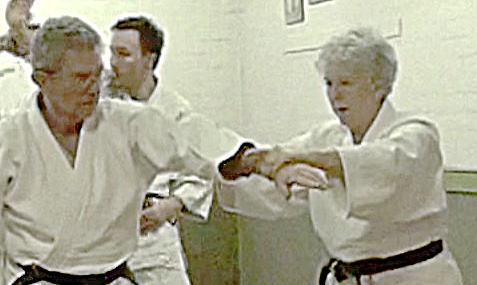
But each physical training program must be adapted to the real limitations of the practitioner. We cannot expect the same performance from a 80 yr old person compared to a 20 yr old practitioner.
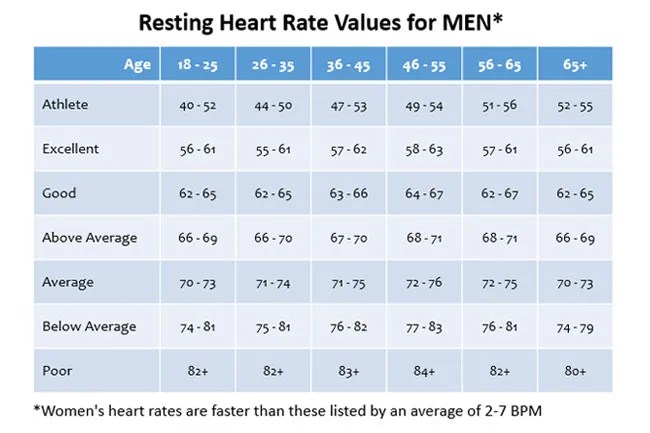
Performing always at the maximum heartbeat is not healthy, especially for older practitioners.
Knowing your heartbeat is a key to excellent performing taking into account the limitations of your age and condition.

Using a smart watch or other device to measure your heartbeat can be helpful to find out something about your condition when performing for example solo-exercises with or without a weapon.

You can estimate your maximum heart rate based on your age. To estimate your maximum age-related heart rate, subtract your age from 220. For example, for a 50-year-old person, the estimated maximum age-related heart rate would be calculated as 220–50 years = 170 beats per minute (bpm). A 20-year-old person would be 220-20 years= 200 BPM.

When you know your max heart rate, you can calculate the BPM for efficient exercising.

Target heart rate zones are five ranges of heart rates that generally determine how much effort a person is putting forth in their exercise.

Heart rate zones vary from person to person—someone who is younger or more physically active will have different target zones than a person who is older or currently less physically active—so they’re described as percentages of maximum heart rate. 

  • Zone 1 – moderate to low intensity, at 50 to 60 percent of maximum heart rate 
  • Zone 2 – moderate intensity, at 60 to 70 percent of maximum heart rate 
  • Zone 3 – moderate to high intensity, at 70 to 80 percent of maximum heart rate 
  • Zone 4 – high intensity, at 80 to 90 percent of maximum heart rate 
  • Zone 5 – very high intensity, at 90 to 100 percent of maximum heart rate 

Educational limitations

Not every martial art has an extensive educational program, some of them are very limited and physical. Others are very wide organized and require a lot of mental energy.
Maybe, the martial art you practise has a very profound mental educational program. But you are very loyal to the group or teacher, but you like to practise more physical. This is your problem, not the system’s problem, and you have to solve it.
You can look around for a more physical method or you can use your creativity and a good conversation with the teacher to find a solution for your problem.

The fat-belly syndrome limitation

There was a time when I was accumulating too much fat in the belly. A fat-belly is of course a limitation in proper martial art training. Some people with this syndrome will tell you about developing a powerful hara. Of course, this is only an excuse for not participating in a physical training program adapted to the person in question.
After changing a bad habit of eating and drinking, my well developed hara disappeared and my training became more vigorous.

Knowing your limitations

We can detect a lot of more limitations, but deep in our heart we really know our limitations and we must adapt our training. Sometimes, you will find out remarks made by others about your performance. Those remarks can be very positive, but can have also a huge negative impact on your training. Especially social media is a well known source of negative influence.

Knowing your limitations is the path to “well-being”.