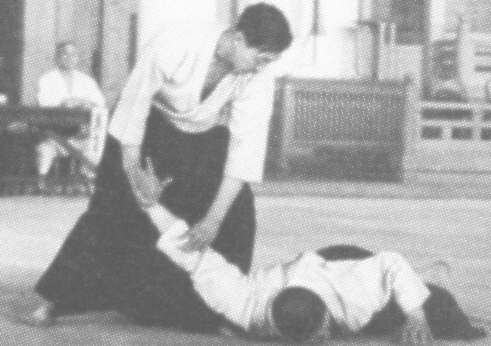
Kenji Tomiki – Early Life (1900-1948): Pioneer of Modern Aikido

Early Life and Education (1900-1929)

Kenji Tomiki was born in March 1900 in Kakunodate, Akita Prefecture in northern Japan. He progressed through Kakunodate Elementary School and Yokote Prefectural Middle School before attending Waseda University’s Second Higher Academy. He ultimately graduated from Waseda University’s Faculty of Political Science and Economics.

Tomiki began practicing judo from elementary school and distinguished himself in Waseda University’s judo club, obtaining his 4th dan rank while still a student. After his university years, he began studying under Morihei Ueshiba, who was establishing himself as independent from Daito-ryu Aiki-jujutsu. This connection with Ueshiba would continue throughout his life.

After graduating from university, Tomiki worked at Tohoku Electric Power and then taught for three years at Kakunodate Middle School. In 1929, he represented Miyagi Prefecture in the Imperial Martial Arts Tournament. Later, to intensively study Ueshiba’s techniques, he moved to Tokyo and lived close to Ueshiba’s dojo, training intensively for two years.

Philosophical Development and Teaching in Manchuria (1930-1945)

In May 1928, Tomiki wrote a letter to Kaizan Nakazato expressing his views on martial arts. He identified shortcomings in Kodokan Judo compared to Daito-ryu, particularly noting that judo practitioners experienced decline in ability after age forty, while Daito-ryu’s subtle breathing power seemed to remain effective into old age. He also observed that Kodokan Judo was extremely limited in scope due to competitive rules, while Daito-ryu was unrestricted and aligned better with swordsmanship and spearmanship principles.

In 1935, Tomiki traveled to Manchuria where he introduced aikibudo to Hideki Tojo, then commander of the Kwantung Military Police. This led to teaching positions at the Kwantung Army Military Police Training Unit, Daido Academy, and the Shinkyo Police Department from 1936. In February 1939, he became an associate professor at Kenkoku University.

On February 11, 1940, Ueshiba implemented a dan ranking system, granting Tomiki the first 8th dan in aikibudo. The following year, in April 1941, Tomiki also received 6th dan in judo. During this period at Kenkoku University, he worked to systematize, theorize, and popularize Aikido, with the goal of eventually making it competitive.

Teaching Style and Philosophy

Tomiki’s teaching approach at Kenkoku University was described as “rationalist” compared to Ueshiba’s “irrationalist” method. While Ueshiba’s teaching emphasized intuition, embodiment, and enlightenment without detailed explanations, Tomiki focused on theoretical and systematic instruction. He explained the mechanics of techniques through principles like shizentai no ri (natural posture), kuzushi no ri (balance breaking), and ju no ri (flexibility).

Students characterized Tomiki as gentle, mild-mannered, with “warm, soft, large hands.” He was described as always smiling, with a solid build but extremely gentle demeanor. Despite sometimes appearing “cold at first glance,” he was surprisingly attentive to his students, even bringing home-cooked meals to hospitalized students.

Tomiki was not only accomplished in martial arts but also in traditional Japanese arts. He enjoyed dancing and would teach students the Sado Okesa dance. He was talented in calligraphy and painting, particularly in creating ink paintings of bamboo. This artistic ability came from training with his uncle, the Japanese painter Hyakuho Hirafuku.

Theoretical Contributions

Tomiki developed a systematic theoretical framework for aikido, connecting it to Jigoro Kano’s achievements in modernizing jujutsu. He named techniques with descriptive terms like “oshi-taoshi” (push down) and “hiki-taoshi” (pull down) rather than using jargon, making the art more accessible. He emphasized the connection between martial arts and other Japanese arts, noting that the principles of body and power were common across disciplines like kabuki, dance, calligraphy, and painting.

In his 1954 book “Judo Taiso,” Tomiki explained his rationale for systematizing aikido techniques. He noted that while judo had successfully reorganized throwing and ground techniques (randori techniques), there was still a need to develop a structured approach to atemi-waza (striking techniques) and kansetsu-waza (joint techniques). Through his 30 years of study, he recognized the deep connection between judo and aiki jujutsu principles.

By 1943, Tomiki had published works exploring the relationship between form and principle in martial arts. He explained that principles could only be understood through techniques and forms, emphasizing the importance of kata training and referencing the Buddhist stages of shu-ha-ri (preserve, break, leave). He connected martial arts principles to Chinese painting theory, particularly the concept of “bone method,” concluding that understanding these principles allows one to “respond to circumstances and changes, and work freely without hindrance.”

The “Bone Method” Concept in Tomiki’s Martial Arts Philosophy

The concept of “bone method” (骨法) is a profound philosophical principle that Kenji Tomiki incorporated into his martial arts theory, drawing parallels between traditional East Asian painting theory and martial arts practice.

Origins in Chinese Painting Theory

The “bone method” originally comes from traditional Chinese painting theory, specifically from the “Six Laws” (六法) of painting established by Xie He in the 5th century CE . In this classical framework, the Six Laws include principles like “spiritual resonance and life movement” (气韵生动), “bone method and use of brush” (骨法用笔), and other technical aspects of painting.

Tomiki’s Application to Martial Arts

Tomiki adapted this concept to martial arts in his writings on “Form and Principle” published in 1943. In these texts, he explains that the “bone method” in painting parallels the fundamental principles that exist behind martial arts techniques. Just as the “bone method” gives structure and life to a painting, the underlying principles animate martial arts techniques.

According to Tomiki, “spiritual resonance and life movement” represents the life essence of painting, while the other five laws (including bone method) are means to bring this life movement to the painting. He saw a direct parallel to martial arts, where the visible techniques express deeper underlying principles.

Practical Meaning in Martial Arts

In practical terms, the “bone method” in Tomiki’s martial arts philosophy represents:

  1. Essential Structure: Just as the bone structure gives form to a body, the “bone method” provides the essential structure to both painting and martial arts techniques.
  2. Freedom Through Structure: Tomiki concludes that “Only those who understand the bone method can freely express their conceptions on paper. It is like those who understand the principles of martial arts can respond to circumstances and changes, and work freely without hindrance.”
  3. Beyond Mere Technique: The concept suggests that true mastery goes beyond learning shapes or movements, requiring an understanding of the underlying structural principles that give life to technique.

Connection to Tomiki’s Overall Philosophy

This concept reflects Tomiki’s broader approach to martial arts as a systematizer and theorist. By incorporating concepts from Chinese aesthetics into martial arts theory, he demonstrated his intellectual breadth and his commitment to placing martial arts within a larger cultural and philosophical framework.

The “bone method” exemplifies Tomiki’s rationalist approach to martial arts, where understanding the fundamental principles (the “bones”) allows practitioners to express techniques with both structure and freedom, adapting fluidly to changing circumstances.

Post-War Years (1945-1948)

After Japan’s defeat in 1945, Tomiki was detained by Soviet forces at Lake Balkhash in Siberia. This internment lasted three and a half years, during which time Manchukuo collapsed and Kenkoku University closed. Tomiki finally returned to Japan in late 1948.

During his internment, Tomiki continued to refine his understanding of martial arts. In the preface to “Judo Taiso,” he mentioned that his experiences during internment clarified the significance of maintaining traditional techniques while adapting them for practical use. Upon his return to Japan, he would further develop his systematic approach to aikido techniques.

Legacy and Impact

Tomiki’s contribution to martial arts centered on his synthesis of traditional aikijujutsu with modern educational methods. He established a system to teach striking and joint lock techniques rationally, making them accessible within the framework of physical education. His approach created a bridge between the irrationalist, intuitive training methods of traditional martial arts and a more systematic, principle-based approach suitable for modern education.

Tomiki viewed his work as continuing the legacy of Jigoro Kano, who had successfully adapted traditional jujutsu into modern judo. Similarly, Tomiki sought to transform the “aikido techniques” of Morihei Ueshiba into a structured educational system, preserving their essence while making them accessible to contemporary practitioners.

This period from 1900 to 1948 represents the formative years of Tomiki’s development and his initial contributions to systematizing aikido. His later work at Waseda University would further develop his vision of competitive aikido, creating a distinct branch within the aikido world.

Summary of Source Materials on Kenji Tomiki

The materials provide comprehensive documentation of Kenji Tomiki’s life, philosophy, and contributions to martial arts, focusing on his development of a systematic approach to aikido. Here’s a summary of the key documents:

1. “Kenji Tomiki Budoron” (Document 1)

This extensive text appears to be Tomiki’s major philosophical work on martial arts, containing chapters on the uniqueness of Japanese martial arts, modernization of budo, judo principles, and aikido development. The document explores how traditional martial arts can be adapted to modern educational contexts while preserving their essential character. Tomiki articulates principles like shizentai no ri (natural posture), ju no ri (flexibility), and kuzushi no ri (breaking balance) that form the foundation of his technical system .

2. “Judo Taiso” (Document 7)

This translated work from 1954 details Tomiki’s system of “Judo Exercises” that apply judo principles to aikido techniques. He explains how he reorganized striking and joint lock techniques from Daito-ryu Aiki Jujutsu into an educational framework. The document includes detailed instructions for basic movements, postures, and techniques with accompanying illustrations .

3. “Aikido Nyumon” (Document 8)

Published in 1958, this “Introduction to Aikido” provides a rational method for practicing striking and joint lock techniques. The document outlines fifteen basic forms and their applications, continuing Tomiki’s systematic approach to aikido instruction with detailed explanations and illustrations .

4. “Personal Views on Martial Arts” and “Prewar” (Document 9)

This document contains Tomiki’s 1928 letter to Kaizan Nakazato expressing his views on martial arts and criticizing Kodokan Judo from the perspective of Daito-ryu. It also covers Tomiki’s time teaching at Kenkoku University in Manchuria (1939-1945), detailing his relationship with Morihei Ueshiba and his development of a rationalist approach to aikido instruction .

5. Key Terminology (Document 4)

This document provides definitions of essential concepts in Japanese martial arts, including philosophical terms like Bushido, technical concepts like kata and waza, and educational approaches like goraku (entertainment-oriented) and tanren-shugi (discipline-oriented) training methods .

6. Additional Supporting Documents

Several smaller documents provide supporting information about specific aspects of Tomiki’s work, including his views on competition in martial arts (documents 2-3), his approach to school martial arts education (document 5), and philosophical differences between recreation-oriented and discipline-oriented physical education (documents 3, 5) .

Together, these documents present a comprehensive picture of Tomiki’s life work: creating a bridge between traditional martial arts and modern educational methods by applying scientific principles, systematic organization, and rational teaching approaches to the techniques of aikido.

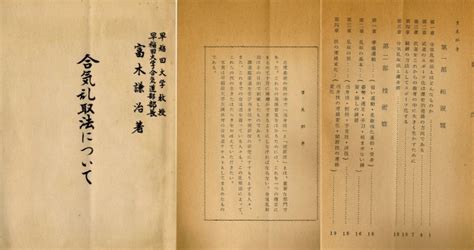
Mushin Mugamae? What huh?

Mushin Mugamae is a Japanese expression often used in the context of Tomiki’s Aikido. It is usually translated as ’empty mind, no posture’. 

But is this really the case? We need to understand and describe this expression in a much broader context.

A summary of the comments made by Kenji Tomiki regarding Mushin Mugamae


“No mind” (“mushin” 無心) represents the highest mental state in human cultivation. It must be the ultimate goal of martial arts, which reaches the “path” (“michi” 道) through “technique” (“waza” 技). Making martial arts competitive and establishing an arena for winning and losing is an educational “place” to learn “no mind” by transcending victory and defeat. However, competition comes with limitations. One tends to fixate on stances, drift toward specialized techniques, and forget the ideal of “no stance” (“mukamae” 無構). To learn “no stance,” one must repeatedly train in the correct “kata” (形) that emphasize self-defense.Emphasizing kata practice not only approaches the essence of martial arts and avoids the pitfalls of competition but also meets the needs of lifelong physical education in the coming era and greatly benefits the maintenance and promotion of national health through martial arts.

When we read and translate texts by Kenji Tomiki, we will certainly notice that he often uses the same parts of texts in different essays on Japanese martial arts. It is important for us to understand the purpose of the frequent repetition of an explanation of his concepts. Some of the texts (in Japanese) are available at:

(https://www.jstage.jst.go.jp/static/pages/JstageOverview/-char/en)

Translation and understanding confusion

When translating and trying to understand “mushin mugamae”, there is confusion when trying to understand this expression without the necessary background.

Mushin

In the context of martial arts, “無心” (mushin) is a profound concept that translates to “no-mindedness” or “no-mind.” It represents a mental state where the mind is free from distractions, fears, and ego, allowing for instinctive and fluid reactions. This state is highly valued in martial arts because it enables practitioners to respond naturally and effectively to any situation without hesitation or overthinking.

In Martial Arts:

  • Focus and Clarity: Mushin allows martial artists to act with complete focus and clarity, unhindered by conscious thought or emotion. This state is often achieved through rigorous training and meditation, where the practitioner learns to quiet the mind and trust their instincts.
  • Spontaneity: In combat or sparring, mushin enables spontaneous and intuitive movements, making the practitioner more adaptable and unpredictable to opponents.
  • Unity of Mind and Body: It signifies a harmonious unity between the mind and body, where actions flow naturally without conscious interference.

In a Broader Context:

  • Mindfulness and Presence: Beyond martial arts, mushin can be applied to daily life as a state of mindfulness and presence. It encourages living in the moment, fully engaged with the current task or experience without being distracted by past regrets or future anxieties.
  • Flow State: Mushin is akin to the concept of “flow” in psychology, where a person is fully immersed and focused on an activity, leading to a sense of effortless concentration and enjoyment.
  • Creativity and Problem-Solving: In creative endeavors or problem-solving, mushin can help individuals approach challenges with an open and uncluttered mind, leading to innovative solutions and expressions.
  • Emotional Balance: It promotes emotional balance and resilience, helping individuals manage stress and maintain composure in challenging situations.

In essence, mushin is a state of mental clarity and readiness that transcends the boundaries of martial arts, offering valuable insights and benefits for personal growth, creativity, and overall well-being.

Mugamae – Mukamae – Mukō

The term “無構” (mukamae) is composed of two kanji characters:

  1. 無 (Mu): This character means “nothingness,” “none,” or “without.” It represents the absence of something or a state of emptiness.
  2. 構 (Kamae): This character means “posture” or “stance.” In martial arts, “kamae” refers to the physical and mental readiness or posture that a practitioner adopts.

Together, “無構” (mukamae) can be interpreted as a state of “no posture” or “no fixed stance.” This concept is rooted in Japanese martial arts and Zen philosophy, emphasizing a mental and physical state of readiness without preconceived notions or rigid positions. It signifies being prepared for any situation without being confined to a specific form or expectation, allowing for fluid and adaptive responses.

But here is where the confusion comes in:

In martial arts contexts, the term 無構 can be read as either “mukamae” or “mukō”, depending on the specific tradition and context:

  1. “Mukamae” (無構え) – This reading is more commonly used in martial arts discussions about posture and stance. It literally means “no stance” or “no posture” and refers to a state where the practitioner has transcended formal stances, achieving a natural readiness that isn’t fixed in any particular form. In this context, it’s often written with the final え (e) as 無構え to clarify the pronunciation.
  2. “Mukō” (無構) – This alternate reading is sometimes used in more philosophical contexts, particularly in certain traditions of kenjutsu (sword techniques). It maintains the same fundamental meaning of “no predetermined form” but might be emphasized differently depending on the school.

無構 or 無構え

In his texts, Tomiki often uses the abbreviated form 無構 rather than the more explicitly pronounced 無構え when discussing this concept.

This is significant because:

  1. Tomiki is deliberately using the classical, condensed form 無構 that appears in traditional martial arts texts, particularly those from sword schools like the “Book of Five Rings” (五輪書, Gorin no Sho) which he references. This connects his ideas directly to historical martial traditions.
  2. Despite the abbreviated written form, the concept should still be understood as “mukamae” in pronunciation and meaning – referring to the state of “no stance” or transcending fixed postures.
  3. This writing choice reflects Tomiki’s deep connection to traditional martial arts literature while developing his modern perspective on martial arts education.

When Tomiki discusses 無構 (mukamae), he’s emphasizing the paradoxical nature of martial arts mastery – that the highest level of technique appears to have no technique, and the most effective stance appears to have no stance. This aligns with his broader philosophy of moving from form to formlessness, and from technique (waza) to way (michi).

The abbreviated writing style also reflects classical Japanese scholarly tradition, where concepts were often written in condensed form with the understanding that practitioners would know the proper reading and full implications. This approach is consistent with Tomiki’s position as both an innovator and a preserver of traditional martial arts knowledge.

Budoron, Kenji Tomiki’s Masterpiece

Kenji Tomiki was a prominent Japanese martial artist known for his contributions to both judo and aikido. He was also a pedagogue of martial arts theory, known as “Budoron” in Japanese. This term refers to the study and philosophy of martial arts, encompassing the principles, ethics, and educational methods associated with these disciplines.

Tomiki’s work in Budoron focused on integrating the philosophical and practical aspects of martial arts to create a comprehensive system of training and personal development. He believed in the importance of blending physical techniques with mental discipline and ethical considerations, reflecting the broader goals of budo, which emphasizes self-cultivation and personal growth through martial arts practice

Tomiki’s approach to Budoron influenced the development of Kyogi Aikido, which incorporates elements of both aikido and judo. This system emphasizes the importance of randori (free-style practice) and includes a competitive element, setting it apart from other aikido styles. Tomiki’s contributions to martial arts theory and practice continue to influence practitioners and educators in the field.

Budoron

This book is a collection of martial arts theories put together from the writings of Kenji Tomiki (1900-1979), who was totally devoted to the practice and research of martial arts from before to after the war, pouring his passion into martial arts education and developing outstanding martial arts theories.

His take on martial arts is both deep and wide-ranging, exploring the philosophy and practical use of Japanese martial arts. If you want to get his writing, you need to know about the key concepts of Japanese Budō.

Key Terminology Review

Budō (武道) and Bujutsu (武術)

In the Budoron texts, both terms are translated simply as “martial arts,” but it’s important to distinguish between them:

  • Budō refers to the “martial way” with emphasis on personal development and spiritual cultivation
  • Bujutsu refers to practical “martial techniques” focused on combat effectiveness

The text moves between discussing traditional martial skills (bujutsu) and their evolution into modern martial ways (budō). For instance, when discussing the historical development in the Edo period, the text is primarily referring to bujutsu, while the post-Meiji educational focus is more aligned with budō.

Kata (形) vs. Katachi (形)

The translation correctly conveys kata as prescribed training forms or patterns, but could more explicitly note that kata in martial arts refers to the structured sequence of movements that embody technical principles rather than merely external shapes.

Kyogi (競技)

The translation accurately renders kyogi as “competition,” but could emphasize that this specifically refers to the structured, rule-based competitive format that allows for the testing of skills in a controlled environment.

Wa (和)

The concept of wa (harmony) is central to the text and is properly translated. This concept represents not just peaceful coexistence but an active state of balanced interaction, particularly important in the martial arts context where it refers to achieving resolution without unnecessary conflict.

Buryoku (武力) vs. Bōryoku (暴力)

The distinction between these terms is well-translated:

  • Buryoku (military/martial power) is controlled force with proper rules
  • Bōryoku (violence) is uncontrolled, rule-less force

This distinction forms a central argument in the text about the ethical core of martial arts.

Randori (乱取り)

While mentioned in the text, randori could be more explicitly defined as “free practice” or “free sparring” – a training method that allows practitioners to apply techniques in more dynamic, unscripted situations than kata practice permits. The author mentions randori as a crucial innovation in judo that allows for testing techniques without the mortal danger of older “matches.”

Content Accuracy

The translation effectively captures the author’s key arguments:

  1. The historical evolution from battlefield techniques to self-defense arts and finally to educational disciplines
  2. The ethical progression from combat effectiveness to spiritual cultivation
  3. The balanced approach that values both competitive practice (kyogi) and formal patterns (kata)
  4. The central distinction between controlled martial power (buryoku) and unrestrained violence (bōryoku)
  5. The concept of “the way” (道/michi) as the integration of technique and spiritual development

Overall, the translation accurately conveys both the technical terminology and the philosophical depth of the original text, emphasizing the author’s argument that Japanese martial arts represent a unique cultural heritage that balances practical effectiveness with ethical and spiritual development. The key contribution of the text is its explanation of how traditional martial arts can be modernized through competition while preserving their essential characteristics through continued kata practice.

Understanding Randori and Kyogi in Japanese Martial Arts

Randori (乱取り)

Randori literally means “chaos taking” or “free seizing” and represents a fundamental training method in several Japanese martial arts, particularly judo and aikido.

Key Characteristics of Randori:

  1. Unscripted Practice: Unlike kata (predetermined forms), randori involves spontaneous, dynamic interaction between practitioners.
  2. Controlled Resistance: Partners provide genuine resistance, but within parameters that maintain safety while allowing techniques to be applied with realistic effort.
  3. Learning Application: Randori bridges the gap between kata (theory) and actual combat by teaching practitioners how to apply techniques against an actively resisting opponent.
  4. Development Focus: It develops timing, reflexes, adaptability, and situational awareness that cannot be cultivated through kata alone.
  5. Safety Framework: Unlike historical duels or challenges, randori provides a framework for testing techniques without mortal danger.

As Kenji Tomiki explains in his texts, randori was a crucial innovation in martial arts pedagogy. In traditional martial schools, practitioners would learn through kata but then might immediately test their skills in potentially lethal duels or challenges. Randori created an intermediate practice space where techniques could be tested against resistance without the life-threatening consequences.

In judo, Jigoro Kano systematized randori as a core training method, allowing practitioners to develop and test throwing and grappling skills through free practice. Tomiki later applied similar principles to aikido, developing a randori system for practicing aikido techniques safely against resistance.

Kyogi (競技)

Kyogi means “competition” or “sport” and refers to the structured, rule-governed competitive format of martial arts.

Key Characteristics of Kyogi:

  1. Formalized Rules: Clear regulations that define permissible techniques, scoring methods, and victory conditions.
  2. Safety Considerations: Restrictions on dangerous techniques to prevent injury while maintaining the essence of the art.
  3. Objective Evaluation: Provides a framework for measuring skill development and technical proficiency.
  4. Educational Purpose: Transforms the “place of victory” into a “place of education” where practitioners can develop moral qualities like fairness, respect, and self-control.
  5. Cultural Adaptation: Represents the adaptation of martial arts to modern educational values and social contexts.

Tomiki viewed kyogi as essential for modernizing martial arts, particularly for:

  • Making techniques objectively testable
  • Developing practitioners’ ability to perform under pressure
  • Creating a framework for martial arts as physical education
  • Preserving the martial arts’ educational value in a democratic society

The Relationship Between Randori and Kyogi

While closely related, randori and kyogi serve different functions:

  • Randori is a training method focused on learning through free practice
  • Kyogi is a competitive format focused on testing skills in a formalized environment

In Tomiki’s vision, both elements are necessary for complete martial arts education:

  1. Kata provides the theoretical foundation and preserves comprehensive technical principles
  2. Randori develops application skills through free practice
  3. Kyogi tests these skills in a structured competitive format

Tomiki’s significant contribution was recognizing that neither approach alone was sufficient. Traditional schools that focused solely on kata risked developing techniques that couldn’t be applied against resistance (what he calls “flower-style swordsmanship”). Conversely, focusing only on competition risked losing the comprehensive technical curriculum and deeper principles preserved in traditional forms.

By integrating both approaches—competition-based training for dynamic application and kata-based training for comprehensive technical study—Tomiki sought to preserve what he saw as the essence of Japanese martial arts while adapting them to modern educational contexts.