Aiki-Do, the way to Aiki?

Aikido or Aiki-Do?

There are many explanations for Aiki-Do and from a historical point of view we have to look a the lineage of the many educational lines of Aiki-Do.
Morihei Ueshiba can be credited to be the founder of Aikido and was a student of Sokaku Takeda, the founder of modern Daito Ryu Aikijutsu (or Aiki-Jujutsu). Morihei Ueshiba modernized Daito Ryu and therefore changed the mechanical but also the philosophical concepts.

Is there a difference between Aikido and Aiki-Do?
The distinction between the two can be summarized as follows:

  • Aikido: the martial art created by Morihei Ueshiba, based upon a concept of natural rhythm, a free flow of personal expression that offers no conflict with nature.
  • Aiki-Do: a method to learn the skill of aiki which is to provide a method of hand-to-hand combat.

According to Japanese Martial Arts scholar Don Draeger, the personal view of Sokaku Takeda on aiki is:

The secret of aiki is to overpower the opponent mentally at a glance and to win without fighting.

Morihei Ueshiba modernized Aiki-Do, sometimes called Aiki-Budo or other names, in such a way that the concept of Aiki is different from the Daito Ryu Aiki concept. The concept of Aiki by Morihei Ueshiba is explained in “Aikido” by Kisshomaru Ueshiba, the son of Morihei Ueshiba. This book is written under supervision of Morihei Ueshiba.

Aiki is the expression of Truth itself. It is the way of calling people together and reconciling them with love whenever they may attack us.

Our interest of course is in the lineage of Kenji Tomiki. He was a student of Morihei Ueshiba for his Aikido (previously AikiBudo or other names) and this is the reason why there is a link with the Daito Ryu lineage. But can we conclude Tomiki Aikido is Daito Ryu? In my opinion, Tomiki Aikido has some Daito-Ryu influence via Morihei Ueshiba, but is not following the Daito-Ryu syllabus and therefore the movement patterns will be very different.

Another person who has an influence on Tomiki’s Aikido is Hirokazu Kobayashi from Osaka. Some of his student are claiming Kobayashi was a Daito Ryu shihan. But this seems a controversial assertion. To learn more about the link between Kobayashi and Daito Ryu, you can read an article by Guillaume Erard.
Tetsuro Nariyama, shihan of the Shodokan Dojo in Osaka has a great influence on the modern version of Tomiki’s Aikido and he was for many years a student to Hirokazu Kobayashi. During the time he learned from Kobayashi, he introduced Tomiki’s randori method to university aikido clubs under Kobayashi’s control.

Explanation by Kenji Tomiki

Kenji Tomiki gave an explanation for 2 important words, Aikido & Aiki.

  • Aikido: the old saying goes, “It is the spirit that carries the mind and controls the body.” The people of ancient times believed that man’s mind and body and consequently his strength were under the control of the spirit.

  • Aiki means making your spirit “fit in” with your opponent’s. In other words it means bringing your movements into accord with your opponent’s. After all it means the same thing as the “principle of gentleness,” for it is an explanation of the principle from within.

The perception of Kenji Tomiki is a “pragmatic” one, and most people approach his method very technically. In my opinion, Tomiki explained Ueshiba’s Aikido according the ideas of Kodokan founder Jigoro Kano, but tried to keep the spiritual message of Morihei Ueshiba. Tomiki seems to use almost non-religious words to explain a spiritual message. By using a non-religious language, some Western people are very highly attracted by the logic he used to explain his Aikido understanding. Other people regret the absence of a kind of aiki-mystery in the method.

But is this just a perception or maybe we don’t understand Tomiki’s message?

gleeson judoThere is an interesting quote of Tomiki in Geof  Gleeson’s book: Judo Inside Out:

  • When training in aiki jitsu under Professor Tomiki he often used the symbol of prayer, the placing of two hands together as signifying the purpose of prayer and religion – the duality of God and man, the yin and yang, becoming one.


Human Lifelong Activity

If we try to understand Aikido in a pragmatic way but as a lifelong activity, we cannot just build our understanding on techniques, exercises or technical kata. We have to find out the elements which can be used as criteria for Aikido as a human lifelong activity. I am not referring to the 3 principles of Judo used by Tomiki (Natural posture, Breaking the posture & Principle of Gentleness) because they are included in the Fundamental Elements.

Yōso – Fundamental elements

Yōso literally translated as “principle”, but in the context of our study we use “essential element”. Of course this is already discussed in other articles on this blog. But I would like to stress the importance of this way of thinking: A human lifelong activity.

This is only possible if we change our way of thinking from raw muscular power into a method based upon physical & mental skills, creating an Aikido method for everybody. This method is using technical skills to control attacking power of an opponent by using fundamental elements without raw muscular power.

What are the fundamental elements in the method which can be practised by everyone?

  • Ma
  • Hyoshi
  • Aiki

Ma : distance & time interval

Distance :

  • distance between 2 opponents or more
  • the distance to step to the opponent to control him, for example grasping the wrist

Time Interval :

  • the relation between distance and time
  • big and small movements and time relationship

Controlling the distance and the time to bridge the distance doesn’t need excessive muscular power, only our natural way of moving is needed. The relationship with the principle of natural posture is evident.

The exercises unsoku-ho & tandoku undo are a very basic training tool to practise how to move in a natural way. When a training partner is involved, we are confronted with the distance and the relationship with time when moving into a safe zone after a movement of the opponent. The concept of “rikakutaisei” is her involved.

Hyoshi : cadence, rhythm, tempo

  • cadence : Cadence is the total number of repeated movements (cycles) taken within a given period of time.
  • rhythm : creating movements within a pattern (waza). You create rhythm by repetition of similar movements with a variations pattern
  • tempo : the speed of a movement cycle

Learning the skill to change hyoshi with the purpose to control the opponent. There are 2 opportunities:

  • Changing the own hyoshi to create an opportunity to control the opponent.
  • Changing opponent’s hyoshi to create an opportunity to control the opponent.

Repetitive training is a basic method to learn the concept of hyoshi an includes the following parameters:

  • cadence : the total number of repetitions in a certain time
  • rhythm : repetitions of a movement pattern without changing the choreography
  • tempo : the time to perform 1 movement pattern, which is repeated several times at the same speed

Combinations of cadence, rhythm and tempo can be used.

Aiki

Aiki (in aikido) is the skill to read correctly the Ma & Hyoshi of the opponent and controlling his actions. Reading the opponent is called “yomi”* and comes from “yomu” which is “to read”. We can read before or during the actions of the opponent. When this reading is correctly done, the use of power will follow the laws of natural movements with the body. No tension is required to apply power. Therefore it becomes a lifelong activity.

The concept of reading goes far beyond the use of the eyes. The total body can be seen as a sense organ and will be used to “yomi” correctly the Ma & Hyoshi of the opponent. It is most important to “un-tension” the body if we use it as a “yomi” sense organ.

Shigeru UemuraSome advice by Shigeru Uemura, former ShitoRyu karateka
In internal martial arts we advance by releasing the muscles, in other words by falling. When we release the muscles, an energy linked to gravitation is released. With the muscular relaxation, the movement is immediate, in a single time, this movement is much faster than with the muscular system which is done in two stages.
It is by releasing the weight of the body that we move. By synchronizing the muscular system, the tendinous system, the nervous system and the bone system, which makes it possible to move with high efficiency.

By following this advice the skill how to move is improving which has a great influence on reading and anticipation of opponent’s movements.

* Sometimes Yomi is referring to a kind of fortune-telling.

Inspiration and creativity

tegatana secret front

In 2010, I wrote a book “Tegatana, the secret weapon of Aikido”. It describes history and technical content of Tomiki Aikido. Since that time my life changed a great deal. I am not going to disturb you with my family life. I like to mention the changes in my “martial art” life.

Since I wrote my book some interesting people came on my road to perfection. They changed completely my understanding of Tomiki Aikido.

Is this understanding the correct way of Tomiki Aikido, I don’t know, but at this moment it feels the best way for me.

Nevertheless, who are those people?

  • Mike Sigman : Internal Strenght & Chinese Martial Arts theory
  • Ilias Calimintzos : Yi-Quan, Chinese boxing
  • Akira Hino : Hino Budo, Japanese Martial Arts theory and practise

They triggered something in me and forced me to walk on a path in an unknown territory. I cannot see the end of the road but I enjoy very much the travelling.

Inspiration and creativity

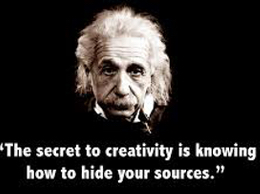
”To raise new questions, new possibilities, to regard old problems from a new angle, requires creative imagination.”
Albert Einstein

interlinking-posts-630x401

Inspiration and creativity go hand in hand, but are 2 different things. There is also the “knowledge” component involved.

Inspiration comes at the right time and will be triggered in most cases by external stimulus. It creates new ideas how to solve old problems. The new ideas, of course, have to be concreted by action, in the case of martial arts: practise.

Existing knowledge is necessary, but it cannot interfere directly with new ideas, otherwise creativity will be blocked. Keep your mind open for evaluating the process of problem solving with existing knowledge. Unfortunately knowledge is sometimes hid by bad habits.

How to become creative in your training

First, forget you are a member of a big organisation. The rules of your organisation are blocking your creativity.
Next, study the basic principles of your martial art.
Ask yourself, what is the aim of your training? For yourself or eventually for your students? When you have your answer start with your training and keep in mind the basic principles of your art.

In my case, as I am not interested in competitive randori and certainly not in competitive kata or enbu, my interest goes in the direction “how to move efficiently the body in randori and kata”. I discovered that most of the basic principles in Tomiki Aikido are the same as in most of the other martial arts. My discovery is not based upon conscious thinking and using buzz words. No, my discovery is on the level of subconscious acting.

There are no words to describe how to imply the basic principles into my art. Maybe I can say the art are the basic principles itself.

Another discovery was the concept of “rendo”. The interlinking of all your body and mind movements in relationship with the opponent. Without this interlinking your martial art will be based upon raw muscle power and wrong use of bodyweight.

Once I had a bodily feeling (taikan) of rendo, I started to review basic kata and koryu no kata. Of course my rendo is not optimal and sometimes I am trapped in my old habits.
By reviewing kata, new problems came to the surface. By using the quote of Albert Einstein, some of the problems are solved by using creativity based upon the basic principles.
Besides using the basic principles of the art, you need training in the use of hara (koshi, tanden and yōbu). How to use the mind is another important element in the training. All of those elements are commented in the content of this blog.

Creative randori

creative randori

People asked on several occasions about the skills of my son. There is only 1 answer: practise.
Of course, there is external stimulus. In his case, he had very good training partners. Those men triggered him a lot to find new ways for improving his randori.
Once, a Japanese teacher said: Tim created a system which only suits him.
His ideas are written into a little booklet:

creative-randori

If you had a look at this booklet, you will notice this is not the basic stuff your organisation is providing. It is totally different, but on the other hand it is Tomiki Aikido Randori.

Don’t become trapped in your own structure

When creative movements become fixed movements you will be trapped in your own body and mind structure.
From a physical point of view, reference is made to doubleweight. Your body cannot move anymore. You are ready to be thrown by the opponent.

An example of this problem is called the stiff knee syndrome. Your knees are blocked because you are pushed in a defensive situation and don’t want to fall. The stiff knee syndrome is frequently seen by older people or overweight people.

images

Self-defence or self-development

Without self-development, there will be no self-defence

Many people start a martial art with the intention to study self-defence. This is not wrong in itself, but before you can survive in a confrontation, you must study yourself.

  • physical
  • mentally

As long you cannot control yourself, you will be not able to defend yourself.
Fear, for example, creeps up in your body and freezes all flexible movements.
Anger can give you a wrong answer to solve a physical or mental confrontation.

Can we find an answer for fear, anger or other mental situations in martial arts?

This was of course also a problem for famous Japanese swordsmen and they also tried to find answers.
In Japanese swordsmen literature are many stories about this problem. Do they find a direct answer? Lets have a look at some stories.

Yamaoka Tesshu

Yamaoka-TessuYamaoka Tesshu (1836-1888), a famous swordsman from the end of the Tokugawa era through the beginning of Meiji era, wrote an essay about martial arts.
In this essay there is a story of Katsu Kaisu (Japanese statesman, end of the Tokugawa era through the beginning of Meiji era) recalling his encounter with Shirai Toru (1782-1843).
Even after a long period of training, Katsu Kaisu was afraid of the eldery Shirai Toru and his sword.
Shirai Toru gave an interesting explanation about his fear to Katsu Kaisu.

You feel fear towards my sword because you have some knowledge and experience in the art of sword fighting. A person without ego and no thoughts has no fear. That is the secret of the art of sword fighting.

Fear and anger

After the age of 40, most of the people’s physical power will deteriorate. When we don’t take enough attention to our self-development, fear and anger will come more apparent in a physical confrontation and this will kill you. It is not the opponent who is killing you, you kill yourself, because you cannot control your fear or anger.
Young people are compensating their fear by muscular power, but as we said before, power will deteriorate after a certain age.

There is another  story of Shirai Toru (mentioned higher) and his teacher Terrada Muneari (1745-1825, founder of Tenshin-Itto-Ryu). Shirai (28yrs) thought he could easily handle the elder Terrada (63yrs). But he didn’t have one chance to hit Terrada. Later Terrada said:

Self-awareness and spiritual enlightenment is the only way

Self-development

Self-development is closely related to self-awareness. How you see and feel yourself. Can you accept yourself, with your quality and your human weaknesses?

Martial arts are a mirror for you. Very soon in your training, your weaknesses are coming to the surface. This is the moment to become consciously aware of these weaknesses, to know yourself is the first step in self-development.

A practical example:

When an opponent (your training-partner) is attacking your face. How are you avoiding or handling this attack? Jumping away, freeze, panic,…..

Just ask your partner to slow down, and perform your defensive action also in a slow manner. From the moment you feel comfortable, ask your partner to add more speed and power. Can you handle? Maybe you have to go back to a slower performance, maybe you have more confidence and you can ask for more speed and power. From very structured training, you can evolve to unstructured training. If you are fortunate you will never use your skill in the real outside world. But you can test yourself in some kind of “competition” set? Not to become a champion, but just to test yourself.

Self-defence

Self-defence is a practical application of martial arts, and are mostly performed with a partner. Remember this model from an earlier post:

autopietic system

Your movement is always the result of a communication with the opponent. This is only possible if you have developped the skill of awareness, physically and mentally.

Having confidence in your abilities and knowing your shortcomings will create the perfect strategy for you in a confrontation, hostile or friendly.

The last words of Musashi Miyamoto

Abstract: The “Dokkôdô” is the last handwritten manuscript by Miyamoto Musashi. Due to its apho- ristic style it is often quoted and used to illustrate his thinking as well as his way of life, it has however until now not been intensively, thematically dealt with, so that the interpretation of several verses is still contradictory, which often leads to misunderstandings. In order to improve this situation we have ini- tially tried to interpret all words in each verse as literally as possible, then from here to form a sentence under consideration of its grammatical as well as its historical context and finally to present the entire translation of the “Dokkôdô”. The author hopes that this small contribution may become an inspiration for further discussion, which could lead us to a deeper understanding of Musashi’s truth.