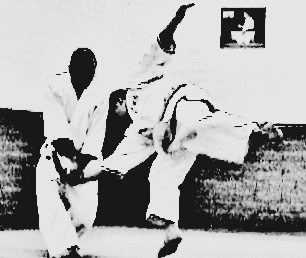
Tanren-shugi and Goraku-shugi in Kenji Tomiki’s Budō Philosophy: A Brief Introduction

In Kenji Tomiki’s comprehensive framework for understanding martial arts in the modern world, two contrasting yet complementary philosophical approaches to physical education emerge: tanren-shugi (鍛錬主義) and goraku-shugi (娯楽主義). These concepts represent different dimensions of how physical activity, particularly martial arts, can be approached in educational settings.

Tanren-shugi (鍛錬主義): The Discipline-Oriented Principle

Tanren-shugi literally translates as “discipline-centered principle” or “forging doctrine.” The term draws on metallurgical imagery—just as metal is tempered through fire to become stronger, the human character is forged through rigorous training.

Key characteristics:

  • Emphasizes rigorous, systematic training that develops mental fortitude alongside physical skills
  • Values the cultivation of perseverance, focus, and self-control through challenging practice
  • Prioritizes long-term character development over immediate enjoyment
  • Maintains the traditional essence of martial arts as paths for self-cultivation
  • Views struggle and difficulty as essential elements of meaningful growth

Goraku-shugi (娯楽主義): The Recreation-Oriented Principle

Goraku-shugi translates as “recreation-centered principle” or “entertainment doctrine.” This approach emphasizes the enjoyment and leisure aspects of physical activity.

Key characteristics:

  • Focuses on making physical activity pleasurable and accessible
  • Emphasizes participation, social interaction, and enjoyment
  • Recognizes the value of physical activity as leisure in modern society
  • Addresses the need for healthy recreational outlets in increasingly mechanized lifestyles
  • Makes physical education more approachable for a broader population

While traditionally some Japanese physical education discourse viewed goraku-shugi with suspicion (associating it with indulgence or frivolity), Tomiki recognized its legitimate place in modern physical education.

Kenji Tomiki’s View


What makes Tomiki’s philosophy noteworthy is his recognition that both approaches have value in modern education. Rather than seeing them as mutually exclusive, he advocated for their integration:
Complementary Functions: Tanren-shugi provides depth and character formation, while goraku-shugi ensures accessibility and sustainability of practice.
Educational Balance: A complete physical education system requires both the discipline to develop character and the enjoyment that makes practice sustainable.
Cultural Bridge: By acknowledging both principles, Tomiki created a conceptual bridge between traditional martial arts values and modern educational needs.
Adaptability to Different Life Stages: The balance can shift throughout a practitioner’s life—perhaps more goraku-shugi elements for beginners and children, with deeper tanren-shugi emphasis for advanced practitioners.


Tomiki argued that school martial arts (gakkō budō) should primarily embody tanren-shugi while incorporating enough goraku-shugi elements to make them accessible in modern educational settings. This balance allowed traditional martial arts to find a place in post-war Japanese education while preserving their essential character-building qualities.
By recognizing both dimensions, Tomiki created a framework that helped martial arts evolve from war techniques into valuable educational tools that contribute to developing well-rounded individuals in a peaceful, democratic society.e.

Professional athletes and recreational athletes

The distinction between “tanren-shugi” (鍛練主義) and “goraku-shugi” (娯楽主義) in Japanese physical education philosophy does closely resemble the Western distinction between elite/professional athletes and recreational athletes.

Top/Elite Athlete ≈ Tanren-shugi Approach

  1. Dedication Level:
    • Rigorous, systematic training regimens
    • Sport as a primary life focus
    • Willing to endure significant hardship and discomfort
  2. Mindset:
    • Pursuit of excellence and mastery
    • Constantly pushing boundaries of performance
    • Development of mental fortitude alongside physical skills
  3. Purpose:
    • Transcends mere enjoyment
    • Embraces challenge and difficulty
    • Views sport as a path for self-development and self-actualization
  4. Philosophical Elements:
    • Character development through discipline
    • Cultivating resilience and determination
    • Striving to reach human potential

Recreational Athlete ≈ Goraku-shugi Approach

  1. Engagement Level:
    • Casual, flexible participation
    • Sport as a supplementary activity
    • Primarily seeks enjoyable experiences
  2. Mindset:
    • Focus on fun and social aspects
    • Maintains comfortable level of challenge
    • Balances sport with other life priorities
  3. Purpose:
    • Primarily for enjoyment and health benefits
    • Social connection and entertainment
    • Stress relief and work-life balance
  4. Philosophical Elements:
    • Sport as a healthy leisure activity
    • Emphasis on participation over performance
    • Physical activity as life enrichment

Key Similarities in the Comparison

  1. Spectrum of Engagement:
    • Both cultural frameworks recognize a spectrum of involvement
    • The same sport can be approached either way
    • Individuals may shift between approaches at different life stages
  2. Societal Value:
    • Both Western and Japanese perspectives recognize value in both approaches
    • Each serves different but complementary functions in society
    • Both contribute to physical and mental wellbeing in different ways
  3. Educational Applications:
    • Both frameworks inform how physical education is structured
    • Schools in both contexts struggle with balancing enjoyment and discipline
    • Both recognize the developmental potential of physical activity

Cultural Nuances

Despite these parallels, there are some cultural nuances that distinguish the Japanese concepts:

  1. Spiritual Dimension:
    • Tanren-shugi often incorporates spiritual and moral development more explicitly than Western elite sport philosophy
    • The concept of “do” (道/道) or “way” emphasizes lifelong pursuit of mastery as a spiritual path
  2. Historical Context:
    • Japanese martial arts tradition brings unique historical context to tanren-shugi
    • The “life force” (生命力) concept mentioned in the text has specific cultural resonance
  3. Philosophical Framing:
    • The Japanese concepts are more explicitly framed as philosophical approaches or “-isms”
    • In Western contexts, the distinction is often described more in terms of participant categories or levels

Bibliography

Kenji Tomiki wrote many books and essays, all in Japanese. He wrote only one in English: Judo and Aikido.
His most famous work is of course Budoron, a collection of essays on Budo, Judo and Aikido.

Please email me if you are interested in his writings and would like more information.
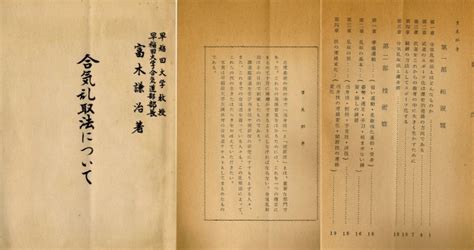
Budoron, Kenji Tomiki’s Masterpiece

Kenji Tomiki was a prominent Japanese martial artist known for his contributions to both judo and aikido. He was also a pedagogue of martial arts theory, known as “Budoron” in Japanese. This term refers to the study and philosophy of martial arts, encompassing the principles, ethics, and educational methods associated with these disciplines.

Tomiki’s work in Budoron focused on integrating the philosophical and practical aspects of martial arts to create a comprehensive system of training and personal development. He believed in the importance of blending physical techniques with mental discipline and ethical considerations, reflecting the broader goals of budo, which emphasizes self-cultivation and personal growth through martial arts practice

Tomiki’s approach to Budoron influenced the development of Kyogi Aikido, which incorporates elements of both aikido and judo. This system emphasizes the importance of randori (free-style practice) and includes a competitive element, setting it apart from other aikido styles. Tomiki’s contributions to martial arts theory and practice continue to influence practitioners and educators in the field.

Budoron

This book is a collection of martial arts theories put together from the writings of Kenji Tomiki (1900-1979), who was totally devoted to the practice and research of martial arts from before to after the war, pouring his passion into martial arts education and developing outstanding martial arts theories.

His take on martial arts is both deep and wide-ranging, exploring the philosophy and practical use of Japanese martial arts. If you want to get his writing, you need to know about the key concepts of Japanese Budō.

Key Terminology Review

Budō (武道) and Bujutsu (武術)

In the Budoron texts, both terms are translated simply as “martial arts,” but it’s important to distinguish between them:

  • Budō refers to the “martial way” with emphasis on personal development and spiritual cultivation
  • Bujutsu refers to practical “martial techniques” focused on combat effectiveness

The text moves between discussing traditional martial skills (bujutsu) and their evolution into modern martial ways (budō). For instance, when discussing the historical development in the Edo period, the text is primarily referring to bujutsu, while the post-Meiji educational focus is more aligned with budō.

Kata (形) vs. Katachi (形)

The translation correctly conveys kata as prescribed training forms or patterns, but could more explicitly note that kata in martial arts refers to the structured sequence of movements that embody technical principles rather than merely external shapes.

Kyogi (競技)

The translation accurately renders kyogi as “competition,” but could emphasize that this specifically refers to the structured, rule-based competitive format that allows for the testing of skills in a controlled environment.

Wa (和)

The concept of wa (harmony) is central to the text and is properly translated. This concept represents not just peaceful coexistence but an active state of balanced interaction, particularly important in the martial arts context where it refers to achieving resolution without unnecessary conflict.

Buryoku (武力) vs. Bōryoku (暴力)

The distinction between these terms is well-translated:

  • Buryoku (military/martial power) is controlled force with proper rules
  • Bōryoku (violence) is uncontrolled, rule-less force

This distinction forms a central argument in the text about the ethical core of martial arts.

Randori (乱取り)

While mentioned in the text, randori could be more explicitly defined as “free practice” or “free sparring” – a training method that allows practitioners to apply techniques in more dynamic, unscripted situations than kata practice permits. The author mentions randori as a crucial innovation in judo that allows for testing techniques without the mortal danger of older “matches.”

Content Accuracy

The translation effectively captures the author’s key arguments:

  1. The historical evolution from battlefield techniques to self-defense arts and finally to educational disciplines
  2. The ethical progression from combat effectiveness to spiritual cultivation
  3. The balanced approach that values both competitive practice (kyogi) and formal patterns (kata)
  4. The central distinction between controlled martial power (buryoku) and unrestrained violence (bōryoku)
  5. The concept of “the way” (道/michi) as the integration of technique and spiritual development

Overall, the translation accurately conveys both the technical terminology and the philosophical depth of the original text, emphasizing the author’s argument that Japanese martial arts represent a unique cultural heritage that balances practical effectiveness with ethical and spiritual development. The key contribution of the text is its explanation of how traditional martial arts can be modernized through competition while preserving their essential characteristics through continued kata practice.

Understanding Randori and Kyogi in Japanese Martial Arts

Randori (乱取り)

Randori literally means “chaos taking” or “free seizing” and represents a fundamental training method in several Japanese martial arts, particularly judo and aikido.

Key Characteristics of Randori:

  1. Unscripted Practice: Unlike kata (predetermined forms), randori involves spontaneous, dynamic interaction between practitioners.
  2. Controlled Resistance: Partners provide genuine resistance, but within parameters that maintain safety while allowing techniques to be applied with realistic effort.
  3. Learning Application: Randori bridges the gap between kata (theory) and actual combat by teaching practitioners how to apply techniques against an actively resisting opponent.
  4. Development Focus: It develops timing, reflexes, adaptability, and situational awareness that cannot be cultivated through kata alone.
  5. Safety Framework: Unlike historical duels or challenges, randori provides a framework for testing techniques without mortal danger.

As Kenji Tomiki explains in his texts, randori was a crucial innovation in martial arts pedagogy. In traditional martial schools, practitioners would learn through kata but then might immediately test their skills in potentially lethal duels or challenges. Randori created an intermediate practice space where techniques could be tested against resistance without the life-threatening consequences.

In judo, Jigoro Kano systematized randori as a core training method, allowing practitioners to develop and test throwing and grappling skills through free practice. Tomiki later applied similar principles to aikido, developing a randori system for practicing aikido techniques safely against resistance.

Kyogi (競技)

Kyogi means “competition” or “sport” and refers to the structured, rule-governed competitive format of martial arts.

Key Characteristics of Kyogi:

  1. Formalized Rules: Clear regulations that define permissible techniques, scoring methods, and victory conditions.
  2. Safety Considerations: Restrictions on dangerous techniques to prevent injury while maintaining the essence of the art.
  3. Objective Evaluation: Provides a framework for measuring skill development and technical proficiency.
  4. Educational Purpose: Transforms the “place of victory” into a “place of education” where practitioners can develop moral qualities like fairness, respect, and self-control.
  5. Cultural Adaptation: Represents the adaptation of martial arts to modern educational values and social contexts.

Tomiki viewed kyogi as essential for modernizing martial arts, particularly for:

  • Making techniques objectively testable
  • Developing practitioners’ ability to perform under pressure
  • Creating a framework for martial arts as physical education
  • Preserving the martial arts’ educational value in a democratic society

The Relationship Between Randori and Kyogi

While closely related, randori and kyogi serve different functions:

  • Randori is a training method focused on learning through free practice
  • Kyogi is a competitive format focused on testing skills in a formalized environment

In Tomiki’s vision, both elements are necessary for complete martial arts education:

  1. Kata provides the theoretical foundation and preserves comprehensive technical principles
  2. Randori develops application skills through free practice
  3. Kyogi tests these skills in a structured competitive format

Tomiki’s significant contribution was recognizing that neither approach alone was sufficient. Traditional schools that focused solely on kata risked developing techniques that couldn’t be applied against resistance (what he calls “flower-style swordsmanship”). Conversely, focusing only on competition risked losing the comprehensive technical curriculum and deeper principles preserved in traditional forms.

By integrating both approaches—competition-based training for dynamic application and kata-based training for comprehensive technical study—Tomiki sought to preserve what he saw as the essence of Japanese martial arts while adapting them to modern educational contexts.

Aikido as a Performance Art: An In-Depth Exploration


A person is identified not just by their name but by the human values they embody. Strip away those values, and the person becomes an object, easily manipulated by dictators, corporations, and social media.
Similarly, a martial art is defined by its name and the human values it imparts. Remove those values, and it becomes vulnerable to exploitation by salespeople, corporations, or worse—it loses its purpose and is discarded as irrelevant.

Introduction

Aikido, a modern Japanese martial art founded by Morihei Ueshiba, is renowned not only for its self-defense techniques but also for its aesthetic and performative qualities. While Aikido maintains its roots in practical combat, it seamlessly integrates elements of performance art, creating a harmonious blend of martial effectiveness and artistic expression. This exploration delves into how Aikido embodies performance art, examining its choreography, theatricality, and the balance between physical technique and mental discipline.

Kata: The Foundation of Aikido’s Performative Aspect

Understanding Kata

At the heart of Aikido’s performative nature lies kata, a collection of structured movements that simulate real combat scenarios. Kata serves as both a training tool and a performance medium, allowing practitioners to internalize techniques while presenting them in a visually engaging manner.

  • Static and Dynamic Structures: Kata comprises static structures (key-pictures) and dynamic structures (transitional movements). Static structures provide a foundational stance or position, while dynamic structures facilitate smooth transitions between these positions. This interplay creates a fluid and aesthetically pleasing sequence of movements.
  • Memetic Naming: Post-World War II, high-ranking students began naming techniques to aid memory retention. These names function as “memes,” triggering mental images and structures that enhance the practitioner’s ability to recall and execute movements with precision.

The Role of Go-Kyo and Basic Techniques

The Go-Kyo system in Kodokan Judo and its counterparts in Tomiki Aikido illustrate the structured approach to teaching and performing techniques.

  • Go-Kyo in Judo: This classification system organizes throwing techniques, providing a systematic framework for learning and demonstration.
  • Basic 15 and Its Evolution: Kenji Tomiki introduced Basic 15, a foundational set of techniques in the 1950s. Although not classified formally as kata, Basic 15 laid the groundwork for subsequent iterations like Basic 17 and Tanto Basic 17, which incorporated more refined and varied movements.
  • Randori no Kata: High-ranking instructors coined Randori no Kata to formalize basic techniques, culminating in its inclusion in the JAA syllabus in 1980. This formalization underscores the performative intent behind kata, emphasizing both technical proficiency and aesthetic presentation.

Theatricality in Aikido

Historical Context of Martial Arts and Theater

The intersection of martial arts and performance art is not unique to Aikido. Historically, martial practices have often been intertwined with theatrical traditions:

  • European Fencing: Once part of theatrical studies, fencing evolved into both a competitive sport and a performative display.
  • Chinese Opera and Kabuki: These traditional art forms heavily incorporate martial choreography, blending combat techniques with dramatic storytelling.

Aikido’s Theatrical Elements

Aikido adopts similar principles, integrating martial techniques with performative choreography to create a captivating spectacle:

  • Choreographed Performances: Aikido demonstrations often showcase the fluidity and grace of techniques, emphasizing the seamless execution of movements. These performances are meticulously choreographed to highlight the harmony between practitioners.
  • Character Development: Modern Budo (Gendai Budo) emphasizes character development alongside technical skill. In Aikido performances, practitioners embody specific roles—Tori (the attacker) and Uke (the defender)—each with distinct movements and intentions, enhancing the narrative aspect of the performance.
  • Social Interaction: Performances are designed to engage spectators, conveying the “truth of action” by simulating realistic combat scenarios. This interaction fosters a connection between practitioners and the audience, elevating the performance beyond mere technique demonstration.

Balancing Combat Effectiveness and Aesthetic Expression

Combat Roots vs. Aesthetic Focus

Aikido’s dual emphasis on combat effectiveness and aesthetic beauty presents both opportunities and challenges:

  • Combat Effectiveness: At its core, Aikido remains a practical martial art aimed at self-defense. Techniques are designed to neutralize opponents efficiently, emphasizing leverage, timing, and precision.
  • Aesthetic Expression: Simultaneously, Aikido values the visual appeal of movements. The flowing, circular motions not only serve practical purposes but also create a visually harmonious performance.

Potential Conflicts and Solutions

The balance between combat utility and aesthetic form can sometimes lead to conflicting priorities:

  • Neglecting Practicality: An overemphasis on aesthetics may result in the neglect of combat effectiveness, leading to the spread of misconceptions about the applicability of techniques in real-world scenarios.
  • Integrating Concepts: The ideal approach integrates combat principles into the performative aspects, ensuring that aesthetic movements retain their practical origins. This synergy enhances both the visual appeal and the functional integrity of Aikido techniques.

Training Methods and Their Performative Implications

Static and Dynamic Structures in Training

Aikido training incorporates both static and dynamic structures, each contributing to the performative quality of the art:

  • Static Structures: These are foundational stances and positions that provide stability and serve as reference points for movements.
  • Dynamic Structures: These involve transitions and fluid movements between static structures, creating a seamless flow that is both practical and visually engaging.

Role of Instructors and Advanced Practitioners

Guidance from experienced instructors is crucial in bridging the gap between technical proficiency and performative execution:

  • Choreographic Guidance: Instructors help practitioners refine their movements, ensuring that techniques are executed with both precision and grace.
  • Mental Discipline: Beyond physical training, practitioners cultivate mental structures that underpin their movements, enhancing the authenticity and fluidity of their performance.

Use of Media in Enhancing Performative Skills

Modern training methods leverage various media to augment the learning and performative aspects of Aikido:

  • Visual Aids: Books, videos, and digital platforms provide visual representations of techniques, aiding in the comprehension and execution of complex movements.
  • 3D Insights: Video demonstrations offer three-dimensional perspectives, allowing practitioners to observe and emulate the intricacies of dynamic structures.

The Aikido Syllabus: A Blueprint for Structured Performance

Memetic Collection of Techniques

The Aikido syllabus functions as a structured collection of “memes,” each representing a technique’s underlying structure:

  • Memory Aids: Technique names act as mental triggers, facilitating the recall and execution of movements through associated images and structures.
  • Structured Learning: The syllabus organizes techniques in a logical sequence, promoting progressive mastery and enabling practitioners to build upon foundational skills.

Impact on Performative Demonstrations

A well-structured syllabus enhances the performative aspect by ensuring that practitioners have a comprehensive understanding of each technique’s nuances:

  • Consistency in Performance: Standardized techniques allow for uniformity in demonstrations, making performances more coherent and impactful.
  • Depth of Understanding: A thorough grasp of the syllabus ensures that performances are not merely superficial displays but reflect a deep understanding of the art’s principles.

Static and Dynamic Structures Training: Enhancing Performative Excellence

Technique Demonstration and Perception

When demonstrating techniques without specifying the initial action, practitioners reveal their personal interpretation and understanding of the movement:

  • Individual Interpretation: Each practitioner’s unique perception influences how they execute and present a technique, adding diversity to performances.
  • Visual Representation: The balance between static and dynamic structures in demonstrations creates a visually engaging narrative that captivates audiences.

Skill Development: Athletic vs. Martial Skills

Aikido distinguishes between athletic skills (physical prowess) and martial skills (combat effectiveness), both of which contribute to performative excellence:

  • Athletic Skills: These enable practitioners to execute movements with agility and strength, enhancing the visual appeal of performances.
  • Martial Skills: These ensure that techniques retain their combat effectiveness, maintaining the art’s practical integrity.

Integration in Competitive and Performative Contexts

Tomiki Aikido’s emphasis on competitive formats like Randori and Kata illustrates the dual application of techniques in both combative and performative settings:

  • Randori: A free-form practice that emphasizes adaptability and combat readiness, showcasing martial prowess.
  • Kata: A structured form that highlights the aesthetic and choreographic aspects of techniques, emphasizing grace and precision.

Theatricality and Character Development in Aikido

Expressing Narrative Through Movement

Aikido performances often convey a narrative, portraying the interaction between Tori (the attacker) and Uke (the defender):

  • Role Embodiment: Practitioners embody their roles, infusing movements with intention and purpose that narrate a story of conflict and resolution.
  • Emotional Expression: Beyond physical movements, Aikido performances express emotions and psychological states, adding depth to the portrayal.

Character Development Through Practice

Modern Budo emphasizes character development as a fundamental aspect of martial arts training:

  • Discipline and Respect: Practitioners cultivate qualities like discipline, respect, and humility through rigorous training and performative practice.
  • Social Interaction: Engaging in synchronized movements and coordinated techniques fosters social bonds and mutual understanding among practitioners.

Challenges and Solutions in Balancing Aesthetics and Practicality

Risk of Aesthetic Overemphasis

An excessive focus on aesthetic elements can compromise the martial effectiveness of techniques:

  • Misconceptions: Overly stylized performances may lead to misunderstandings about the practical application of Aikido techniques in real-world scenarios.
  • Technique Dilution: The essence of techniques may be diluted if aesthetic considerations overshadow functional execution.

Integrating Combat Principles into Performance

To maintain the integrity of Aikido as both a martial art and a performance medium, it is essential to balance aesthetics with combat principles:

  • Functional Choreography: Choreograph movements in a way that preserves their combat effectiveness, ensuring that performances remain authentic and practical.
  • Educative Performances: Use performances as opportunities to educate audiences about the underlying principles and practical applications of techniques, bridging the gap between art and combat.