Katachi or Kata

Waza – Katachi – Kata
(The Japanese way)

Adapted from an article by Kumiko Ikuta (1990) AI & Soc 4: 127-146

Japanes fan dance

Waza is a skill within the Japanese traditional performance arts or martial arts such as Noh, Kabuki, Aikido, Judo and others. Waza will be shown by a sensei and a learner can master it only through the activity of imitating and repeating what his sensei does. “Katachi” is an apparent physical form of waza (1 or more) performed by the learner, which may be decomposed into parts and described as a sequence of procedures. On the contrary, “Kata”, which has been regarded as the ultimate goal of the learner to attain in learning “Waza”, is not a simple collection of parts of action like “Katachi”, but his understanding and personal expression of “Katachi”. The most important matter for the learner in learning “Waza”, is not the perfect reproduction of “Katachi” as a physical form of action, but grasping the meaning of it with a sense of reality.
Speaking from the point of view of the sensei, how can the sensei transmit his “Kata”, not “Katachi”, to the learner effectively? To make the learner master the waza, the sensei says while showing him this waza, “Hold your right hand up just as if you were trying to catch snow falling down from the sky”, instead of saying “Keep your right hand up exactly at an angle of 45 degrees”. The sensei intentionally used metaphorical expressions in the process of teaching even in cases where he could express what he wished to say to his learner in a descriptive language. And it is after the same sensation is provoked in the body of the learner that he can grasp the meaning of “Kata”, in other words, master “Kata” beyond the activity of imitation of “Katachi”. Receiving a metaphorical suggestion like “Act as if you are catching snowflakes falling down from the sky”, may confuse the learner at first, but he may begin to imagine the scene of snow falling on a cold day, and to compare the image of catching snow with his hand with the knowledge he has stored so far through committing himself to the world of Japanese martial art. As soon as he can understand what the metaphorical expression practically implies, he also can get the same physical sensation as his sensei has, in his own body, and can simultaneously grasp the meaning of “Katachi” with a sense of reality, that is to say, he can master “Kata”. By intermediation metaphorical expression which has the effect of encouraging the learner to activate his creative imagination, the sensei can effectively transmit “Kata” to him. In this sense, the activity of imagination on the part of the learner, which encouraged effectively by metaphorical expression, is an indispensable factor for mastering “Kata”, not “Katachi”. Concerning the aim of teaching and learning “Waza”, the process of teaching and learning a skill of Japanese martial art has been considered so mysterious and closed that the people outside the world of “Waza” hardly understand what happens there. Nonetheless,, in fact, what both the sensei and the learner aim for at the end of the teaching and learning is the mastery of “Kata”, not “Katachi”. “Kata”, as distinct from “Katachi”, can well be explained by introducing a sociological concept “habitus” which is a cultural or situational “Katachi”. It is “Kata”, “habituated katachi”, that the learner should make efforts to master through the activity of imitating and repeating the form his sensei shows. That is exactly what the learner should “steal in secret” from his sensei. The perfect reproduction of “Katachi” (the state of “Mushin mugamae”) can easily be learned through following a sequence of procedures of “Katachi” shown by the sensei, but in order for the learner to get to the state of mastering of “Kata”, he has to activate his creative imagination while he is following a sequence of procedures of “Katachi”, and to grasp the meaning of it by himself. Metaphorical expression effectively encourages the learner to activate his imagination. Thereby enabling him to grasp the meaning of”Katachi” which is the mastery of “Kata”.


Tomiki Aikido Techniques

Basic 15 – Basic 17, embu or kata?

Around 1956 Tomiki sensei selected 15 techniques for use in “randori”. Later he added more techniques. Basically when those techniques are demonstrated in sequence, it is called “katachi” or “kata”, depending on the understanding of the practitioner. When entering competition the word “embu” is used.

Prof. F. Shishida (Waseda University) wrote on this matter the following :

The difference between kata (katachi) and embu or embu-kyogi

Tomiki had never referred to embu in his life. Judging from my long experience in aikido and study, the word embu (to practice martial arts) was used as a demonstration at a place called embu-jo in early modern times. Around 1973, embu-kyogi started to take place at a public event at the student championship of Tomiki Aikido. Master Oba seems to have added embu-kyogi (embu) to the randori event in the All Japan Student Championship in 1971. He seems to have wanted to encourage students in the Kansai area who only practice kata. According to Mr. T. Sato, Tomiki mentioned only the fact to him with a dissatisfied look when he visited Tomiki to report that he joined the embu-kyogi with Koryu-Daigo-no-kata. Judging from the common sense of Japanese martial arts, embu-kyogi is out of the question to him, because it is impossible to avoid that practitioners want to exaggerate their performance to make a false show of power. Exaggeration is at the opposite end of the practicality of aikido that Tomiki pursued. On the other hand, kata is a tool to improve practical skill, the power of scientific investigation, and character building, compared with embu that is just a display of power. We have to understand that Tomiki’s goal are those above mentioned through kata and randori, and that he has no concept of embu for realizing his goal.

Senta Yamada wrote in 1962
Basic 15 or Basic techniques for Randori

They can be divided into 4 sections.
Three techniques apply to attacks, four elbow techniques, four are concerned with wrist twists, and four with wrist turns.
These form the framework for the system and should be considered as the first essential to progress. Time should be allowed, periodically, for the practise of these “katachi” moves, because they serve to remind you to keep posture and movement fresh and sound. The importance of this cannot be emphasized too strongly.

From techniques to katachi to kata

There is a process in the understanding of aikido.
People are learning basic movements, by linking them together “waza” will be created. The demonstration of techniques in a prearranged  sequence is called “katachi”. When katachi is fully integrated into body & mind, it is called “kata”.

Demonstration of prearranged set of techniques during grading or public demonstration = katachi or kata

Demonstration = embu

Public demonstration place = embu-jo
Competition = embu-kyogi

Tomiki Aikido Katachi or Kata

As explained earlier, we can consider every sequence of waza as a form of “katachi” which can be transformed into “kata”.

The purpose of each katachi or kata must be understood by the practitioner, without this basic knowledge the transformation from katachi to kata is almost impossible.

The word kata will be used in the name of the different sequences of waza. It is the ultimate goal of every practitioner to transform katachi into kata. Without this transformation, Tomiki Aikido always stays at the level of embu-kyogi,  were practitioners want to exaggerate their performance to make a false show of power. Exaggeration is at the opposite end of the practicality of aikido that Tomiki pursued.

Kata for Randori purposes

The waza of these kata are designed to apply safely into randori.

Randori no kata (basic 15) Atemi waza – Hiji waza – Tekubi waza
Randori no kata (basic 17) Atemi waza – Hiji waza – Tekubi waza  – Uki waza
Randori no kata (10 ura waza or 10 counter techniques)

Koryu no kata

There are 6 koryu no kata with each a different purpose. The origin of some koryu no kata can be found in Daito Ryu Aiki Jujutsu or other Japanese martial arts like Kito Ryu or Ryōi Shintō-ryū. Besides the many tai-jutsu waza (unarmed skills) some weapon skills are incorporated into koryu no kata. The weapon skills can vary depending on the weapon school of the chief instructor (shihan).
Tenshikei – rotational body movement

Tenshikei

spiral line012Tenshikei is the Japanese term for chan shi jin or silk reeling, a skill in Internal Chinese martial arts. The name derives from the twisting and spiralling movements of the silkworm as it wraps itself in its cocoon and the pulling off the silk from the coccoon. The body is imitating this by winding and unwinding movements.

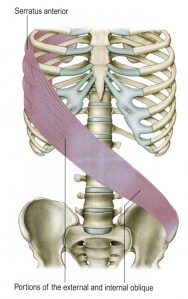
Tenshikei uses the diagonal tension and releasing of the muscles and tendons in the central body. Tension and releasing are controlled by the kyokotsu.
Kyokotsu as a control centre of the movement, uses the tanden,koshi and yōbu as the stability platform.

Hara – Tanden, Koshi & Yōbu

Basically Hara is the lower part of the central body. Mostly it is translated as “belly” or “abdomen”.

  • Koshi means the area of the hips. It also includes the lower back.
  • Tanden is a point below the navel, loosely translated as the energy centre (Chinese medicine and martial arts). It is the focus point for internal techniques and exercises.
  • Yōbu is the waist area. The Chinese word is Yao. The waist is the part of the abdomen between the rib cage and hips.

In our study, Hara will be used in many exercises, especially during Tenshikei.
When the body moves, the Tanden is the centre and is the place of a relative no-movement.
The muscles associated with koshi and yōbu will be used to start movements. There are other methods to start movement like using gravity, but this is discussed elsewhere in this study.

Morita Monjuro (1889-1978)
Famous Japanese swordman wrote some interesting notes on the relationship between tanden and koshi in hitting with a sword.

The striking at a single pace: the tanden and koshi by which all kind of strikes are possible

Tanden and the musculature of the koshi form a unity, but their roles are not the same. The tanden controls the koshi. The training of koshi is synonymous with the training of the tanden, center of the body, and thus it becomes a training of body and mind … We can say the training of each technique strengthen the muscles of the koshi and the tanden. Which has almost the same effect as to strengthen the tanden practicing zazen. If the practice remains at a mere technical manipulation, the effect can not be the same. By producing the art of the koshi and tanden, we can strengthen our mind and body.
To hit properly from the tanden and koshi, we must use a perfect structured body and a perfect handling of the sword. This is a gesture that is produced in accordance with the two forces that go diagonally right leg left arm, left leg and right arm.
The perfect handling of the sword is produced by the integration of three elements:

1. the rotation of koshi
2. diagonal tension produced by this rotation
3. displacement of the body

Twisting and untwisting

In a basic format the twisting of the upper body will follow a certain sequence.

  1. Turn the shoulder line. Keep gankyo bappai **
  2. Turn the body along the diagonal line.
  3. Turn the pelvis line.***

Feel the spiral movement in the body. Avoid muscular tension by pulling the muscles, the tension you feel is the result of the twisting

Untwisting follows the reverse sequence.

** Gankyōbappai (含胸抜背).
This is a phrase used to describe the postural adjustment at the chest level (Empty the chest & Pull out the back ). Keep the concave shape of the chest and stretch the spine to widen the back. Important is not to tense the muscles.

***Turning the pelvis line is only possible when the “mata” or “kwa” is flexible and not tensed up. If you cannot make the groin soft, you will not make the full twisting movement.

Tenshikei solo exercise – twisting and untwisting

rolling tanden01

Using a modified kyokotsu exercise – see earlier.
The arrows show the direction of the movements.
Don’t tense the muscles, just release the tension when turning to the other side.
The exercise is “one” continuous movement.

Tenshikei and force

Twisting and untwisting creates force, this force can be transmitted into the opponent.

Tenshikei lines

Partner exercises are an example for applying twisting and untwisting.
In the example the force of twisting and untwisting will be transmitted by extending the arm and creates the opportunity to apply “oshi taoshi” or pushing down.
Extending the arm and putting the weight into the opponent will create “hakkei” or sudden power.

Tenshikei from the lower body

tenshikei lower body

The body is a system which includes also legs, feet…. To create a full-body tenshikei, we must take out the tension of the knee.

The lower part of the central body will become involved in a full-body tenshikei.

See example : Bring the bodyweight on the the right foot, take out the tension of the right knee. Make a full tenshikei by moving the shoulder line, the diagonal lines and the pelvis line.

Both shoulders should be moved as 1 unit.

Ido-ryoku

Ido-ryoku can be  translated as ‘locomotive power”. When we grasp the arm of the opponent we can move our body a certain distance, this creates some power called momentum.

In Newtonian mechanics, linear momentum, translational momentum, or simply momentum is the product of the mass and velocity of an object. It is a three-dimensional vector quantity, possessing a magnitude and a direction. (Wikipedia)

Another meaning, although related to the previous one, ido has the idea of “shift”. It is not always necessary to move the feet. Body weight shifting (taijū no idō) is a method to produce power without the use of the feet.


Ido-ryoku is the effectiveness of “physical movement” that works even without a locomotive power in a mutual relation between two practitioners. (Prof. Shishida – Aikido Lecture & Seminar at the 11th TAIN International Festival / 2015 Aikido World Championships On Thursday October 22, 2015.)

Kyokotsu – sternum control

Kyokotsu – 胸骨 = sternum
胸 mune = chest
骨 hone = bone

Hino’s Budo Theory opened my eyes to improve my movements, especially the basics in Tomiki Aikido (unsoku-ho, tandoku undo tegatana dosa, sotai dosa……….)

It is a misunderstanding to label Tomiki Aikido as only competition. There is more…..

rolling tanden01

Kyokotsu – Control Centre of the human spine

tensegrity modelThe spine plays an extremely important role in our body as it supports the upper body’s weight, provides posture while allowing for movement and flexibility, and protects the spinal cord.
The muscles attached to the spine are very strong and are used to generate efficient body movement with the help of the arms and/or legs.
Controlling the muscles attached to the spine is not an easy task.

“Use the spine but don’t think about the spine.”

In our bodywork we are using “kyokotsu” as a control centre of the spine. If our attention is to the spine, the spine muscles becomes tensed and our body will act rigid.

Relationship between elbow and kyokotsu

The freedom of the arm is in direct proportion to the use of the elbow. The elbow is controlled by the kyokotsu.
When the kyokotsu moves backwards, the arms will move forward due the activation of the back and shoulder muscles.
The elbow will give direction to the hand when the back and shoulder muscles are activated. To create an efficient movement guided by the elbow a “pattern” must be created in the mind which can be used by the unconscious mind.
Putting the mind on the “specific point” of the elbow will greatly improve the efficiency of using the arm and hand.

Our skeleton is build in 3 sections, one of them is the upper axial skeleton. Some info you can find under “power management”.

Why is it important to put your mind on the elbow?
The movement of the kyokotsu is connected to the elbow due the movement of the back and shoulder muscles. When turning the shoulder line, in normal cases the elbow will follow the shoulder line rotation. By putting the mind on the specific point of the elbow we can direct the elbow in a straight line to the target.

In Atemi* Waza the elbow is often used to give direction to reach the target.
On the other hand the target is not always the face or the stomach, but it is also possible targeting by gripping the opponent’s wrist , shoulder or other joint.

* Atemi is a general term in martial arts or Budo/Bujutsu to describe the techniques for punching, thrusting, striking, kicking,…aimed at critical areas of the body.

Kyokotsu exercises

When working with kyokotsu and koshi, it is advised not to focus on koshi but focusing on kyokotsu.
Why? When you focus on koshi you will have tension on the muscles of the koshi area. This will disturb the concept of yukozo and the result is a lesser mobility and flexibility.

There are 3 kind of kyokotsu movements to practise

1. front and back
2. up and down
3. figure 8

kyokotsu in-out

Forward and back

Push the kyokotsu forward without changing the position of the shoulders. Thereafter move the kyokotsu backwards.
Be careful not to use the shoulders.
Pulling in the kyokotsu is not done by pulling in the stomach muscles!

Keep the abdomen in a relaxed way.
When doing the exercise correctly, the pelvis will start to move, but don’t put too much attention to it, the pelvis movement is the result of the kyokotsu movement.

Up and down
Push the line between the nipples up. This will stretch the sides of the body. You will feel this on waist level. Lower the sides of the torso.
During the up and down movement, the elbows are moving up and down by the movement of the central body. The pelvis is not moving up, it serves as an anchor from which the upward stretch is done. Visualize your are pulling up and pushing up the kyokotsu.

up & down kyokotsu 01

Figure 8

The movement of both elbows are simultaneous and rotate on the central body axis, like a figure 8 around the kyokotsu.

3d figure 8
When turning the shoulder-line, stretch the body up, turn back and pull in the kyokotsu, stretch the body up……….

tenshikei solo exercise

The science of training

Primary movement patterns.

2895036Humans have several primary movement patterns that are learnt and refined throughout early life. Many of those primary movements are learnt by a baby without an example of another person. The baby has no role model.
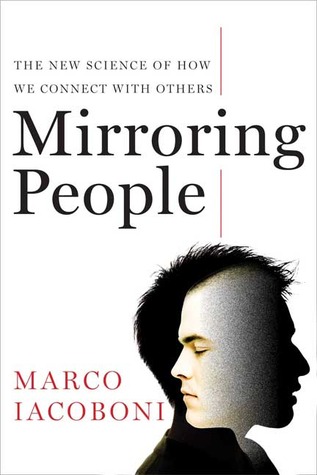
When the baby starts to discover other people movements, a mirroring process starts in the brain of the baby and copies the movements of other people. Refer to the book written by Marco Iacoboni.


During your early years of life, your brain records and refines several primary movement patterns that it will need again and again. These patterns, once ingrained, allow your brain to quickly put them in to action and modify them slightly as the environment dictates.

Learning or modifying basic movement patterns

Primary movement pattern is learned without a role model, basic movement pattern is learnt by using a role model like parent, other children…..Or martial arts instructors.
Using walking as an example. Your brain is recalling the basic pattern known as ‘gait’ and could modify this to uphill or downhill or over uneven surfaces or in a crowd with shorter steps than usual.

The patterns are used in many variations but in the brain, the basic movement pattern is always the same. So a strike with the hand-blade, a fist or a knife is a replica of a basic movement pattern in the brain. What changes is the speed at which they occur, the loading in the movement (due to the weight of a weapon), and other minor refinements (where the target is and the timing of the start of the movement).
With a basic movement pattern the relative timing of the body segments stays the same. So, in striking with the hand-blade, if the action took one second the timing and sequencing of the joint movements would all be proportional to that one second. If in a strike with a weapon, the action took half a second the timing and sequencing of the joint movements would still be in the same proportion as in the hand-blade strike.

This allows us to ‘slow down’ and perfect a movement if someone is having a hard time with it, and as if by magic, when we speed the movement up again the improved movement should prevail. This is one reason that getting it right is more important than getting it done. The purity of the movement greatly increases the forces that can eventually be developed and can significantly reduce the injury risk simultaneously.

0.5 seconds for the mind to recognise what has occurred

libet bookBenjamin Libet states in his book, “Mind Time: The Temporal Factor in Consciousness (Perspectives in Cognitive Neuroscience),” that it takes 0.5 seconds for the mind to recognise what has occurred.
When someone attacks you, you usually try to defend with your hands, but this is just a conditioned response. However, if you enter into your opponent as your opponent is about to attack, your opponent will be turned back on himself and his attack will suddenly stop. This is because you are entering in before 0.5 seconds and entering the unconscious mind of your opponent. That is why you can control your opponent. Once your pre-0.5 seconds unconscious mind is controlled, you cannot break free from that condition. Usually, after 0.5 seconds, both you and your opponent are in the conscious world, and because such pre-conscious control will not work, it will become a simple exchange of power and technique.

Sen or pre-emptive action

5 rings011There is only “one” pre-emptive action, but we discern three types in pre-emptive action.

• One is a pre-emptive action from me to the opponent, and it is called the active pre-emptive action.
• Another is a pre-emptive action when the opponent is to strike me, and it is called the reactive pre-emptive action.
• The last is a pre-emptive action when both the opponent and I are to strike each other, and it is called the interactive pre-emptive action.

There are no other type in pre-emptive actions.
A pre-emptive action is the decisive factor in victory, it is the most crucial in martial arts.
There are many details in a pre-emptive action, but as it is up to the logic of the moment and you need to see the mind of the opponent and use the skill of martial arts to win.
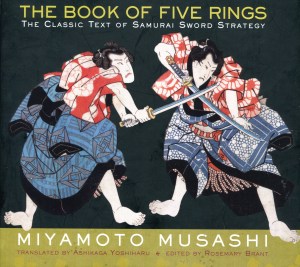
In the “Fire” book (The book of 5 Rings) by Musashi Miyamoto, you will find a similar explanation.

Chikara wo Nuku 力を抜く

In a Japanese dojo, you hear sometimes the expression. Chikara wo Nuku. Chikara means power or force. Nuku means to pull out or withdraw. You may hear for example `katana wo nuku`, to pull out (unsheathe) your sword. It means start of the action.
The “chikara wo nuku” concept is not only important in martial arts but also in everyday life when there is friction between 2 people. Finding the timing to remove the tension is a skill very useful for quarrelling people. There is also an expression when a fighting couple makes up, moto no saya ni osomatta – the sword is sheathed back in its scabbard.

Chikara wo nuku is the ability to drop or release power in a proper manner and timing when you feel resistance in an exchange with the opponent. In toshu randori (unarmed randori), you can either create a tension or pressure and release it or you receive tension from your opponent and skilfully direct and release it. Properly executed, you can create moments of great surprise for your opponent. When the opponent is surprised, his power is often disrupted and creates moments of receptivity in him.

The function of muscles

The most serious mistake that people have about body movements is that they believe movements are primarily generated by conscious contractions because they have consciousness and muscle.
Basically there are 2 kind of using muscles in the training for Tomiki Aikido.

• bridging the distance
• manipulation of opponent

Bridging the distance

In bridging the distance, the function of muscles is not to generate the main power of body movements, but to trigger the start a movement (to lose balance) by using gravity, to control it (to create new balance), and to redirect into the opponent. Using gravity is an economic way of using energy and is certainly according Kano’s maxim :

“Seiryoku-Zenyo” (maximum efficient use of energy)


Manipulation of the opponent

Manipulation of the opponent is the result of the body communication by using the concept of “sen” or initiative.
Besides “sen”, we must also consider the distance between the 2 bodies. The attack of the opponent has to be controlled by using “mikiri” or the manipulation of the distance by an extremely thin margin. This action of control must be very precise. By using the tenshikei skill we can transmit our power into the opponent.
Pulling or tensing the muscles will destroy the capacity of listening to the communication of the 2 bodies

autopietic system

Jukozo – Flexible structure – Tensegrity

Tomiki wrote many articles and books about Budo, mostly Judo and Aikido. In his writings, but also in his lectures he stressed a lot “shizentai” or natural posture.
Shizentai is a posture neither limp or neither rigid. From shizentai we can move in any direction. If someone is pushing we can move away without changing the distance in our relationship with the opponent or partner.
Flexibility is a concept prevalent in all parts of Japanese society. Even in Japanese architecture, flexible structure is a basic concept due to the many earthquakes.
The old temples were built on a principle of flexi­bility, with thousands of interconnecting wooden parts that absorbed and dissipated the force of an earthquake as it traveled up and down the structure. Unfortunately this concept was overlooked by early 1900 Japanese architects until there was a major earthquake in 1923. From a modern architectural perspective flexible structure or “jukozo” was a revolutionary concept, and reinvented by Japanese archi­tects as the only defence against earthquakes.
In Western society, tensional integrity or floating compression is a similar concept (see Tensegrity on Wikipedia).
In martial arts, skill of “jukozo” or the interconnecting parts of the human body is one of the basic premises of study from the beginning in your training. Jukozo is direct related to “rendo” (interlinked movements) which will be discussed later.

Soft-Tissue-Therapy-Tensegrity-Structure1-e1426098026118  tensegritty01