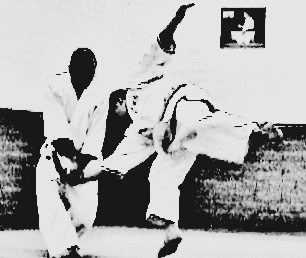
A person is identified not just by their name but by the human values they embody. Strip away those values, and the person becomes an object, easily manipulated by dictators, corporations, and social media.
Similarly, a martial art is defined by its name and the human values it imparts. Remove those values, and it becomes vulnerable to exploitation by salespeople, corporations, or worse—it loses its purpose and is discarded as irrelevant.
Introduction
Aikido, a modern Japanese martial art founded by Morihei Ueshiba, is renowned not only for its self-defense techniques but also for its aesthetic and performative qualities. While Aikido maintains its roots in practical combat, it seamlessly integrates elements of performance art, creating a harmonious blend of martial effectiveness and artistic expression. This exploration delves into how Aikido embodies performance art, examining its choreography, theatricality, and the balance between physical technique and mental discipline.
Kata: The Foundation of Aikido’s Performative Aspect
Understanding Kata
At the heart of Aikido’s performative nature lies kata, a collection of structured movements that simulate real combat scenarios. Kata serves as both a training tool and a performance medium, allowing practitioners to internalize techniques while presenting them in a visually engaging manner.
- Static and Dynamic Structures: Kata comprises static structures (key-pictures) and dynamic structures (transitional movements). Static structures provide a foundational stance or position, while dynamic structures facilitate smooth transitions between these positions. This interplay creates a fluid and aesthetically pleasing sequence of movements.
- Memetic Naming: Post-World War II, high-ranking students began naming techniques to aid memory retention. These names function as “memes,” triggering mental images and structures that enhance the practitioner’s ability to recall and execute movements with precision.
The Role of Go-Kyo and Basic Techniques
The Go-Kyo system in Kodokan Judo and its counterparts in Tomiki Aikido illustrate the structured approach to teaching and performing techniques.
- Go-Kyo in Judo: This classification system organizes throwing techniques, providing a systematic framework for learning and demonstration.
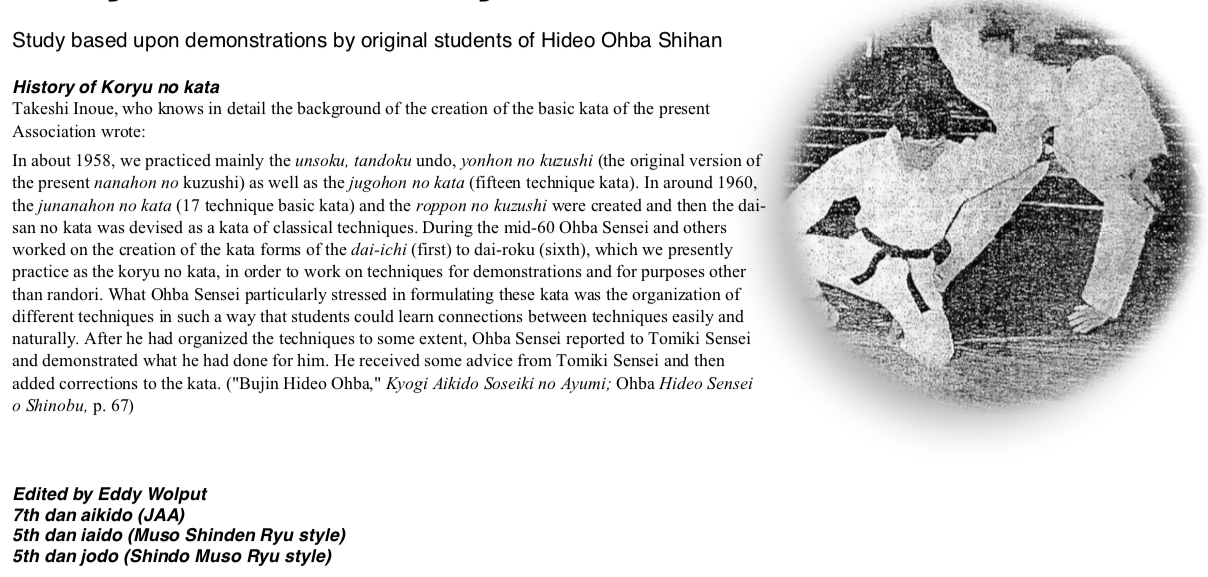
- Basic 15 and Its Evolution: Kenji Tomiki introduced Basic 15, a foundational set of techniques in the 1950s. Although not classified formally as kata, Basic 15 laid the groundwork for subsequent iterations like Basic 17 and Tanto Basic 17, which incorporated more refined and varied movements.
- Randori no Kata: High-ranking instructors coined Randori no Kata to formalize basic techniques, culminating in its inclusion in the JAA syllabus in 1980. This formalization underscores the performative intent behind kata, emphasizing both technical proficiency and aesthetic presentation.
Theatricality in Aikido
Historical Context of Martial Arts and Theater
The intersection of martial arts and performance art is not unique to Aikido. Historically, martial practices have often been intertwined with theatrical traditions:
- European Fencing: Once part of theatrical studies, fencing evolved into both a competitive sport and a performative display.
- Chinese Opera and Kabuki: These traditional art forms heavily incorporate martial choreography, blending combat techniques with dramatic storytelling.
Aikido’s Theatrical Elements
Aikido adopts similar principles, integrating martial techniques with performative choreography to create a captivating spectacle:
- Choreographed Performances: Aikido demonstrations often showcase the fluidity and grace of techniques, emphasizing the seamless execution of movements. These performances are meticulously choreographed to highlight the harmony between practitioners.
- Character Development: Modern Budo (Gendai Budo) emphasizes character development alongside technical skill. In Aikido performances, practitioners embody specific roles—Tori (the attacker) and Uke (the defender)—each with distinct movements and intentions, enhancing the narrative aspect of the performance.
- Social Interaction: Performances are designed to engage spectators, conveying the “truth of action” by simulating realistic combat scenarios. This interaction fosters a connection between practitioners and the audience, elevating the performance beyond mere technique demonstration.
Balancing Combat Effectiveness and Aesthetic Expression
Combat Roots vs. Aesthetic Focus
Aikido’s dual emphasis on combat effectiveness and aesthetic beauty presents both opportunities and challenges:
- Combat Effectiveness: At its core, Aikido remains a practical martial art aimed at self-defense. Techniques are designed to neutralize opponents efficiently, emphasizing leverage, timing, and precision.
- Aesthetic Expression: Simultaneously, Aikido values the visual appeal of movements. The flowing, circular motions not only serve practical purposes but also create a visually harmonious performance.
Potential Conflicts and Solutions
The balance between combat utility and aesthetic form can sometimes lead to conflicting priorities:
- Neglecting Practicality: An overemphasis on aesthetics may result in the neglect of combat effectiveness, leading to the spread of misconceptions about the applicability of techniques in real-world scenarios.
- Integrating Concepts: The ideal approach integrates combat principles into the performative aspects, ensuring that aesthetic movements retain their practical origins. This synergy enhances both the visual appeal and the functional integrity of Aikido techniques.
Training Methods and Their Performative Implications
Static and Dynamic Structures in Training
Aikido training incorporates both static and dynamic structures, each contributing to the performative quality of the art:
- Static Structures: These are foundational stances and positions that provide stability and serve as reference points for movements.
- Dynamic Structures: These involve transitions and fluid movements between static structures, creating a seamless flow that is both practical and visually engaging.
Role of Instructors and Advanced Practitioners
Guidance from experienced instructors is crucial in bridging the gap between technical proficiency and performative execution:
- Choreographic Guidance: Instructors help practitioners refine their movements, ensuring that techniques are executed with both precision and grace.
- Mental Discipline: Beyond physical training, practitioners cultivate mental structures that underpin their movements, enhancing the authenticity and fluidity of their performance.
Use of Media in Enhancing Performative Skills
Modern training methods leverage various media to augment the learning and performative aspects of Aikido:
- Visual Aids: Books, videos, and digital platforms provide visual representations of techniques, aiding in the comprehension and execution of complex movements.
- 3D Insights: Video demonstrations offer three-dimensional perspectives, allowing practitioners to observe and emulate the intricacies of dynamic structures.
The Aikido Syllabus: A Blueprint for Structured Performance
Memetic Collection of Techniques
The Aikido syllabus functions as a structured collection of “memes,” each representing a technique’s underlying structure:
- Memory Aids: Technique names act as mental triggers, facilitating the recall and execution of movements through associated images and structures.
- Structured Learning: The syllabus organizes techniques in a logical sequence, promoting progressive mastery and enabling practitioners to build upon foundational skills.
Impact on Performative Demonstrations
A well-structured syllabus enhances the performative aspect by ensuring that practitioners have a comprehensive understanding of each technique’s nuances:
- Consistency in Performance: Standardized techniques allow for uniformity in demonstrations, making performances more coherent and impactful.
- Depth of Understanding: A thorough grasp of the syllabus ensures that performances are not merely superficial displays but reflect a deep understanding of the art’s principles.
Static and Dynamic Structures Training: Enhancing Performative Excellence
Technique Demonstration and Perception
When demonstrating techniques without specifying the initial action, practitioners reveal their personal interpretation and understanding of the movement:
- Individual Interpretation: Each practitioner’s unique perception influences how they execute and present a technique, adding diversity to performances.
- Visual Representation: The balance between static and dynamic structures in demonstrations creates a visually engaging narrative that captivates audiences.
Skill Development: Athletic vs. Martial Skills
Aikido distinguishes between athletic skills (physical prowess) and martial skills (combat effectiveness), both of which contribute to performative excellence:
- Athletic Skills: These enable practitioners to execute movements with agility and strength, enhancing the visual appeal of performances.
- Martial Skills: These ensure that techniques retain their combat effectiveness, maintaining the art’s practical integrity.
Integration in Competitive and Performative Contexts
Tomiki Aikido’s emphasis on competitive formats like Randori and Kata illustrates the dual application of techniques in both combative and performative settings:
- Randori: A free-form practice that emphasizes adaptability and combat readiness, showcasing martial prowess.
- Kata: A structured form that highlights the aesthetic and choreographic aspects of techniques, emphasizing grace and precision.
Theatricality and Character Development in Aikido
Expressing Narrative Through Movement
Aikido performances often convey a narrative, portraying the interaction between Tori (the attacker) and Uke (the defender):
- Role Embodiment: Practitioners embody their roles, infusing movements with intention and purpose that narrate a story of conflict and resolution.
- Emotional Expression: Beyond physical movements, Aikido performances express emotions and psychological states, adding depth to the portrayal.
Character Development Through Practice
Modern Budo emphasizes character development as a fundamental aspect of martial arts training:
- Discipline and Respect: Practitioners cultivate qualities like discipline, respect, and humility through rigorous training and performative practice.
- Social Interaction: Engaging in synchronized movements and coordinated techniques fosters social bonds and mutual understanding among practitioners.
Challenges and Solutions in Balancing Aesthetics and Practicality
Risk of Aesthetic Overemphasis
An excessive focus on aesthetic elements can compromise the martial effectiveness of techniques:
- Misconceptions: Overly stylized performances may lead to misunderstandings about the practical application of Aikido techniques in real-world scenarios.
- Technique Dilution: The essence of techniques may be diluted if aesthetic considerations overshadow functional execution.
Integrating Combat Principles into Performance
To maintain the integrity of Aikido as both a martial art and a performance medium, it is essential to balance aesthetics with combat principles:
- Functional Choreography: Choreograph movements in a way that preserves their combat effectiveness, ensuring that performances remain authentic and practical.
- Educative Performances: Use performances as opportunities to educate audiences about the underlying principles and practical applications of techniques, bridging the gap between art and combat.
 Study Group Tomiki Aikido