written and/or compiled by Eddy Wolput °1948 – 7th dan Aikido (JAA-Tokyo/Japan) – 5th dan Iaido – 5th dan Jodo. Part of the material in this article is not directly linked to the Japan Aikido Association (NPO) program or Shodokan approach. Other concepts are incorporated into the study of the subject presented.
Section 3 of koryu no kata dai yon is called Oyo Waza
Oyo Waza literally means “application techniques”, which means you are using basic techniques in different attacking situations. You are required to “adapt” the basic technique without changing the concept and principles.
Section 3 – Techniques 1-4
These waza don’t use a lock. The first 2 waza are using an atemi waza, an application of gyakugamae ate. The next 2 waza are using a wrist-grip.
Section 3 – Techniques 5-8
A lock is applied to perform a throw.
Section 3 – Techniques 9-11
Using “tenshikei” makes these throws an efficient aikido waza.
Koryu dai yon a basic training tool
From a technical point of view, koryu dai yon has a different view on aikido waza as promoted in 17-hon no kata or 17-hon no kata in Tomiki’s aikido method. Mostly it is associated with the Kodokan kuzushi concept. But looking at the content of this kata, the relationship with Daito Ryu is more evident. The use of the hand (tegatana) is the most important aspect in the kata. Examination of Daito Ryu Aikijujutsu waza, the use of Aiki-age and aiki-sage are important and basic skills. Without these skills, other waza are not efficient.
When Kenji Tomiki was involved in the creation of Kodokan Goshin Jutsu kata, he visited Renshinkan Daito Ryu Aikijujutsu dojo headed by Maeda Takeshi, student of Matsuda Toshimi. Matsuda sensei was a student of Takeda Sokaku. As a sidenote, founder of Hakko Ryu Aikijujutsu was a member of the Matsuda Daito Ryu lineage.
Tomiki Kenji sensei, a student of Ueshiba Morihei and Jigoro Kano, asked Maeda to see the real Daito Ryu.
By examining the Renshinkan syllabus, the resemblance with Koryu dai yon is remarkable. The use of “tegatana” is from the beginning a basic skill.
From a BAB movie: Daito-ryu Aiki Jujutsu Renshinkan Part.1 Zadori 〜Aiki in sitting position
Toyota Kata defines management as, “the systematic pursuit of desired conditions by utilizing human capabilities in a concerted way.” Rother proposes that it is not solutions themselves that provide sustained competitive advantage and long-term survival, but the degree to which an organization has mastered an effective routine for developing fitting solutions again and again, along unpredictable paths. This requires teaching the skills behind the solution.
Teaching the skills behind the use of the jo
When reading the biography of Kenji Tomiki and Hideo Ohba, there are references to sword and other weapons schools. Some of those references are from the time when Kenji Tomiki and Hideo Ohba were in Manchuria. Both were exposed to military martial arts especially sword, spear, bayonet and short sword. In Koryu no kata the yari or juken is replaced by the jo, but of course the length of the jo is not fixed like the jo of the Shindo Muso Ryu jojutsu or Kendo Renmei Jodo.
Military Juken training
There are 8 jo no tsukai kata in Koryu no kata dai san and 4 kata in Koryu no kata dai roku. The 4 dai roku kata are an extension of dai san jo no tsukai kata.
All kata start with tori thrusting to the suigetsu (solar plexus) of the opponent (uke). Note the use of rolling feet.
Uke is avoiding and grasping the jo either with 2 hands or 1 hand.
All actions of tori after the grasping are following the same logic.
The study of kata is very complex and depends on harmonizing the action between tori and uke. By trying to describe all the actions in the kata, there is a danger someone will depend totally on the description and will deny the creativity of a human being. Remember the words of Gustave Mahler
“Tradition is not the worship of ashes, but the preservation of fire.” ― Gustav Mahler–
Koryu no kata dai san – Jo no tsukai nr1
Koryu no kata dai san – Jo no tsukai nr2
Koryu no kata dai san – Jo no tsukai nr3
Koryu no kata dai san – Jo no tsukai nr4
Koryu no kata dai san – Jo no tsukai nr5
Koryu no kata dai san – Jo no tsukai nr6
Koryu no kata dai san – Jo no tsukai nr7
Koryu no kata dai san – Jo no tsukai nr8
Koryu no kata dai roku – Jo no tsukai nr1
Koryu no kata dai roku – Jo no tsukai nr2
Koryu no kata dai roku – Jo no tsukai nr3
Koryu no kata dai roku – Jo no tsukai nr4
Why practising with jo?
To understand the purpose of weaponwork in Aikido we must accept that development does not rely upon techniques or weapons, but on independence of it. If a sword is used, do not realize it as a sword. If using a Jo, do not depend on it, but feel the common harmony in body movement.
By using a weapon there is a real threat towards the opponent or training partner. Unfortunately by doing too much shiai, the feeling of a threat not mentioned in the rulesbook will be ignored and some parts of the training can be spoiled by such an attitude. For this reason a balance has to be created between randori and kata, even if someone doesn’t see or ignores the purpose of kata training. Understanding the logic in the kata is necessary.
There are different opinions on the meaning of ura-waza.
reverse or counter technique, also called kaeshi-waza.
alternative performance of kuzushi with application
……….
7-hon no kuzushi ura-waza
In Koryu no kata Dai Yon, the 2nd section is called Ura-waza. This section is build upon the omote-waza discussed in a previous article.
The start of the 7 waza are the 7-hon no kuzushi without the throw of the omote-waza, followed by an alternative action. Some of these actions are applications for randori (restricted free fight) or goshinho waza (aiki self-defence). The “kuzushi” element is a prime factor for a non-muscular approach.
Non- muscular actions
Movement is based upon muscular actions. When we say “non-muscular action”, we are talking about extending muscular actions, and not flexing muscular actions.
For a technical explanation see Encyclopedia Britannica.
Pulling and pushing are 2 different movements, but from a non-muscular point of view both are using an extensor action. Basically all “kuzushi” movements are based upon the non-muscular concept. The moment when we use a flexor action, opponent will intercept and can do a counter movement.
All non-muscular actions in koryu no kata dai yon are movements away from the centre to the outside.
A main component of Dai Yon is the (un)famous 7-hon no kuzushi. The 1st part of the Dai-Yon is about throwing an opponent after acquiring a perfect “kuzushi”. This possibility in a fighting situation will be very rare….although it can happen if…..
Koryu no kata Dai Yon
Nage no kata – omote waza – 7 waza
Nage no kata – ura waza – 7 waza
Oyo waza* – applications – 11 waza
*Oyo waza designates applications build upon 7-hon no kuzushi basics.
Nage no kata – omote waza
The 1st part of the kata is build upon the 7-hon no kuzushi. A throwing action is added after the kuzushi.
The focus is on the action of the hand and arm doing the kuzushi. The efficiency of the throw is depending on the elasticity of Tori’s body. When the body is stretched power is stored and can be released into uke’s body.
The dynamics of the kuzushi (loss of balance) will undergo the influence of gravity.
There is a mechanism we have to take in account when we use stretching and release.
With the muscular relaxation, the movement is immediate, in a single time, this movement is much faster than with the muscular system of contraction. If we try to throw with muscular contraction, opponent will sense your intention and will block your movement.
Using meguri and tenshi-kei is necessary to create efficient kuzushi.
Jodan aigamae & Jodan gyakugamae
Kuzushi is created by using a rotational movement of the hand, followed by a body movement with the elbow as a transfer joint.
When you try to lift the hand and arm, Uke will feel and block your movement.
Jodan aigamae & gyakugamae are actions on the inside of Uke’s arm.
Chudan aigamae & Chudan gyakugamae
Kuzushi is created by using a rotational movement of the hand, followed by a body movement with the elbow as a transfer joint.
The skill is to turn opponent’s arm in hineri fashion without stretching opponent’s arm. Rotating the arm is the message.
Chudan aigamae & gyakugamae are actions on the outside of Uke’s arm.
In the 70-ties I had the opportunity to study aikido with Hirokazu Kobayashi. In that time I didn’t understand the concept of meguri* and tenshi (body rotation). Kobayashi stressed on many occasions the spiral movement of the wrist and the dropping of the elbow. Using the koshi was also one of his favorite remarks.
It was Akira Hino’s explanation about “tenshi-kei”, the power of internal rotation, that gave me a better understanding of meguri* and the use of koshi (lower back).
*A defensive movement when grasped at the wrist, is the skill of “meguri”, meaning flexibility, rotation of the forearms. The use of the koshi as engine for power release increases the efficiency of defense action.
Meguri and tenshi are the main components in 7-hon no kuzuzhi, the balance disturbing exercises of Tomiki’s Aikido. Without spiral rotations, the balance disturbing will only rely on muscular power of the arm. Only by using “rendo” or synchronizing body movements, the power of meguri and tenshi will create the necessary balance disturbing followed by a throw or control action.
7-hon no kuzushi
The concept of balance disturbing in Tomiki’s Aikido is partly the result of the influence of Kodokan Judo, but also Morhei Ueshiba’s Aikido is prominent present.
Morihei Ueshiba’s Aikido is build around the use of rotational and spiral power.
In the picture, there is the downward rotational movement of the body. By using a meguri pulling action on the sleeve or arm, the rotational movement changes into a downward spiral movement.
Some teachers use an almost linear approach, others use a more circular approach. This of course will affect the perception and will have a negative influence on the performance of lesser skillful practitioners. The external movements has to combined with internal movements, this is only possible through the skill of “rendo”.
The 7-hon no kuzushi is build around :
vertical movement
horizontal movement
central axis rotation
The basic positions are “aigamae” & “gyakugamae” for the vertical and horizontal movements. You will notice, Uke is grasping the wrist with the right hand and keeps the left hand ready for the follow-up action. This can be a strike with the fist or another grasping action.
The central axis rotation start from a rear attack position. Of course the central axis rotation is also present in the vertical and horizontal movements.
When studying 7-hon no kuzushi, we have to understand these movements are simplified and will not work in a randori environment without adaptation to the circumstances.
The movement pattern of these exercises has to be written in the subconscious part of the mind for immediate access when necessary
Vertical movement
Combination Jodan & Gedan Kuzushi
There are 2 vertical modes in 7-hon no kuzushi:
upward – jodan-kuzushi is mostly characterized by a hineri movement
aigamae
gyakugamae
downward – gedan kuzushi – mostly characterized by a “gaeshi” movement
aigamae
gyakugamae
Horizontal movement
Horizontal kuzushi movements are mostly characterized by a hineri movement
When performing from the right posture, opponent can attack from 2 positions:
aigamae
gyakugamae
Central axis rotation
The idea here is an application of spinning top power.**
**A spinning top is a toy designed to spin rapidly on the ground, the motion of which causes it to remain precisely balanced on its tip due to its rotational inertia.
Meguri and tenshi in 7-hon no kuzushi
A “kuzushi” movement is succesful when we consider the following:
target: the wrist attacked by the opponent
the hand of the grasped wrist to indicate the direction
the elbow: the transfer joint for the full-body power by using meguri and tenshi
The target
Opponent can grasp the wrist according 2 modes:
omote dori – outside wrist
go-no-sen
sen-no-sen
ura dori – inside wrist
go-no-sen
sen-no-sen
Each mode has an influence on the hand movement of the grasped wrist. In the go-no-sen mode, opponent has the initiative of the grasping. Defender has the initiative in the sen-no-sen mode.
There are 2 grasping methods:
junte dori
kote gaeshi
kopte mawashi
junte dori – regular grip
gyakute dori – reverse grip
In 7-hon no kuzushi only the junte dori is covered. Gyakute dori or reverse grip is used in kote gaeshi, kote mawashi ……..
How to grasp a wrist?
Grasping a wrist is “almost identical” as grasping the hilt of a sword.
Most of the holding power is in the thumb and middle finger. Little finger, ringfinger and index finger are envelopping the wrist. Grasping is not a static action. The dynamics of grasping is the result of “meguri” and “tenshi”.
The hand of the grasped wrist
As already mentioned, Tori can act in a go-no-sen or sen-no-sen mode.
The hand in most of the cases can move freely. There are 2 basic modes:
upward
downward
By using the turning point in the hand, the tendon of in the forearm will stretch. If the point of turning is close to the wrist, the stretching will not happen. By stretching the tendon(s) it is easier to use the elbow in the desired direction.
Meguri and the use of elbow
Meguri is based upon the flexibility and rotation of the forearm.
The flexibility and rotation of the forearm and elbow is depending on the connection with the kyokotsu, a point at the breastbone. When pulling in the arm by using the biceps muscle, the shoulder will be locked and the power from the central body cannot travel through the elbow to the hand.
In his book “Goshi Jutsu Nyumon”, Kenji Tomiki used a picture to explain hand and elbow movement around a fulcrum, the grasping point by opponent. The picture is only showing the principle of leverage and does not include meguri action.
It is not always possible to move efficiently just by using simple leverage as seen in Tomiki’s fulcrum picture. The elbow movement is only possible if the shoulder is free of tension.
Rotation of the forearm when grasped at the wrist is possible by using the skill of “tenshi” or internal rotation. Tenshi-kei is the power of tenshi and can be used to make waza efficiency higher.
We can use body rotation and internal rotation at the same time to increase waza efficiency. An example can be the rear wrists grasping where we use an external body rotation and tenshi or internal rotation.
Basic 7-hon no kuzushi
7-hon no kuzushi is an exercise to study body movements which can be used in all forms of balance disturbing. The belief that 7-hon no kuzushi is the method for balance disturbance is a delusion. It is an exercise to learn how to use the body with external and internal movements.
There are many versions of 7-hon no kuzushi. The early versions are created when Kenji Tomiki was still teaching. During the creation of Koryu no kata, the study of 7-hon no kuzushi became a part of the training and was incorporated into Koryu no kata daiyon.
History of Koryu no kata
Takeshi Inoue the autor of a book on Koryu no kata, who knows in detail the background of the creation of the Koryu no kata wrote:
In about 1958, we practiced mainly the unsoku, tandoku undo, yonhon no kuzushi (a former version of the nanahon no kuzushi/7-hon no kuzushi) as well as the jugohon no kata (basic15 kata). In around 1960, the junanahon no kata ( basic17 kata) and the roppon no kuzushi/6-hon no kuzushi were created and then the dai-san no kata was devised as a kata of classical techniques. During the mid-60 Ohba Sensei and others worked on the creation of the kata forms of the dai-ichi (first) to dai-roku (sixth), which we practice as the koryu no kata, in order to work on techniques for demonstrations and for purposes other than randori. What Ohba Sensei particularly stressed in formulating these kata was the organization of different techniques in such a way that students could learn connections between techniques easily and naturally. After he had organized the techniques to some extent, Ohba Sensei reported to Tomiki Sensei and demonstrated what he had done for him. He received some advice from Tomiki Sensei and then added corrections to the kata. (“Bujin Hideo Ohba,” Kyogi Aikido Soseiki no Ayumi; Ohba Hideo Sensei o Shinobu, p. 67)
Some examples from an old Waseda movie 1975
7-hon no kuzushi by Takaeshi Inoue
The illustrations: Tomiki Aikido-Book 1-1978 by dr Lee ah Loi
Tori: Takeshi Inoue
Jodan – aigamae
Jodan – gyakugamae
Chudan aigamae
Chudan gyakugamae
Gedan aigamae
Gedan gyakugamae
Ushiro
7-hon no kuzushi application examples
Some applications we can find in “Koryu no kata dai yon”.
Examples are: Jodan kuzushi aigamae nage waza
Jodan kuzushi gyakugamae nage waza
From “Koryu no kata dai roku” Jodan & gedan kuzushi
There are many explanations for Aiki-Do and from a historical point of view we have to look a the lineage of the many educational lines of Aiki-Do.
Morihei Ueshiba can be credited to be the founder of Aikido and was a student of Sokaku Takeda, the founder of modern Daito Ryu Aikijutsu (or Aiki-Jujutsu). Morihei Ueshiba modernized Daito Ryu and therefore changed the mechanical but also the philosophical concepts.
Is there a difference between Aikido and Aiki-Do?
The distinction between the two can be summarized as follows:
Aikido: the martial art created by Morihei Ueshiba, based upon a concept of natural rhythm, a free flow of personal expression that offers no conflict with nature.
Aiki-Do: a method to learn the skill of aiki which is to provide a method of hand-to-hand combat.
According to Japanese Martial Arts scholar Don Draeger, the personal view of Sokaku Takeda on aiki is:
The secret of aiki is to overpower the opponent mentally at a glance and to win without fighting.
Morihei Ueshiba modernized Aiki-Do, sometimes called Aiki-Budo or other names, in such a way that the concept of Aiki is different from the Daito Ryu Aiki concept. The concept of Aiki by Morihei Ueshiba is explained in “Aikido” by Kisshomaru Ueshiba, the son of Morihei Ueshiba. This book is written under supervision of Morihei Ueshiba.
Aiki is the expression of Truth itself. It is the way of calling people together and reconciling them with love whenever they may attack us.
Our interest of course is in the lineage of Kenji Tomiki. He was a student of Morihei Ueshiba for his Aikido (previously AikiBudo or other names) and this is the reason why there is a link with the Daito Ryu lineage. But can we conclude Tomiki Aikido is Daito Ryu? In my opinion, Tomiki Aikido has some Daito-Ryu influence via Morihei Ueshiba, but is not following the Daito-Ryu syllabus and therefore the movement patterns will be very different.
Another person who has an influence on Tomiki’s Aikido is Hirokazu Kobayashi from Osaka. Some of his student are claiming Kobayashi was a Daito Ryu shihan. But this seems a controversial assertion. To learn more about the link between Kobayashi and Daito Ryu, you can read an article by Guillaume Erard.
Tetsuro Nariyama, shihan of the Shodokan Dojo in Osaka has a great influence on the modern version of Tomiki’s Aikido and he was for many years a student to Hirokazu Kobayashi. During the time he learned from Kobayashi, he introduced Tomiki’s randori method to university aikido clubs under Kobayashi’s control.
Explanation by Kenji Tomiki
Kenji Tomiki gave an explanation for 2 important words, Aikido & Aiki.
Aikido: the old saying goes, “It is the spirit that carries the mind and controls the body.” The people of ancient times believed that man’s mind and body and consequently his strength were under the control of the spirit.
Aiki means making your spirit “fit in” with your opponent’s. In other words it means bringing your movements into accord with your opponent’s. After all it means the same thing as the “principle of gentleness,” for it is an explanation of the principle from within.
The perception of Kenji Tomiki is a “pragmatic” one, and most people approach his method very technically. In my opinion, Tomiki explained Ueshiba’s Aikido according the ideas of Kodokan founder Jigoro Kano, but tried to keep the spiritual message of Morihei Ueshiba. Tomiki seems to use almost non-religious words to explain a spiritual message. By using a non-religious language, some Western people are very highly attracted by the logic he used to explain his Aikido understanding. Other people regret the absence of a kind of aiki-mystery in the method.
But is this just a perception or maybe we don’t understand Tomiki’s message?
There is an interesting quote of Tomiki in Geof Gleeson’s book: Judo Inside Out:
When training in aiki jitsu under Professor Tomiki he often used the symbol of prayer, the placing of two hands together as signifying the purpose of prayer and religion – the duality of God and man, the yin and yang, becoming one.
Human Lifelong Activity
If we try to understand Aikido in a pragmatic way but as a lifelong activity, we cannot just build our understanding on techniques, exercises or technical kata. We have to find out the elements which can be used as criteria for Aikido as a human lifelong activity. I am not referring to the 3 principles of Judo used by Tomiki (Natural posture, Breaking the posture & Principle of Gentleness) because they are included in the Fundamental Elements.
Yōso – Fundamental elements
Yōso literally translated as “principle”, but in the context of our study we use “essential element”. Of course this is already discussed in other articles on this blog. But I would like to stress the importance of this way of thinking: A human lifelong activity.
This is only possible if we change our way of thinking from raw muscular power into a method based upon physical & mental skills, creating an Aikido method for everybody. This method is using technical skills to control attacking power of an opponent by using fundamental elements without raw muscular power.
What are the fundamental elements in the method which can be practised by everyone?
Ma
Hyoshi
Aiki
Ma : distance & time interval
Distance :
distance between 2 opponents or more
the distance to step to the opponent to control him, for example grasping the wrist
Time Interval :
the relation between distance and time
big and small movements and time relationship
Controlling the distance and the time to bridge the distance doesn’t need excessive muscular power, only our natural way of moving is needed. The relationship with the principle of natural posture is evident.
The exercises unsoku-ho & tandoku undo are a very basic training tool to practise how to move in a natural way. When a training partner is involved, we are confronted with the distance and the relationship with time when moving into a safe zone after a movement of the opponent. The concept of “rikakutaisei” is her involved.
Hyoshi : cadence, rhythm, tempo
cadence : Cadence is the total number of repeated movements (cycles) taken within a given period of time.
rhythm : creating movements within a pattern (waza). You create rhythm by repetition of similar movements with a variations pattern
tempo : the speed of a movement cycle
Learning the skill to change hyoshi with the purpose to control the opponent. There are 2 opportunities:
Changing the own hyoshi to create an opportunity to control the opponent.
Changing opponent’s hyoshi to create an opportunity to control the opponent.
Repetitive training is a basic method to learn the concept of hyoshi an includes the following parameters:
cadence : the total number of repetitions in a certain time
rhythm : repetitions of a movement pattern without changing the choreography
tempo : the time to perform 1 movement pattern, which is repeated several times at the same speed
Combinations of cadence, rhythm and tempo can be used.
Aiki
Aiki (in aikido) is the skill to read correctly the Ma & Hyoshi of the opponent and controlling his actions. Reading the opponent is called “yomi”* and comes from “yomu” which is “to read”. We can read before or during the actions of the opponent. When this reading is correctly done, the use of power will follow the laws of natural movements with the body. No tension is required to apply power. Therefore it becomes a lifelong activity.
The concept of reading goes far beyond the use of the eyes. The total body can be seen as a sense organ and will be used to “yomi” correctly the Ma & Hyoshi of the opponent. It is most important to “un-tension” the body if we use it as a “yomi” sense organ.
Some advice by Shigeru Uemura, former ShitoRyu karateka In internal martial arts we advance by releasing the muscles, in other words by falling. When we release the muscles, an energy linked to gravitation is released. With the muscular relaxation, the movement is immediate, in a single time, this movement is much faster than with the muscular system which is done in two stages. It is by releasing the weight of the body that we move. By synchronizing the muscular system, the tendinous system, the nervous system and the bone system, which makes it possible to move with high efficiency.
By following this advice the skill how to move is improving which has a great influence on reading and anticipation of opponent’s movements.
* Sometimes Yomi is referring to a kind of fortune-telling.
In 2010, I wrote a book “Tegatana, the secret weapon of Aikido”. It describes history and technical content of Tomiki Aikido. Since that time my life changed a great deal. I am not going to disturb you with my family life. I like to mention the changes in my “martial art” life.
Since I wrote my book some interesting people came on my road to perfection. They changed completely my understanding of Tomiki Aikido.
Is this understanding the correct way of Tomiki Aikido, I don’t know, but at this moment it feels the best way for me.
Nevertheless, who are those people?
Mike Sigman : Internal Strenght & Chinese Martial Arts theory
Ilias Calimintzos : Yi-Quan, Chinese boxing
Akira Hino : Hino Budo, Japanese Martial Arts theory and practise
They triggered something in me and forced me to walk on a path in an unknown territory. I cannot see the end of the road but I enjoy very much the travelling.
Inspiration and creativity
”To raise new questions, new possibilities, to regard old problems from a new angle, requires creative imagination.” Albert Einstein
Inspiration and creativity go hand in hand, but are 2 different things. There is also the “knowledge” component involved.
Inspiration comes at the right time and will be triggered in most cases by external stimulus. It creates new ideas how to solve old problems. The new ideas, of course, have to be concreted by action, in the case of martial arts: practise.
Existing knowledge is necessary, but it cannot interfere directly with new ideas, otherwise creativity will be blocked. Keep your mind open for evaluating the process of problem solving with existing knowledge. Unfortunately knowledge is sometimes hid by bad habits.
How to become creative in your training
First, forget you are a member of a big organisation. The rules of your organisation are blocking your creativity.
Next, study the basic principles of your martial art.
Ask yourself, what is the aim of your training? For yourself or eventually for your students? When you have your answer start with your training and keep in mind the basic principles of your art.
In my case, as I am not interested in competitive randori and certainly not in competitive kata or enbu, my interest goes in the direction “how to move efficiently the body in randori and kata”. I discovered that most of the basic principles in Tomiki Aikido are the same as in most of the other martial arts. My discovery is not based upon conscious thinking and using buzz words. No, my discovery is on the level of subconscious acting.
There are no words to describe how to imply the basic principles into my art. Maybe I can say the art are the basic principles itself.
Another discovery was the concept of “rendo”. The interlinking of all your body and mind movements in relationship with the opponent. Without this interlinking your martial art will be based upon raw muscle power and wrong use of bodyweight.
Once I had a bodily feeling (taikan) of rendo, I started to review basic kata and koryu no kata. Of course my rendo is not optimal and sometimes I am trapped in my old habits.
By reviewing kata, new problems came to the surface. By using the quote of Albert Einstein, some of the problems are solved by using creativity based upon the basic principles.
Besides using the basic principles of the art, you need training in the use of hara (koshi, tanden and yōbu). How to use the mind is another important element in the training. All of those elements are commented in the content of this blog.
Creative randori
People asked on several occasions about the skills of my son. There is only 1 answer: practise.
Of course, there is external stimulus. In his case, he had very good training partners. Those men triggered him a lot to find new ways for improving his randori.
Once, a Japanese teacher said: Tim created a system which only suits him.
His ideas are written into a little booklet:
If you had a look at this booklet, you will notice this is not the basic stuff your organisation is providing. It is totally different, but on the other hand it is Tomiki Aikido Randori.
Don’t become trapped in your own structure
When creative movements become fixed movements you will be trapped in your own body and mind structure.
From a physical point of view, reference is made to doubleweight. Your body cannot move anymore. You are ready to be thrown by the opponent.
An example of this problem is called the stiff knee syndrome. Your knees are blocked because you are pushed in a defensive situation and don’t want to fall. The stiff knee syndrome is frequently seen by older people or overweight people.
Many people are aware of kata only as a collection of techniques in a prearranged order, in a solo format or with a partner.
Some Tomiki practitioners believe that a kata is a set of techniques practiced with a partner for teaching the basic principles of various aspects of Tomiki aikido.
The question can be asked : What are the basic principles of Tomiki Aikido?
The principle of natural body (shizentai no ri), which concerns posture. This is a natural, unrestricted posture from which it is possible to attack and defend, adapting to any kind of assault.
The principle of gentleness (ju no ri), which concerns the position of defense. It says, do not oppose the offensive power of any kind of antagonist with force. Rather, render that force ineffective by moving your body out of the way (taisabaki).
The principle of breaking balance (kuzushi no ri), which concerns the position of attack. This says to go and build a chance of winning by taking advantage of the breaking of your opponent’s balance or by adhering to his body.
The words are easy to understand in a conscious way. But is it possible to understand with the body?
When researching the ways of training, we find out there are 2 kinds of training methods to study the principles.
The traditional method.
The modern or the alternative method.
And what about the randori method?
We can consider randori as an application of the basic principles in a non-fixed situation. But we are discussing a fixed situation or a kata-based situation.
Traditional method
Kata was or is the central training method for all bujutsu because it is the only way bujutsu can be practiced without the practitioners being wounded or killed.
Bujutsu exponents concentrate training time on perfecting the skills that would provide the base from which fighting techniques could arise when needed. This was done through innumerable repetitions of kata, practiced with one partner as “doer” (shidachi) and the other as “receiver” (uchidachi).
Alternative method
‘To prepare for randori (free training with or without resistance), it is important to realise, that functional strength needed to perform a technique or waza, can only be developed through exercises not only focus on major muscle groups but also improve the condition and flexibility of the fascia. Kata training has a huge effect on developing fascia strength and your ability to apply that strength in many diverse directions, while still maintaining your body’s centre and balance.
In today’s sport martial arts, the big trend is power that collides with your opponent. If one remains at that level of power, then that person will have a harder time as he or she grows old. Kata training is an ideal approach for older practitioners to keep their mind and body injury-free. By exercising the fascia the body becomes more flexible and has the ability to emit tremendous power without damaging the own body by overtension of the major muscle groups.
Kata training is not dull
Practice is not a matter of quantity but quality. If your inside (quality) has not changed, it will be pointed out to you during your training, your kata or randori. There is no positive development in the repetition of meaningless practice. It is necessary to think with the body when you are practicing. The important thing is the time that you have spent in quality practice, and not simply the years that have passed in physical exercise. You have to realize this. This is shugyo (committed practice).
The whole point of kata-training (kihon training included) is to be able to progress from waza (technique) to katachi (basic frame of different waza) and ultimately to kata or your understanding by body and mind of the waza sequences.
If you practise katachi to study “the words of Tomiki Aikido principles”, you are on the wrong road to understanding. You cannot study the words, but you have to study and practise the body-skills behind the principles. Everybody knows the principle of ju, the principle of shizentai, the principle of…..
But not so many people understand the body and mind skills behind the principles. It is only through physical and mental training that the body learns how to handle in a confrontation. The difference between Kyogi Aikido and Budo Aikido becomes non-existing if the body knows, because the body and mind will react with the correct method.
Studying is different from reviewing. Finding the body-skills within kata, this is studying.
Body-skills in kata
Body-skills can be learned through practising exercises focusing on a body movement priciples or Yōso.
Yōso : literally translated as “principle”, but in the context of our study we use “essential element” or “reality based upon laws and rules”.
Japan is well-known for the skill of copying. In the West, copying has a bad flavor, but what about creative copying.
“The original doesn’t exist!”
When a performance is done, the kata or randori doesn’t exist anymore. Even if it is on videotape, the original doesn”t exist…….the videotape is a copy.
Next time we try to perform again the same kata or randori, it will be a copy …… or a new original if we don’t try to copy. But once the kata or randori is finished, the original doesn’t exist anymore.
When a student performs a kata or randori based upon your previous performance, it is a copy. Sometimes it is a copy of a copy if the student uses a videotape.
Copying is a skill and as learning all skills it takes time and perseverance.
Using videotape
Can we learn from a videotape? The answer is “yes”. But you have to understand the limitations of a videotape.
A videotape offers a fixed form, it is only 1 performance. A teacher has no “fixed form” or “standard form”. The dynamics of adaptation to the changing situations can only be seen when we have several videotapes performed during different demonstrations or other performances.
It is difficult to understand which gesture is important or not important. Sometimes people are using a kind of mannerism or non-essential gesture which is done over-exaggerated. The reason for this a non-understanding what happens.
A videotape contains mistakes. Everybody makes mistakes, also the teacher.
Creative copying
Creative copying is based upon basic patterns learned through basic training. Learning basic patterns is not the act of memorizing the visual recognition, but by repeating the patterns until the body has learned them, so that the practitioner or performer can use them without thinking. Using your creativity is the same for kata and randori, although this is only possible when your level is sufficient to do basic patterns without conscious thoughts.
The essence of kata and randori
Randori and kata has to be performed with the essence and not with the mind. But the attention to detail and accuracy cannot be omitted.
When using creative copying, there is a danger to perform a parody or travesty of the reworked material, with or without the intention to use an ironic process.
Putting the essence of kata and randori in words is an impossible task, because adaptation to the many situations is only possible by practising a multitude of variations with a skillfull practitioner or teacher. This is another explanation of ” it has to be felt”. The task of the teacher is to transmit the “essence” of kata and randori, not to show the spectators how good he is.
The 1st lesson
When someone start with a martial art having roots in a traditional school, the way of teaching can be frustating.
There is no verbal explanation, no movement instruction. The expectation is to follow or copy the teacher.
“Stepping into the footsteps of the teacher.”
Learning an art or a skill is done by body to body transmission, not through the mind.
There are 3 important parts in a coin. The front, the back and the edge. Each part represent a major element of Budo Aikido training.
Kata ( katachi, basic forms,…sotai renshu)
Randori (free style, sparring…)
Bodywork (how to move, generating power……ishiki, hyoshi)
Bodywork will make Budo Aikido stable and strong. Without bodywork Budo Aikido has no power. If a coin is very thin, it will easily tear in a coin machine and probably not work.
Randori in Aikido
Adapted from an article by Fumiaki Shishida, JAA Shihan
Many aikido techniques are similar to some of the early jujitsu techniques, evidence that aikido was originally a type of jujitsu. Jigoro Kano, who reformulated various jujitsu techniques and integrated them into the modern judo, proposed two practice systems: randori and kata. He guided his followers to practice using some of the techniques in randori and polish the other techniques through repetitive kata practice. (In the following discussion, the randori style that Kano proposed will be referred to as kumi-randori or randori in the contact (or closed) position). Kano’s proposal is contrasted with the fact that the mainstream aikido schools, following Morihei Ueshiba’s ideology, have been practicing techniques only in the form of kata. Tomiki, who meticulously analyzed all jujitsu techniques, further proposed rikaku-taisei-no-randori, i.e., randori in the non-contact (or open) position, in addition to kumi-randori. As a judo practitioner, Tomiki referred to this new style of randori as the “second randori style”; as an aikido practitioner, he referred to it as “aikido randori.” Tomiki demonstrated how to use atemi techniques (thrusting at the opponent’s chin or crashing against his torso) and kansetsu techniques (locking the opponent’s wrist or elbow) in the non-contact position. In order to standardize the practice procedure, he designed a task cycle that included: unsoku (foot movement), tegatana-undo (foot and hand movement), tegatana-awase (person-to-person foot movement exercise with the hand blade pressed against each other’s), tegatana-no-kuzushi (balance-breaking techniques using one’s hand blade), kakari keiko (randori with no resistance), hikitate keiko (randori with partial resistance), and randori (wrestling with full resistance). In order to show the major techniques that can be used in randori, he compiled the 17 Basic Techniques and 10 Counter (or Reverse) Techniques. The original Tomiki aikido was tailored for toshu randori. The manners and courtesies for aikido practice were modeled on those for Kodo-kan judo.
Techniques learned through kata can be revitalised by randori
From an article written by Kenji Tomiki
The method of practise traditionally used to ensure the safety of dangerous techniques was the kata system of practise. In ancient bujutsu, 99% of a practise was completed by kata alone. That is to say, in order to cope with an opponent’s unlimited attacks, each response was practised by means of kata. That is the reason for the extreme number of kata in ancient jujutsu. For example in Tenjin Shinyo Ryu jujutsu there were 124 kata techniques, and there were over 10 ranho (literally unstructured captures). To become masterful in the practical applications of the techniques required innumerable months. Then someone would be challenged to go from kata to a violent shiai (literally street fight) called tsujinage or tsujigiri. This gave life to kata and was the place to try to fit together objectively one’s own real ability.
A martial art that has no ethics is nothing but violence. Along with the perception of being prepared for death, one must participate in shiai. In the traditional writings there is a prohibition against shiai. Novices entering into shiai unpreparedly were admonished about losing their lives.
Times changed after the middle of the Edo period and shiai that caused injuries costing a life were rigidly proscribed. It was then decided that bujutsu training would be done from first to last only by kata. The bujutsu that lost the opportunity for shiai training showed signs of degeneration because it was impossible to experience personally the true power of the martial arts and the core of the principles of the arts. As a means of correcting this decline the bamboo sword practise in kenjutsu and free sparring practise (randori geiko) in jujutsu were invented.
For example, within kenjutsu in the middle of the Edo era, schools such as kempo-kaho were ridiculed. The ridicule was because these schools were revealed to have kata only practises that made it easy to develop weak points. It is said that the rigor of bujutsu training was forgotten, that the training sank into easy-going ways, that real power was not sought, and that pretentious bombastic activity increased. In short, history reports that the sword kata of budo degenerated into the sword kata of the stage.
Kata practise is performed to avoid the ultimate power of the techniques. When we study by means of a sword or wooden sword, it is necessary to try to meet the moment of the ultimate clash through use of the bamboo sword practise, even though in nine cases out of ten we will be able to absorb the principles of the art, such as the principle of simultaneous strikes (ai-uchi), i.e. cutting the skin to cut the meat, through kata.
From early on jujutsu also devised midare geiko (unstructured practise) training for the nage-waza and the katame-waza techniques that occur in the final moments of close-in hand to hand fighting. On the basis of this kind of practise, Kano completed his randori system of training during and after the Meiji period.
Randori practise is something that is done to give life to the real power of those techniques that were learned through kata. That is to say, randori provides the power to complete a painted dragon by filling in the eyes. The synthesised martial arts techniques of the old jujutsu schools, however, were quite varied and had numerous styles of hand to hand combat. Thus, it is impossible to incorporate all of these techniques into a system of randori training.
Toshu randori
Based upon ideas taught by Itsuo Haba
Atemi waza
Kansetsu waza
Uki waza
Toshu Randori is an aikido training method which includes the principles of kendo and judo. In the principle of kendo, techniques are performed by striking or thrusting at the opponent up to the moment of the contact from the starting position. In the principle of judo, however, they are performed after touching or grabbing the opponent (kumi randori). Toshu Randori has elements of both kendo and judo and shows how we perform techniques in ‘rikaku’, or “at a distance” situation.
In organising toshu-randori, two points particularly warrant attention. First is the safety of the atemi-waza and the kansetsu-waza. Second is the relationship between kata and randori. When we consider the atemi-waza and kansetsu-waza on a fundamental level, we find two characteristics:
The atemi-waza control an opponent by hitting, thrusting into or kicking the physiological weak points of the body (the vital areas), and the kansetsu-waza control an opponent by inflicting a sprain or dislocation on a joint. That is to say, these techniques were divised with the purpose of maiming or killing.
The atemi-waza topple an opponent by manipulating the mechanical weak points of his body and pushing (or pulling him in some occasions) in one direction, while the kansetsu-waza restrain an opponent with a minimum of force by utilizing the limits of joint movement.
To organize “toshu-randori” in a safe way, the second method is the only way in accordance with ethics and safety for the practitioners.
The methods of offensive actions and defensive actions
Offensive actions can be performed by using atemi waza or kansetsu waza (by grasping the wrist or arm). Eventually by using Uki-waza after grasping the wrist.
So ideally techniques should be performed the moment one touches the opponent after yielding and redirecting the power of his kamae.
Defensive actions follow the same concept, yielding and redirecting the power of the offensive actions
By using kendo tactics of distance and hyoshi, physical strength are not required as much. In the field of toshu-waza principles, however, tactics of yielding and redirecting power are emphasised, so physical ability (powered by bodywork) becomes more important. But if one depends on physical strength alone, while grappling with the other carelessly, by neglecting to control opponent’s power and balance properly, one will be countered and defeated. Offense and defence work integrally as two sides of the same coin.
The role of kata in Budo Aikido randori training
The 17 Basic Techniques (Randori no kata) and classical kata forms (Koryu-no-kata) that Kenji Tomiki and Hideo Oba compiled were based on the philosophical and technical principles for Kodokan kata forms set by Jigoro Kano. The original kata are build with an inherent simplicity to demonstrate a basic template of the action.
The over-standardized movements in the kata can destroy the practical information of the performed techniques. The urge to make the randori-no-kata “efficient” makes the kata “unefficient”.
Besides the technical evolution in kata, reiho (etiquette) is another aspect in performing kata. There is a tendency to emphasize too much the way of reiho or “etiquette methods”. Its use is so common that you can see many people simply perform the actions with no or little understanding behind the purpose of the movements. This non-understanding creates an almost clownish behaviour. This is especially the case in koryu no kata when people have to go into seiza for bowing.
But what is the role of randori-no-kata for randori? All the 17 randori techniques are intended to keep the opponent under control and restrain him from getting up and striking back. No technique is designed to hurt the fallen opponent anatomically. An act of exaggeration to make kata performance more spectacular has always been disapproved in the history of Japanese martial arts.
By practising the kata, we keep an original template of the waza. By using training methods like sotai renshu we can adapt the original template for use in randori-geiko and goshin-ho (self-defense exercises). Sotai renshu is a kind of repetitive training with ishiki and taikan as important items.
Some of you maybe bring forward that there is only interest in free-style sparring and they denie the role of creating patterns by repetitive training, in fact sotai renshu is a kind of “katachi”. Creating a pattern is the result of repetitive training. By repeating the basic movement(s) of a waza without stopping, the brain is storing this information for use when necessary. Regular training and focusing on the correct movements are the key for success.
Randori is of course the other side of the coin, and cannot be neglected. Randori is a test to control the correctness of the pattern in your brain.
Hyōshi is most commonly found in the classical martial arts, referring to cadence, rhythm and tempo. In the famous “Book of Five Rings”, Miyamoto Musashi describes it as three timings: before, during, and after an activity in relation to the enemy’s attack.
See : Sen or pre-emptive action
As described by researcher Kenji Tokitsu, hyōshi can refer to the rhythm, cadence, or momentum in things. Momentum is related to the speed of a body (mass).
The relation between two combatants brings into play the whole set of “hyoshi” manifested by each of them: movements, facial expressions, breathing, the ebb and flow of muscular tension, mental state.
Hyoshi is the synchronisation of cadence, rhythm and tempo.
Cadence
Cadence refers to the speed and time taken to complete a series of a single movement.
Rhythm
Just as musical rhythms are defined by a pattern of strong and weak beats, so repetitive body movements often depends on alternating “strong” and “weak” muscular movements.
Tempo
Tempo is the speed of synchronised movements
Kihon training
In kihon training there are many different “sen”. You need to understand the hyoshi and be able to use it properly in order for you to improve your randori.
2.0 go-no sen (up to 2nd kyu or blue belt)
This is a beginners hyoshi. There is an attack, your brain is acting in a conscious way, you are performing the exercise or defense as told by the instructor.
It is the slowest one and not very useful in randori. It is mechanical training.
We can practice a kihon technique thousands of times and we can execute one very quickly. But it is not the mechanical speed which is important, but the tempo of the synchronised movements.
1.5 go-no-sen (1st kyu or brown belt)
It is still a mechanical approach to attack and defense. The synchronisation is much better than the 2.0 approach. You have more control on your movements and some of the substructures of the techniques will be done from the subconscious.
1.0 sen no sen (1st dan and higher)
An approach of 1.0 means when the opponent’s attack comes, the defense by tori simultaneously counters. In other words, these two techniques (attack and defense) are executed at the same time and the execution completes at the same time with the opponent’s attack.
I must emphasize that these numbers are used simply to describe the speed of the training approaches. So, a tempo of 1.5 is biomechanical structurally faster than 2.0, even though an actual 1.5 combination could be slower if it is purposely executed very slowly. I want to make sure that the readers to understand clearly that a “hyoshi” speed I am referring to is different from the popular mechanical speed.
0.0 sen sen no sen
This is an approach which will raise the eyebrows, because the defender will act before a physical attack will happen. In our modern society we cannot act with a violent action against a person who maybe thinks about attacking you.
On the other hand it is possible to take precautions before a physical confrontation will happen. I am not referring to your precaution you take because you are afraid of the confrontation.
Is it possible to use this in kihon training? Yes, this is about taikan or bodily feeling without a physical contact.
Multiple people are sitting with their back to you. Point your finger to someone of the group and shout a kiai* to a person in particular. If that person feels your pointing he will stand up.
* Kiai (気合) is a Japanese term used in martial arts for the short shout uttered when performing an attacking move. Kiai or yelling (with or without a sound) can also be used to teach taikan It starts in the hara; from a physiological perspective, this means the yell should start in the diaphragm, not the throat.
Using hyoshi in your training
Sen or hyoshi can be used to explain the different levels in your kihon training. The application of kihon waza, the basic movements and techniques of Budo Aikido, will be further deepened in randori geiko. Here the use of hyoshi cannot be omitted from the different methods of randori.
So if the instructor is asking you to do a technique faster, don’t change the rhythm and cadense. The secret to do it faster is “relaxation”.
Mi-kiri can be divided in 2 parts. The literal translation of the 2 parts is: mi, “look” or “see”; and kiri, “cut”. The term mikiri is associated with Musashi Miyamoto and his excellent sharpness of perception. For him, mikiri was the basis of his concept of strategy.
Mikiri is basically the ability to judge distance by eye and act accordingly. It is putting the body out of range of the attack by a fraction of a centimeter. In other words avoiding the attack and stay in the distance of rikakutaisei.
Mikiri rest on the accuracy of hyoshi (cadence, rhythm and tempo). Because mikiri is about perception, mikiri can have an impact on fight or not to fight. If your perception gives you the impression you will lose your life in a fight, it is better to walk away and keep your life. Although Musashi Miyamoto was a famous samurai, he also avoided some fights if the situation was not in his favor.
The other meanings of mikiri
DIY, carpentry, & life in Japan
Any decorative trimming for the purpose of creating an aesthetic boundary or joint between two different materials. The term “mikiri” is often preceded by a noun that specifies what kind is being discussed, such as yuka-mikiri or tenjou-mikiri, which means floor mikiri and ceiling mikiri respectively.
Japanese Tattoos
The word is used to define “borders” in Irezumi style of tattoos.
Irezumi is a traditional style of Japanese tattooing, as well as certain modern forms derived from it. Irezumi is done by hand, using wooden handles and metal needles attached via silk thread.
Adapted from an article by Kumiko Ikuta (1990) AI & Soc 4: 127-146
Waza is a skill within the Japanese traditional performance arts or martial arts such as Noh, Kabuki, Aikido, Judo and others. Waza will be shown by a sensei and a learner can master it only through the activity of imitating and repeating what his sensei does. “Katachi” is an apparent physical form of waza (1 or more) performed by the learner, which may be decomposed into parts and described as a sequence of procedures. On the contrary, “Kata”, which has been regarded as the ultimate goal of the learner to attain in learning “Waza”, is not a simple collection of parts of action like “Katachi”, but his understanding and personal expression of “Katachi”. The most important matter for the learner in learning “Waza”, is not the perfect reproduction of “Katachi” as a physical form of action, but grasping the meaning of it with a sense of reality.
Speaking from the point of view of the sensei, how can the sensei transmit his “Kata”, not “Katachi”, to the learner effectively? To make the learner master the waza, the sensei says while showing him this waza, “Hold your right hand up just as if you were trying to catch snow falling down from the sky”, instead of saying “Keep your right hand up exactly at an angle of 45 degrees”. The sensei intentionally used metaphorical expressions in the process of teaching even in cases where he could express what he wished to say to his learner in a descriptive language. And it is after the same sensation is provoked in the body of the learner that he can grasp the meaning of “Kata”, in other words, master “Kata” beyond the activity of imitation of “Katachi”. Receiving a metaphorical suggestion like “Act as if you are catching snowflakes falling down from the sky”, may confuse the learner at first, but he may begin to imagine the scene of snow falling on a cold day, and to compare the image of catching snow with his hand with the knowledge he has stored so far through committing himself to the world of Japanese martial art. As soon as he can understand what the metaphorical expression practically implies, he also can get the same physical sensation as his sensei has, in his own body, and can simultaneously grasp the meaning of “Katachi” with a sense of reality, that is to say, he can master “Kata”. By intermediation metaphorical expression which has the effect of encouraging the learner to activate his creative imagination, the sensei can effectively transmit “Kata” to him. In this sense, the activity of imagination on the part of the learner, which encouraged effectively by metaphorical expression, is an indispensable factor for mastering “Kata”, not “Katachi”. Concerning the aim of teaching and learning “Waza”, the process of teaching and learning a skill of Japanese martial art has been considered so mysterious and closed that the people outside the world of “Waza” hardly understand what happens there. Nonetheless,, in fact, what both the sensei and the learner aim for at the end of the teaching and learning is the mastery of “Kata”, not “Katachi”. “Kata”, as distinct from “Katachi”, can well be explained by introducing a sociological concept “habitus” which is a cultural or situational “Katachi”. It is “Kata”, “habituated katachi”, that the learner should make efforts to master through the activity of imitating and repeating the form his sensei shows. That is exactly what the learner should “steal in secret” from his sensei. The perfect reproduction of “Katachi” (the state of “Mushin mugamae”) can easily be learned through following a sequence of procedures of “Katachi” shown by the sensei, but in order for the learner to get to the state of mastering of “Kata”, he has to activate his creative imagination while he is following a sequence of procedures of “Katachi”, and to grasp the meaning of it by himself. Metaphorical expression effectively encourages the learner to activate his imagination. Thereby enabling him to grasp the meaning of”Katachi” which is the mastery of “Kata”.
Tomiki Aikido Techniques
Basic 15 – Basic 17, embu or kata?
Around 1956 Tomiki sensei selected 15 techniques for use in “randori”. Later he added more techniques. Basically when those techniques are demonstrated in sequence, it is called “katachi” or “kata”, depending on the understanding of the practitioner. When entering competition the word “embu” is used.
Prof. F. Shishida (Waseda University) wrote on this matter the following :
The difference between kata (katachi) and embu or embu-kyogi
Tomiki had never referred to embu in his life. Judging from my long experience in aikido and study, the word embu (to practice martial arts) was used as a demonstration at a place called embu-jo in early modern times. Around 1973, embu-kyogi started to take place at a public event at the student championship of Tomiki Aikido. Master Oba seems to have added embu-kyogi (embu) to the randori event in the All Japan Student Championship in 1971. He seems to have wanted to encourage students in the Kansai area who only practice kata. According to Mr. T. Sato, Tomiki mentioned only the fact to him with a dissatisfied look when he visited Tomiki to report that he joined the embu-kyogi with Koryu-Daigo-no-kata. Judging from the common sense of Japanese martial arts, embu-kyogi is out of the question to him, because it is impossible to avoid that practitioners want to exaggerate their performance to make a false show of power. Exaggeration is at the opposite end of the practicality of aikido that Tomiki pursued. On the other hand, kata is a tool to improve practical skill, the power of scientific investigation, and character building, compared with embu that is just a display of power. We have to understand that Tomiki’s goal are those above mentioned through kata and randori, and that he has no concept of embu for realizing his goal.
Senta Yamada wrote in 1962 Basic 15 or Basic techniques for Randori
They can be divided into 4 sections. Three techniques apply to attacks, four elbow techniques, four are concerned with wrist twists, and four with wrist turns. These form the framework for the system and should be considered as the first essential to progress. Time should be allowed, periodically, for the practise of these “katachi” moves, because they serve to remind you to keep posture and movement fresh and sound. The importance of this cannot be emphasized too strongly.
From techniques to katachi to kata
There is a process in the understanding of aikido. People are learning basic movements, by linking them together “waza” will be created. The demonstration of techniques in a prearrangedsequence is called “katachi”. When katachi is fully integrated into body & mind, it is called “kata”.
Demonstration of prearranged set of techniques during grading or public demonstration = katachi or kata
Demonstration = embu
Public demonstration place = embu-jo Competition = embu-kyogi
Tomiki Aikido Katachi or Kata
As explained earlier, we can consider every sequence of waza as a form of “katachi” which can be transformed into “kata”.
The purpose of each katachi or kata must be understood by the practitioner, without this basic knowledge the transformation from katachi to kata is almost impossible.
The word kata will be used in the name of the different sequences of waza. It is the ultimate goal of every practitioner to transform katachi into kata. Without this transformation, Tomiki Aikido always stays at the level of embu-kyogi,were practitioners want to exaggerate their performance to make a false show of power. Exaggeration is at the opposite end of the practicality of aikido that Tomiki pursued.
Kata for Randori purposes
The waza of these kata are designed to apply safely into randori.
Randori no kata (basic 15) Atemi waza – Hiji waza – Tekubi waza Randori no kata (basic 17) Atemi waza – Hiji waza – Tekubi waza – Uki waza Randori no kata (10 ura waza or 10 counter techniques)
Koryu no kata
There are 6 koryu no kata with each a different purpose. The origin of some koryu no kata can be found in Daito Ryu Aiki Jujutsu or other Japanese martial arts like Kito Ryu or Ryōi Shintō-ryū. Besides the many tai-jutsu waza (unarmed skills) some weapon skills are incorporated into koryu no kata. The weapon skills can vary depending on the weapon school of the chief instructor (shihan).
Tenshikei is the Japanese term for chan shi jin or silk reeling, a skill in Internal Chinese martial arts. The name derives from the twisting and spiralling movements of the silkworm as it wraps itself in its cocoon and the pulling off the silk from the coccoon. The body is imitating this by winding and unwinding movements.
Tenshikei uses the diagonal tension and releasing of the muscles and tendons in the central body. Tension and releasing are controlled by the kyokotsu.
Kyokotsu as a control centre of the movement, uses the tanden,koshi and yōbu as the stability platform.
Hara – Tanden, Koshi & Yōbu
Basically Hara is the lower part of the central body. Mostly it is translated as “belly” or “abdomen”.
Koshi means the area of the hips. It also includes the lower back.
Tanden is a point below the navel, loosely translated as the energy centre (Chinese medicine and martial arts). It is the focus point for internal techniques and exercises.
Yōbu is the waist area. The Chinese word is Yao. The waist is the part of the abdomen between the rib cage and hips.
In our study, Hara will be used in many exercises, especially during Tenshikei.
When the body moves, the Tanden is the centre and is the place of a relative no-movement.
The muscles associated with koshi and yōbu will be used to start movements. There are other methods to start movement like using gravity, but this is discussed elsewhere in this study.
Morita Monjuro (1889-1978) Famous Japanese swordman wrote some interesting notes on the relationship between tanden and koshi in hitting with a sword.
The striking at a single pace: the tanden and koshi by which all kind of strikes are possible
Tanden and the musculature of the koshi form a unity, but their roles are not the same. The tanden controls the koshi. The training of koshi is synonymous with the training of the tanden, center of the body, and thus it becomes a training of body and mind … We can say the training of each technique strengthen the muscles of the koshi and the tanden. Which has almost the same effect as to strengthen the tanden practicing zazen. If the practice remains at a mere technical manipulation, the effect can not be the same. By producing the art of the koshi and tanden, we can strengthen our mind and body. To hit properly from the tanden and koshi, we must use a perfect structured body and a perfect handling of the sword. This is a gesture that is produced in accordance with the two forces that go diagonally right leg left arm, left leg and right arm. The perfect handling of the sword is produced by the integration of three elements:
1. the rotation of koshi 2. diagonal tension produced by this rotation 3. displacement of the body
Twisting and untwisting
In a basic format the twisting of the upper body will follow a certain sequence.
Turn the shoulder line. Keep gankyo bappai **
Turn the body along the diagonal line.
Turn the pelvis line.***
Feel the spiral movement in the body. Avoid muscular tension by pulling the muscles, the tension you feel is the result of the twisting
Untwisting follows the reverse sequence.
** Gankyōbappai (含胸抜背).
This is a phrase used to describe the postural adjustment at the chest level (Empty the chest & Pull out the back ). Keep the concave shape of the chest and stretch the spine to widen the back. Important is not to tense the muscles.
***Turning the pelvis line is only possible when the “mata” or “kwa” is flexible and not tensed up. If you cannot make the groin soft, you will not make the full twisting movement.
Tenshikei solo exercise – twisting and untwisting
Using a modified kyokotsu exercise – see earlier.
The arrows show the direction of the movements.
Don’t tense the muscles, just release the tension when turning to the other side.
The exercise is “one” continuous movement.
Tenshikei and force
Twisting and untwisting creates force, this force can be transmitted into the opponent.
Partner exercises are an example for applying twisting and untwisting.
In the example the force of twisting and untwisting will be transmitted by extending the arm and creates the opportunity to apply “oshi taoshi” or pushing down.
Extending the arm and putting the weight into the opponent will create “hakkei” or sudden power.
Tenshikei from the lower body
The body is a system which includes also legs, feet…. To create a full-body tenshikei, we must take out the tension of the knee.
The lower part of the central body will become involved in a full-body tenshikei.
See example : Bring the bodyweight on the the right foot, take out the tension of the right knee. Make a full tenshikei by moving the shoulder line, the diagonal lines and the pelvis line.
Both shoulders should be moved as 1 unit.
Ido-ryoku
Ido-ryoku can be translated as ‘locomotive power”. When we grasp the arm of the opponent we can move our body a certain distance, this creates some power called momentum.
In Newtonian mechanics, linear momentum, translational momentum, or simply momentum is the product of the mass and velocity of an object. It is a three-dimensional vector quantity, possessing a magnitude and a direction. (Wikipedia)
Another meaning, although related to the previous one, ido has the idea of “shift”. It is not always necessary to move the feet. Body weight shifting (taijū no idō) is a method to produce power without the use of the feet.
Ido-ryoku is the effectiveness of “physical movement” that works even without a locomotive power in a mutual relation between two practitioners. (Prof. Shishida – Aikido Lecture & Seminar at the 11th TAIN International Festival / 2015 Aikido World Championships On Thursday October 22, 2015.)
Hino’s Budo Theory opened my eyes to improve my movements, especially the basics in Tomiki Aikido (unsoku-ho, tandoku undo tegatana dosa, sotai dosa……….)
It is a misunderstanding to label Tomiki Aikido as only competition. There is more…..
Kyokotsu – Control Centre of the human spine
The spine plays an extremely important role in our body as it supports the upper body’s weight, provides posture while allowing for movement and flexibility, and protects the spinal cord.
The muscles attached to the spine are very strong and are used to generate efficient body movement with the help of the arms and/or legs.
Controlling the muscles attached to the spine is not an easy task.
“Use the spine but don’t think about the spine.”
In our bodywork we are using “kyokotsu” as a control centre of the spine. If our attention is to the spine, the spine muscles becomes tensed and our body will act rigid.
Relationship between elbow and kyokotsu
The freedom of the arm is in direct proportion to the use of the elbow. The elbow is controlled by the kyokotsu.
When the kyokotsu moves backwards, the arms will move forward due the activation of the back and shoulder muscles.
The elbow will give direction to the hand when the back and shoulder muscles are activated. To create an efficient movement guided by the elbow a “pattern” must be created in the mind which can be used by the unconscious mind.
Putting the mind on the “specific point” of the elbow will greatly improve the efficiency of using the arm and hand.
Our skeleton is build in 3 sections, one of them is the upper axial skeleton. Some info you can find under “power management”.
Why is it important to put your mind on the elbow?
The movement of the kyokotsu is connected to the elbow due the movement of the back and shoulder muscles. When turning the shoulder line, in normal cases the elbow will follow the shoulder line rotation. By putting the mind on the specific point of the elbow we can direct the elbow in a straight line to the target.
In Atemi* Waza the elbow is often used to give direction to reach the target.
On the other hand the target is not always the face or the stomach, but it is also possible targeting by gripping the opponent’s wrist , shoulder or other joint.
* Atemi is a general term in martial arts or Budo/Bujutsu to describe the techniques for punching, thrusting, striking, kicking,…aimed at critical areas of the body.
Kyokotsu exercises
When working with kyokotsu and koshi, it is advised not to focus on koshi but focusing on kyokotsu.
Why? When you focus on koshi you will have tension on the muscles of the koshi area. This will disturb the concept of yukozo and the result is a lesser mobility and flexibility.
There are 3 kind of kyokotsu movements to practise
1. front and back
2. up and down
3. figure 8
Forward and back
Push the kyokotsu forward without changing the position of the shoulders. Thereafter move the kyokotsu backwards.
Be careful not to use the shoulders.
Pulling in the kyokotsu is not done by pulling in the stomach muscles!
Keep the abdomen in a relaxed way.
When doing the exercise correctly, the pelvis will start to move, but don’t put too much attention to it, the pelvis movement is the result of the kyokotsu movement.
Up and down
Push the line between the nipples up. This will stretch the sides of the body. You will feel this on waist level. Lower the sides of the torso.
During the up and down movement, the elbows are moving up and down by the movement of the central body. The pelvis is not moving up, it serves as an anchor from which the upward stretch is done. Visualize your are pulling up and pushing up the kyokotsu.
Figure 8
The movement of both elbows are simultaneous and rotate on the central body axis, like a figure 8 around the kyokotsu.
When turning the shoulder-line, stretch the body up, turn back and pull in the kyokotsu, stretch the body up……….
Humans have several primary movement patterns that are learnt and refined throughout early life. Many of those primary movements are learnt by a baby without an example of another person. The baby has no role model.
When the baby starts to discover other people movements, a mirroring process starts in the brain of the baby and copies the movements of other people. Refer to the book written by Marco Iacoboni.
During your early years of life, your brain records and refines several primary movement patterns that it will need again and again. These patterns, once ingrained, allow your brain to quickly put them in to action and modify them slightly as the environment dictates.
Learning or modifying basic movement patterns
Primary movement pattern is learned without a role model, basic movement pattern is learnt by using a role model like parent, other children…..Or martial arts instructors.
Using walking as an example. Your brain is recalling the basic pattern known as ‘gait’ and could modify this to uphill or downhill or over uneven surfaces or in a crowd with shorter steps than usual.
The patterns are used in many variations but in the brain, the basic movement pattern is always the same. So a strike with the hand-blade, a fist or a knife is a replica of a basic movement pattern in the brain. What changes is the speed at which they occur, the loading in the movement (due to the weight of a weapon), and other minor refinements (where the target is and the timing of the start of the movement).
With a basic movement pattern the relative timing of the body segments stays the same. So, in striking with the hand-blade, if the action took one second the timing and sequencing of the joint movements would all be proportional to that one second. If in a strike with a weapon, the action took half a second the timing and sequencing of the joint movements would still be in the same proportion as in the hand-blade strike.
This allows us to ‘slow down’ and perfect a movement if someone is having a hard time with it, and as if by magic, when we speed the movement up again the improved movement should prevail. This is one reason that getting it right is more important than getting it done. The purity of the movement greatly increases the forces that can eventually be developed and can significantly reduce the injury risk simultaneously.
0.5 seconds for the mind to recognise what has occurred
Benjamin Libet states in his book, “Mind Time: The Temporal Factor in Consciousness (Perspectives in Cognitive Neuroscience),” that it takes 0.5 seconds for the mind to recognise what has occurred.
When someone attacks you, you usually try to defend with your hands, but this is just a conditioned response. However, if you enter into your opponent as your opponent is about to attack, your opponent will be turned back on himself and his attack will suddenly stop. This is because you are entering in before 0.5 seconds and entering the unconscious mind of your opponent. That is why you can control your opponent. Once your pre-0.5 seconds unconscious mind is controlled, you cannot break free from that condition. Usually, after 0.5 seconds, both you and your opponent are in the conscious world, and because such pre-conscious control will not work, it will become a simple exchange of power and technique.
Sen or pre-emptive action
There is only “one” pre-emptive action, but we discern three types in pre-emptive action.
• One is a pre-emptive action from me to the opponent, and it is called the active pre-emptive action.
• Another is a pre-emptive action when the opponent is to strike me, and it is called the reactive pre-emptive action.
• The last is a pre-emptive action when both the opponent and I are to strike each other, and it is called the interactive pre-emptive action.
There are no other type in pre-emptive actions.
A pre-emptive action is the decisive factor in victory, it is the most crucial in martial arts.
There are many details in a pre-emptive action, but as it is up to the logic of the moment and you need to see the mind of the opponent and use the skill of martial arts to win.
In the “Fire” book (The book of 5 Rings) by Musashi Miyamoto, you will find a similar explanation.
Chikara wo Nuku 力を抜く
In a Japanese dojo, you hear sometimes the expression. Chikara wo Nuku. Chikara means power or force. Nuku means to pull out or withdraw. You may hear for example `katana wo nuku`, to pull out (unsheathe) your sword. It means start of the action.
The “chikara wo nuku” concept is not only important in martial arts but also in everyday life when there is friction between 2 people. Finding the timing to remove the tension is a skill very useful for quarrelling people. There is also an expression when a fighting couple makes up, moto no saya ni osomatta – the sword is sheathed back in its scabbard.
Chikara wo nuku is the ability to drop or release power in a proper manner and timing when you feel resistance in an exchange with the opponent. In toshu randori (unarmed randori), you can either create a tension or pressure and release it or you receive tension from your opponent and skilfully direct and release it. Properly executed, you can create moments of great surprise for your opponent. When the opponent is surprised, his power is often disrupted and creates moments of receptivity in him.
The function of muscles
The most serious mistake that people have about body movements is that they believe movements are primarily generated by conscious contractions because they have consciousness and muscle.
Basically there are 2 kind of using muscles in the training for Tomiki Aikido.
• bridging the distance
• manipulation of opponent
Bridging the distance
In bridging the distance, the function of muscles is not to generate the main power of body movements, but to trigger the start a movement (to lose balance) by using gravity, to control it (to create new balance), and to redirect into the opponent. Using gravity is an economic way of using energy and is certainly according Kano’s maxim :
“Seiryoku-Zenyo” (maximum efficient use of energy)
Manipulation of the opponent
Manipulation of the opponent is the result of the body communication by using the concept of “sen” or initiative.
Besides “sen”, we must also consider the distance between the 2 bodies. The attack of the opponent has to be controlled by using “mikiri” or the manipulation of the distance by an extremely thin margin. This action of control must be very precise. By using the tenshikei skill we can transmit our power into the opponent.
Pulling or tensing the muscles will destroy the capacity of listening to the communication of the 2 bodies
Jukozo – Flexible structure – Tensegrity
Tomiki wrote many articles and books about Budo, mostly Judo and Aikido. In his writings, but also in his lectures he stressed a lot “shizentai” or natural posture.
Shizentai is a posture neither limp or neither rigid. From shizentai we can move in any direction. If someone is pushing we can move away without changing the distance in our relationship with the opponent or partner.
Flexibility is a concept prevalent in all parts of Japanese society. Even in Japanese architecture, flexible structure is a basic concept due to the many earthquakes.
The old temples were built on a principle of flexibility, with thousands of interconnecting wooden parts that absorbed and dissipated the force of an earthquake as it traveled up and down the structure. Unfortunately this concept was overlooked by early 1900 Japanese architects until there was a major earthquake in 1923. From a modern architectural perspective flexible structure or “jukozo” was a revolutionary concept, and reinvented by Japanese architects as the only defence against earthquakes.
In Western society, tensional integrity or floating compression is a similar concept (see Tensegrity on Wikipedia).
In martial arts, skill of “jukozo” or the interconnecting parts of the human body is one of the basic premises of study from the beginning in your training. Jukozo is direct related to “rendo” (interlinked movements) which will be discussed later.

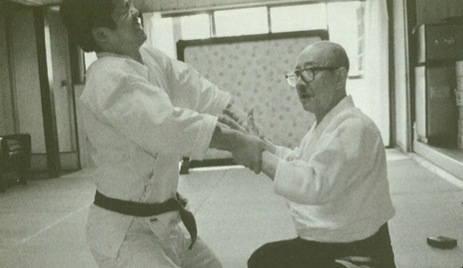
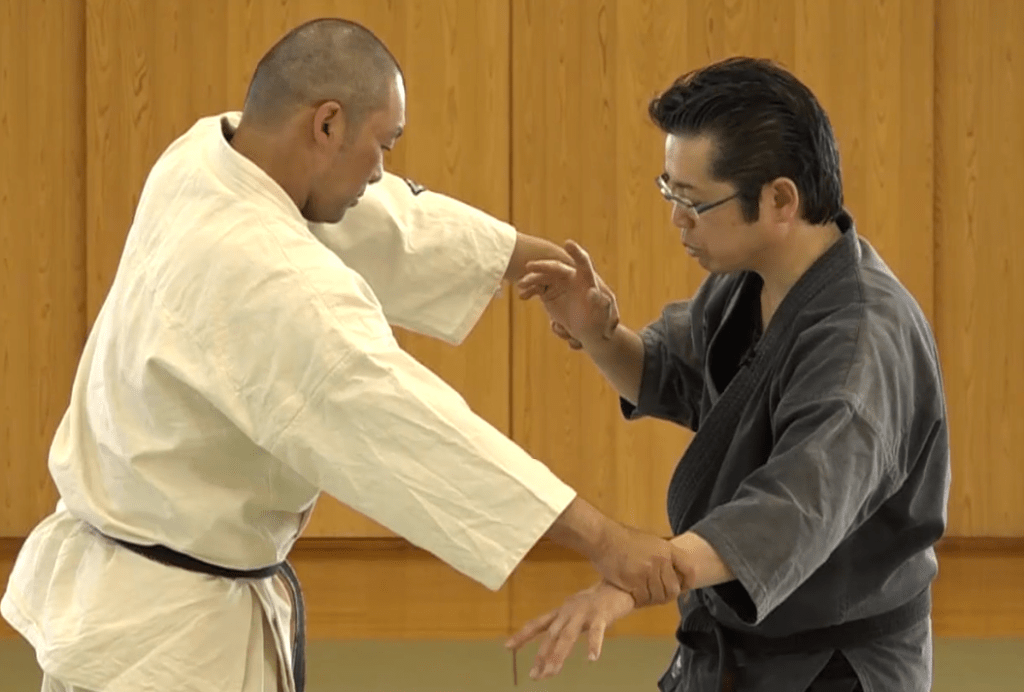


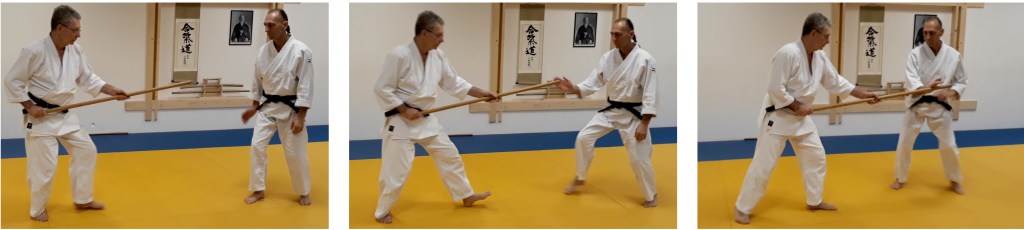


 Jodan aigamae & Jodan gyakugamae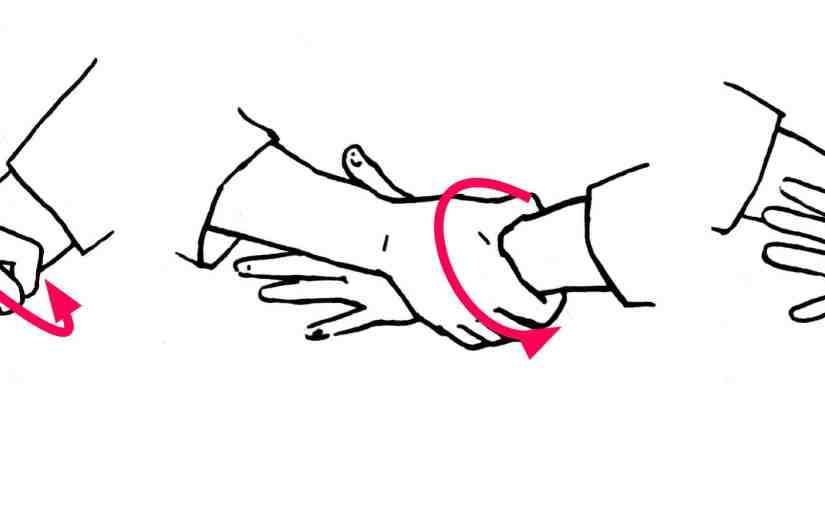
 In the 70-ties I had the opportunity to study aikido with Hirokazu Kobayashi. In that time I didn’t understand the concept of meguri* and tenshi (body rotation). Kobayashi stressed on many occasions the spiral movement of the wrist and the dropping of the elbow. Using the koshi was also one of his favorite remarks.
 *A defensive movement when grasped at the wrist, is the skill of “meguri”, meaning flexibility, rotation of the forearms. The use of the koshi as engine for power release increases the efficiency of defense action.
 The concept of balance disturbing in Tomiki’s Aikido is partly the result of the influence of Kodokan Judo, but also Morhei Ueshiba’s Aikido is prominent present.


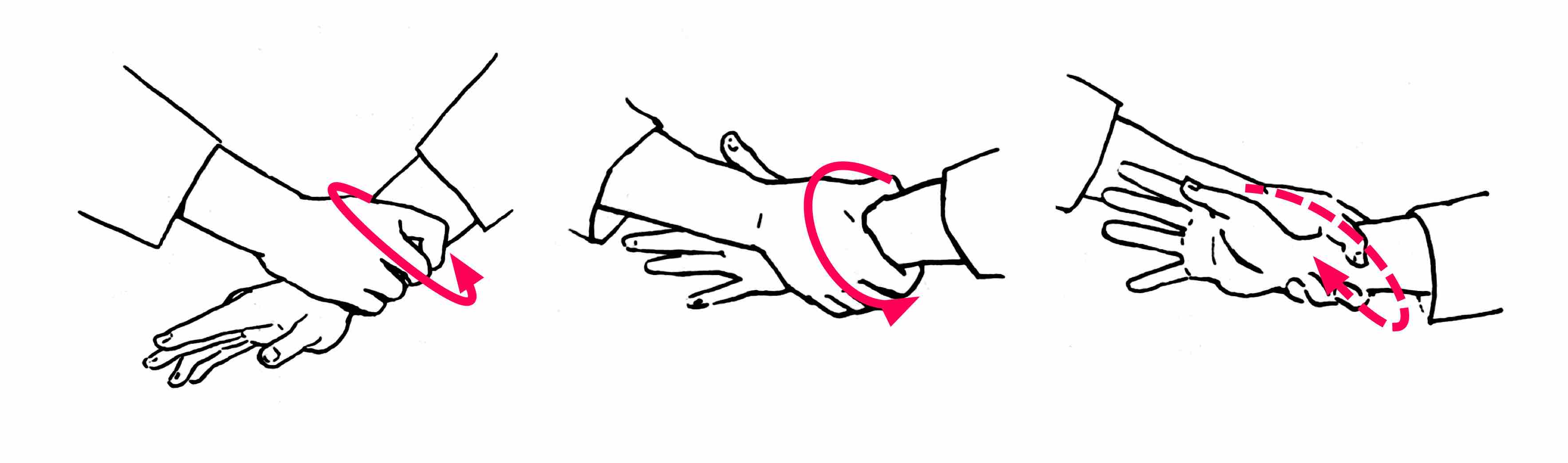


 Rotation of the forearm when grasped at the wrist is possible by using the skill of “tenshi” or internal rotation. Tenshi-kei is the power of tenshi and can be used to make waza efficiency higher.

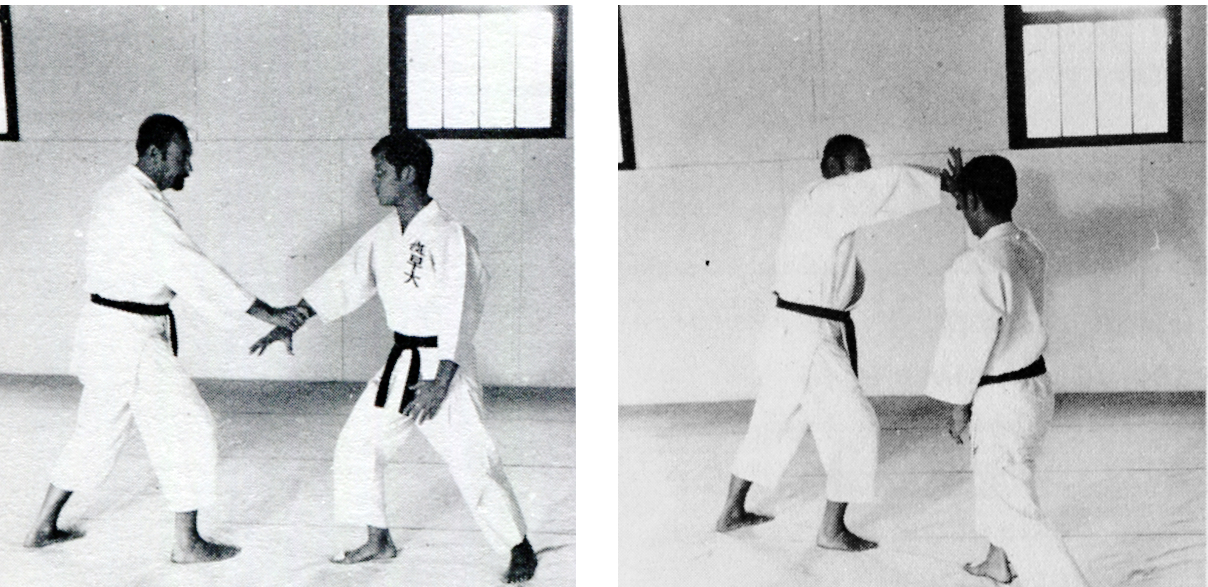


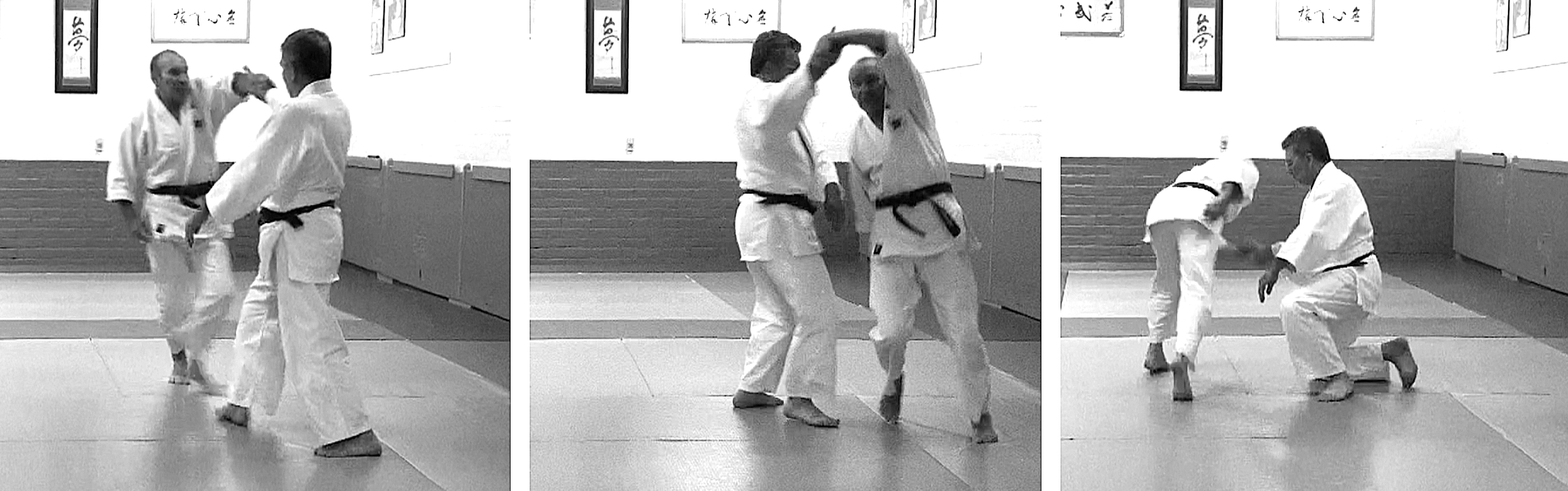


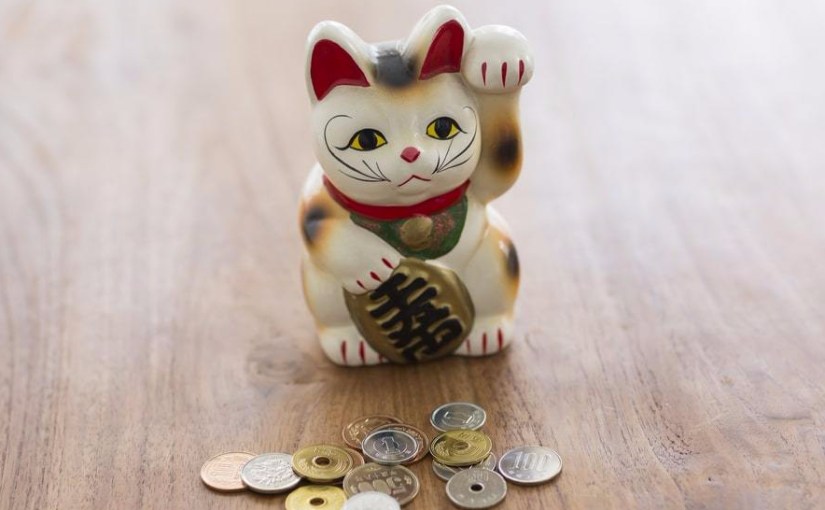
 There is an interesting quote of Tomiki in Geof Gleeson’s book: Judo Inside Out:
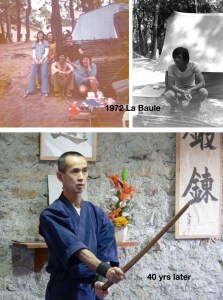 Some advice by Shigeru Uemura, former ShitoRyu karateka
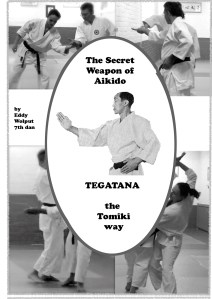

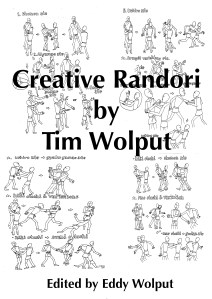
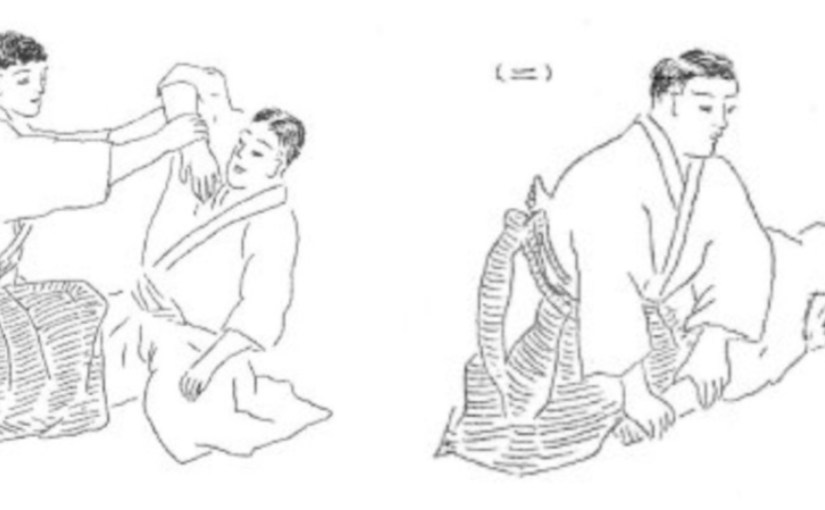
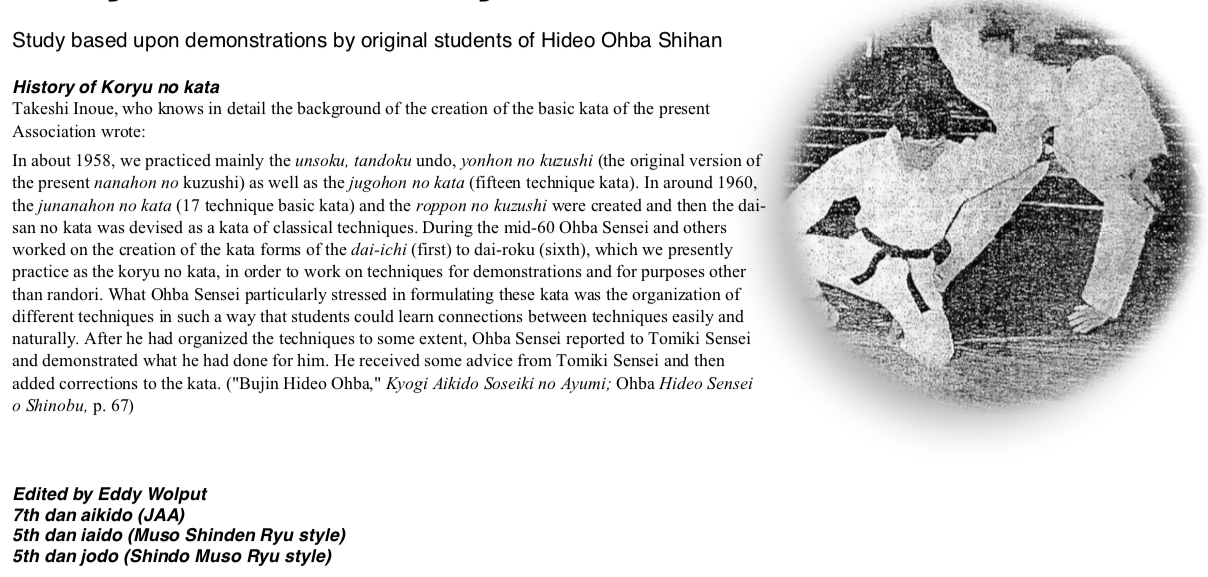

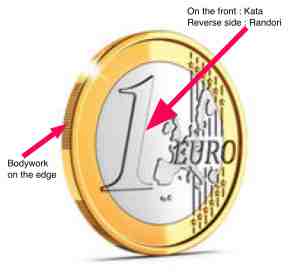


 Hyōshi is most commonly found in the classical martial arts, referring to cadence, rhythm and tempo. In the famous “Book of Five Rings”, Miyamoto Musashi describes it as three timings: before, during, and after an activity in relation to the enemy’s attack.
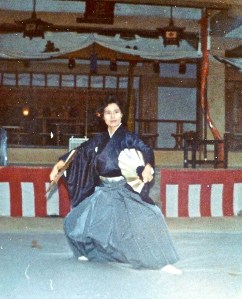
 Tenshikei is the Japanese term for chan shi jin or silk reeling, a skill in Internal Chinese martial arts. The name derives from the twisting and spiralling movements of the silkworm as it wraps itself in its cocoon and the pulling off the silk from the coccoon. The body is imitating this by winding and unwinding movements.
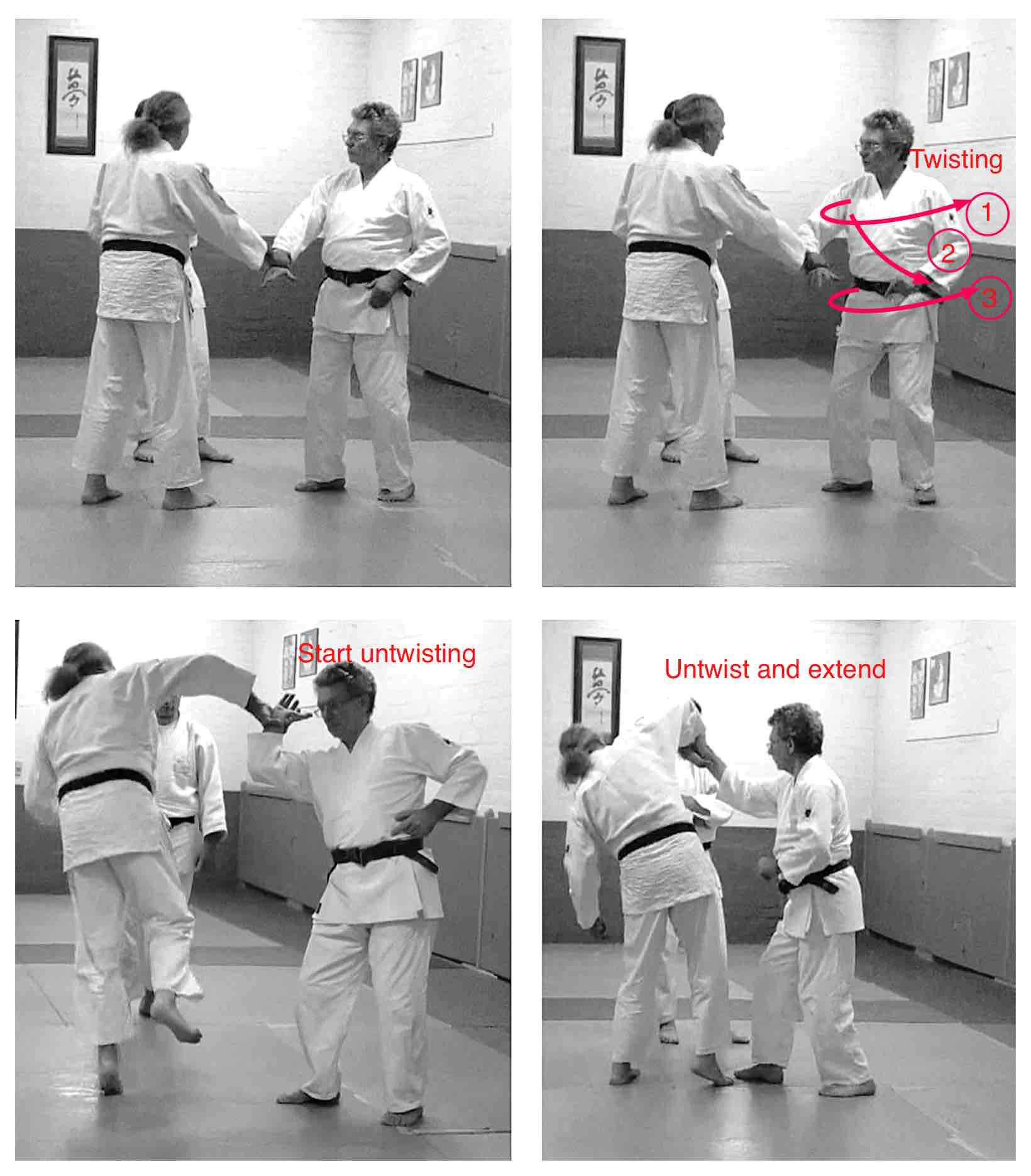

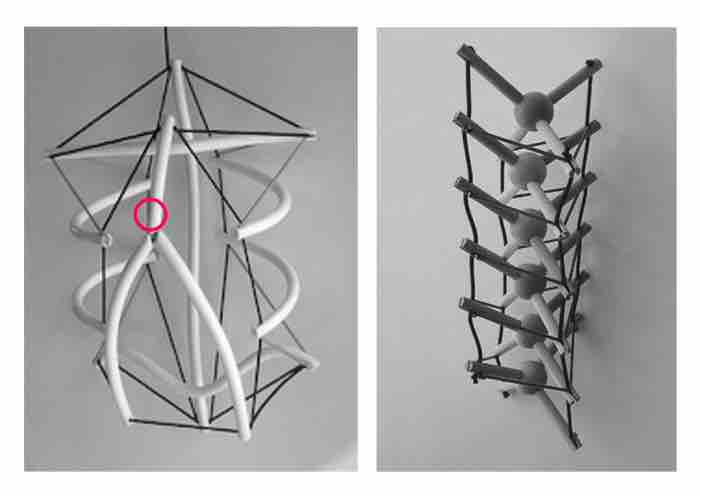 The spine plays an extremely important role in our body as it supports the upper body’s weight, provides posture while allowing for movement and flexibility, and protects the spinal cord.
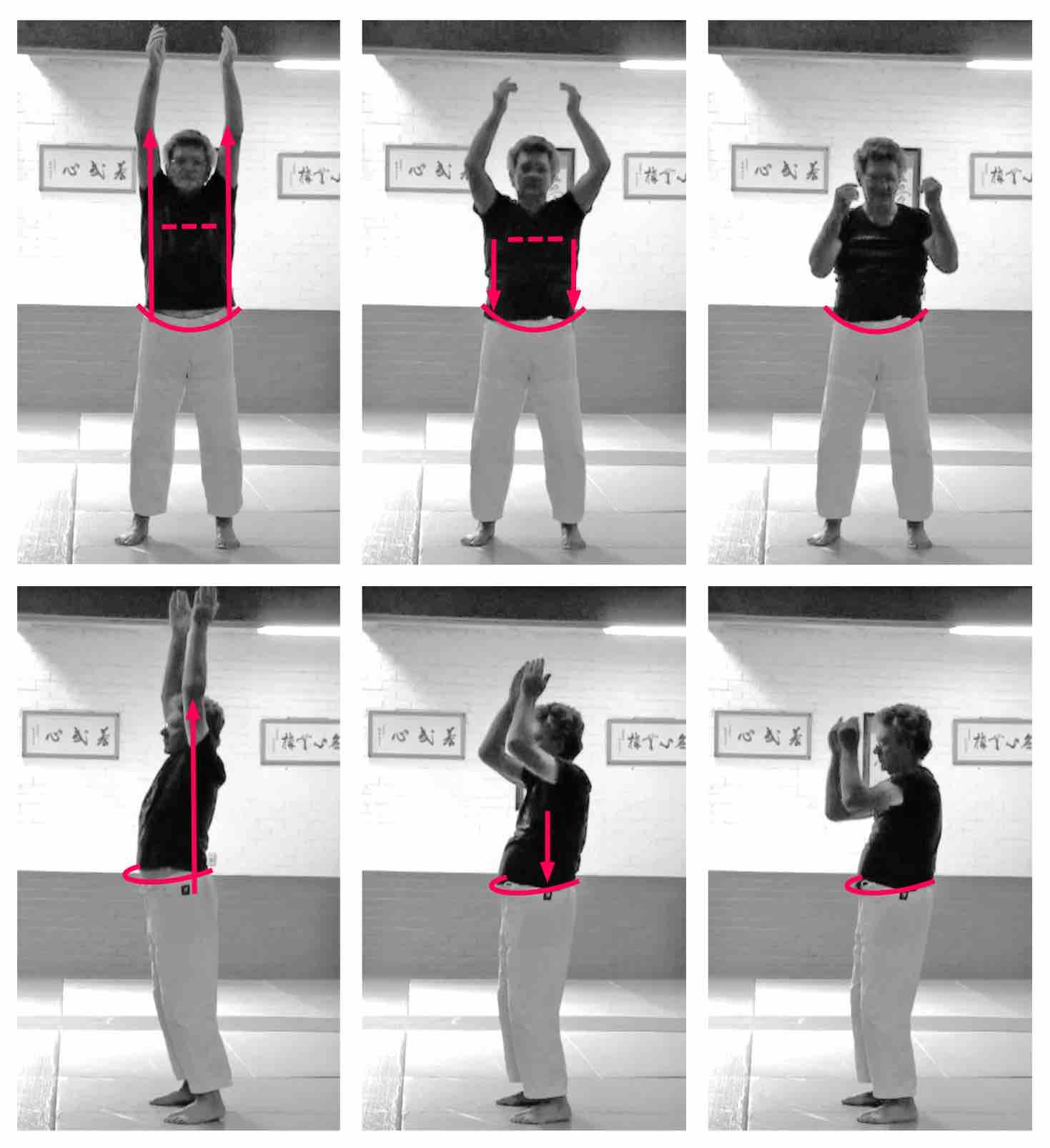
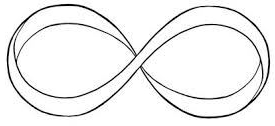
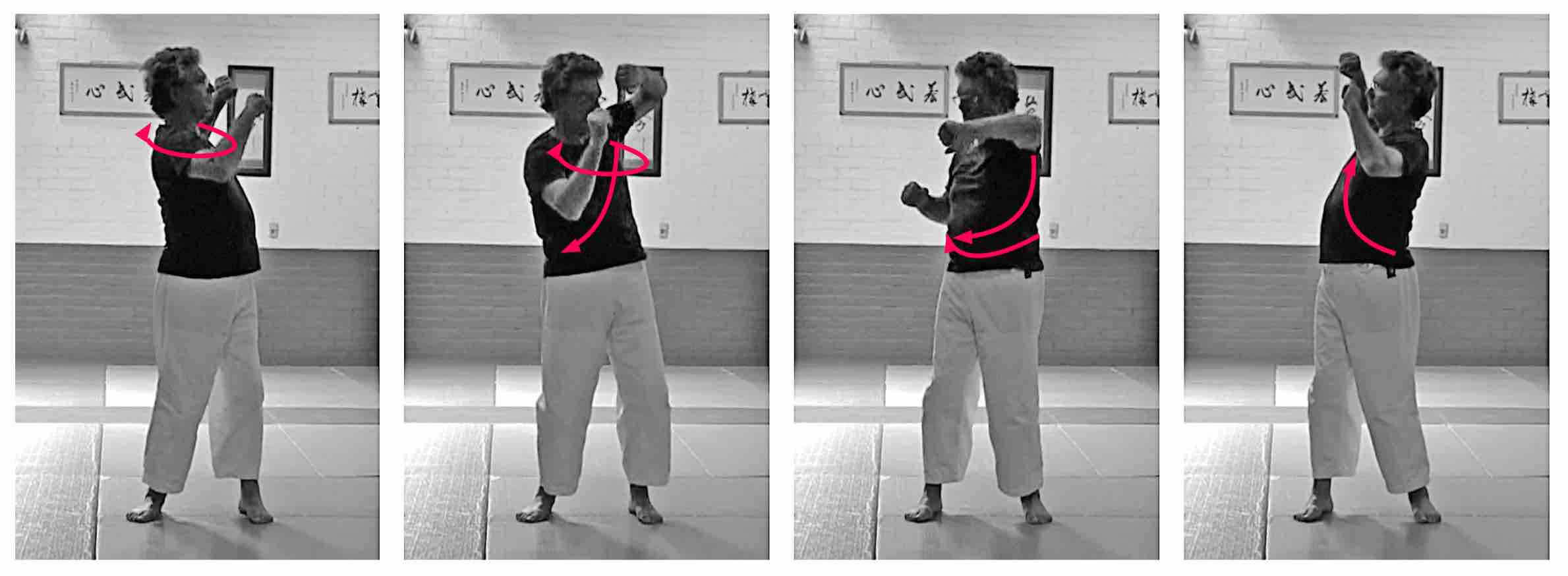
 Humans have several primary movement patterns that are learnt and refined throughout early life. Many of those primary movements are learnt by a baby without an example of another person. The baby has no role model.
 Benjamin Libet states in his book, “Mind Time: The Temporal Factor in Consciousness (Perspectives in Cognitive Neuroscience),” that it takes 0.5 seconds for the mind to recognise what has occurred.
 There is only “one” pre-emptive action, but we discern three types in pre-emptive action.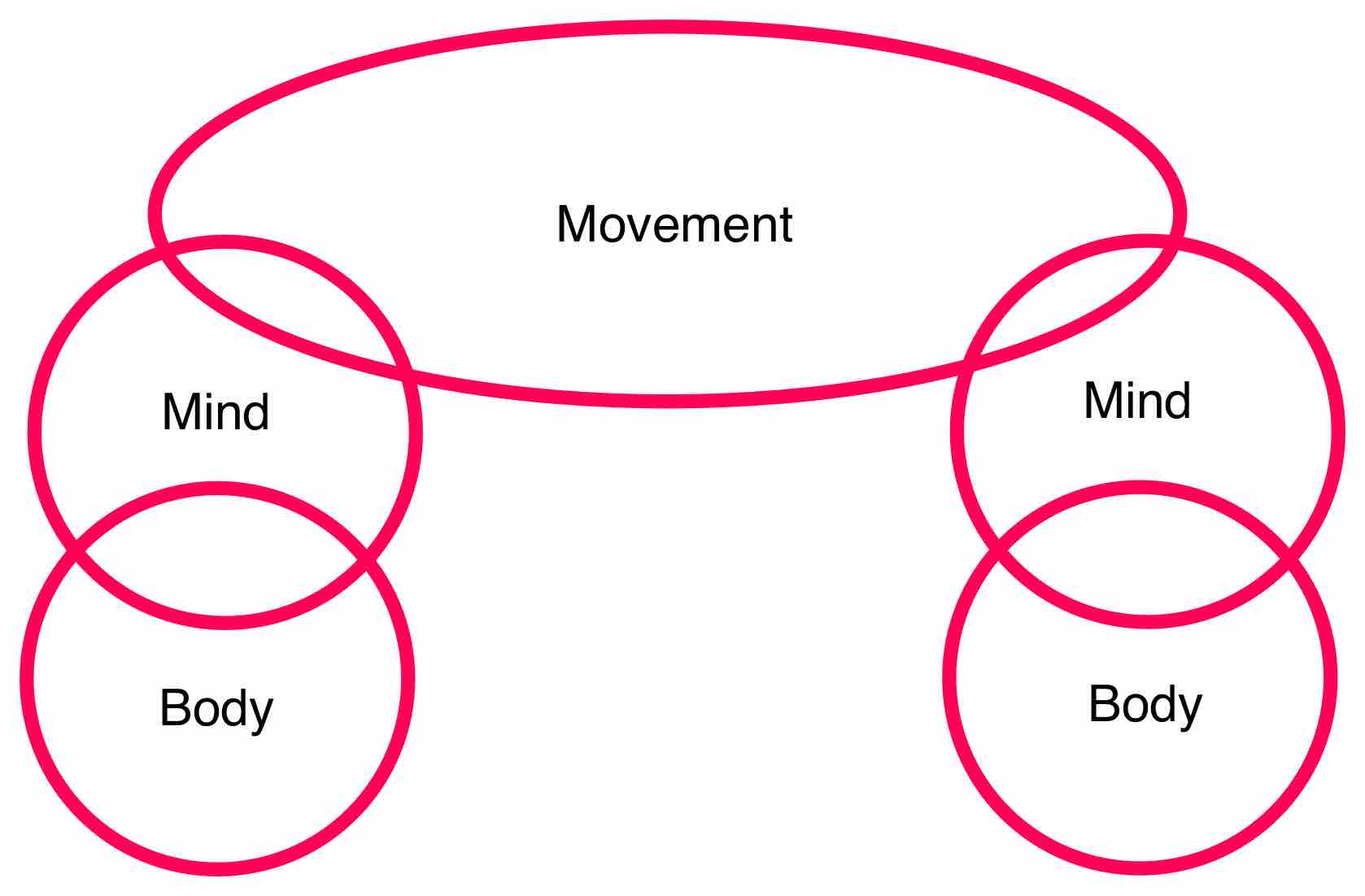


 Study Group Tomiki Aikido